
Tiny Homestead Habit: How to Wash and Store Greens So They Last Longer
Greens have a way of making us feel hopeful at the store and mildly guilty by the end of the week. A bunch of kale, a head of lettuce, a bundle of parsley, or a few tender asparagus stalks can all disappear into the refrigerator faster than we mean for them to.
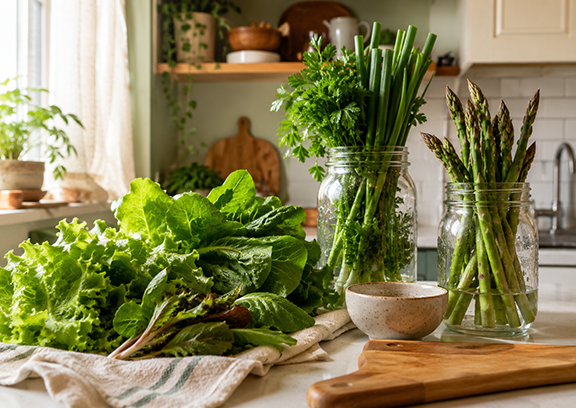
In my kitchen, I’ve learned that fresh food needs a little care before it gets put away. Not a complicated system. Not a full produce-prep afternoon. Just a towel, a jar, a little water when needed, and a visible place in the refrigerator.
The habit is simple: wash and store greens the day they come home.
Fresh food gets eaten when it is clean, visible, and ready.
This is not only about saving money. It is about keeping good food usable, reducing disposable plastic, and making it easier to eat the fresh things we brought home on purpose.
What This Habit Actually Is
When leafy greens come into the kitchen, they need to be handled before they go into hiding.
Wash them, dry them well, and store them in something reusable: a clean cotton towel, an organic cotton produce bag, a glass container, or a ball jar.
That is the whole habit.
Not all the produce.
Not the entire refrigerator.
Not a full Sunday reset.
Just the greens, herbs, and tender stalks that are most likely to wilt before the week is over.
This works because greens usually fail for three reasons: they stay too wet, they get buried, or they require too much work when dinner already needs to happen. Washing and storing them early removes that friction before it starts.
That keeps this firmly in Tiny Homestead Habit territory: one repeatable habit, useful in a small space, with no extra storage system required .
Why This Is a Homestead Habit, Not Just a Frugal Tip
Wasting less food matters. Groceries cost too much to let good produce rot.
But this habit is not only about spending less.
If all we wanted was cheap food, we could chase the lowest price and call it done. That is not the same thing as building a homestead kitchen.
A Tiny Homestead Habit should make good food easier to use, not turn the kitchen into another project.
A homestead kitchen asks better questions.
Can this food stay fresh long enough to feed us?
Can we see what we have?
Can we use washable materials instead of disposable plastic?
Can a small habit make tomorrow’s meal easier and healthier?
That is where cotton towels, organic produce bags, glass containers, and ball jars earn their place. They are not props. They are practical tools. They help fresh food stay usable without turning the refrigerator into a wall of plastic.
You do not need matching containers. You do not need a specialty produce-storage system. You need one repeatable rhythm that keeps fresh food from becoming compost before it becomes dinner.
When to Do It
Do this the day greens come home.
That might be after a grocery trip, farmers market stop, CSA pickup, or small garden harvest. If the greens cannot be handled immediately, do it before they go into the refrigerator for the night.
The timing matters because leafy food declines quickly. Once it disappears into the crisper, it becomes easy to forget.
Keep the habit narrow so it actually happens.
Choose one category:
Lettuce.
Spinach.
Kale.
Chard.
Parsley.
Cilantro.
Green onions.
Asparagus.
Whatever tender green food came through the door, handle that one thing.
That is enough.
How to Wash Leafy Greens
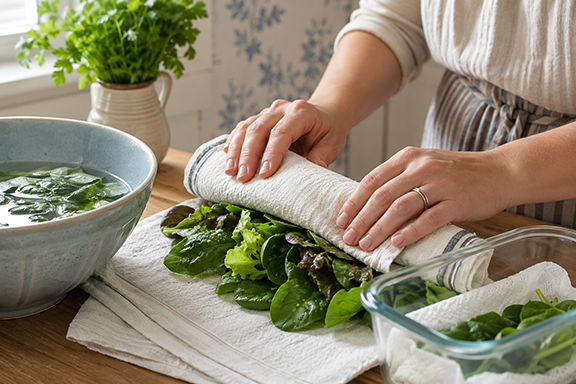
Start with cool water in a large bowl or a clean sink.
Add the greens and swish them gently so dirt drops away from the leaves. Lift the greens out of the water instead of dumping the dirty water back over them.
Then dry them well.
A salad spinner helps, but it is not required. A clean cotton towel works. Lay the greens out, roll the towel gently, and let it absorb the extra moisture.
This step matters. Greens stored soaking wet usually break down faster. The goal is not bone-dry leaves. The goal is leaves dry enough to store without turning slimy.
Once the greens are clean and mostly dry, put them somewhere visible.
Fresh food gets eaten when it can be seen.
How to Store Different Greens
Lettuce does well wrapped in a clean cotton towel and placed in a glass container or reusable produce bag.
Spinach needs to be dried well and stored loosely. If tender spinach gets packed tightly while damp, it turns quickly.
Kale and chard can be washed, dried, and stored whole. If you know you will use them in soup, eggs, beans, or a skillet meal, stripping the stems ahead of time can make them easier to grab. If that feels like too much, leave them whole and keep the habit simple.
Reusable storage is not just about saving money. It helps good food stay visible, clean, and ready for actual meals.
Parsley and cilantro usually last better when the ends are trimmed and the stems stand upright in a ball jar with a little water. They look like useful little bouquets in the refrigerator, and because they are visible, they are easier to use.
Green onions can be stored the same way. Stand them in a jar with a little water and change the water when it looks cloudy.
The method stays simple: wash what needs washing, dry leafy greens well, and store everything where it can be seen.
Use Ball Jars for Tender Stalks and Herbs
Some fresh foods last better when they are treated like cut flowers.
Asparagus is a good example. When it comes home, trim the ends if they look dry, stand the stalks upright in a ball jar, and add an inch or two of water. Then keep the jar in the refrigerator until you need it.
That small step helps the asparagus stay crisp because the cut ends can keep drawing up moisture instead of drying out loose in the drawer.
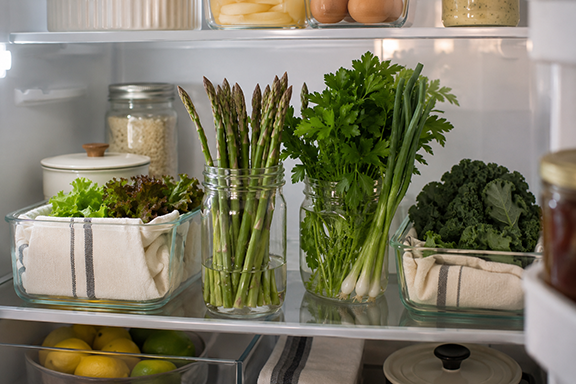
The same basic method works for parsley, cilantro, green onions, and some tender herbs. Use a jar that fits the stems without crowding them. Change the water when it looks cloudy. Keep the jar visible so the food gets used.
This is the kind of kitchen habit that feels like homesteading in a small space: ordinary tools, less waste, better food, and no complicated system to maintain.
What to Use Instead of Disposable Plastic
Use what is already in the kitchen first.
A clean cotton kitchen towel works for lettuce, spinach, kale, and chard.
A flour sack towel works especially well because it dries quickly and wraps around greens without adding much bulk.
Organic cotton produce bags are useful when you want breathable storage that can move from market bag to refrigerator.
Ball jars work for herbs, green onions, asparagus, and smaller amounts of washed greens.
Glass food containers work for larger leaves or anything you want stacked neatly on a shelf.
You do not need every option. Start with one towel and one jar if that is what you have.
The point is not to build a perfect storage system. The point is to keep fresh food usable with materials that can be washed and used again.
What Not to Do
Do not store greens soaking wet.
Do not pack tender leaves tightly into a sealed container with no towel or airflow.
Do not buy special produce containers before testing the habit with what you already own.
Do not wash every vegetable in the house just because you washed the greens.
Do not hide the finished food in the back of the refrigerator.
That last one matters most. A hidden vegetable usually becomes a wasted vegetable. Keep the greens visible enough that they can become part of a real meal.
How This Helps You Eat Better
Washed greens lower the barrier to real food.
If spinach is already clean, it can go into soup.
If lettuce is ready, lunch gets easier.
If parsley is standing in a jar, it can be cut into eggs, beans, potatoes, rice, or broth.
If asparagus is upright in water, it stays on your mind and on the menu.
This habit does not pay off in a dramatic way. It pays off on a tired night when dinner needs one more green thing and that green thing is already ready.
That is why the habit matters. Fresh food does not feed anyone while it waits in a damp bag.
Why This Works in a Small Kitchen
A small kitchen does not have room for complicated systems.
Most of us do not need extra bins, specialty gadgets, or a refrigerator full of matching containers. We need fewer decisions between us and dinner.
This habit works because it uses ordinary things: a towel, a jar, a reusable bag, a glass container.
Tiny homesteading is not ordinary frugality. It is caring for what comes into the house so it can actually feed the household.
It also works because it happens at the right time. Greens get handled before they are needed, not when everyone is hungry and the stove is already on.
That is the whole advantage.
Where This Fits in a Tiny Homestead Kitchen
This habit connects naturally to other small kitchen rhythms.
Pull expiring pantry items before they go to waste.
Keep a scrap bowl while cooking.
Save clean vegetable ends and herb stems for broth.
Wash and store greens before they disappear into the refrigerator.
None of these habits requires land, a big pantry, a perfect kitchen, or extra storage. They just make the household more capable with what already came in.
That is the difference between ordinary frugality and tiny homesteading.
Frugality asks, “How can I spend less?”
Tiny homesteading asks, “How can I care for this food so it can actually feed us?”
The Habit in One Line
When greens, herbs, or tender stalks come home, wash what needs washing, dry leafy greens well, and store everything in reusable containers where it can stay fresh and visible.
If you lilke content like this, check out the Homestead Blog Hop!

