
Shabbat on the Homestead: A Weekly Sabbath Rhythm for Small-Space Living
The homestead always has one more thing asking for your hands. A sink to clear. A jar to label. A plant to water. A floor to sweep. A meal to stretch. Even in a small home, the work can spread until every room feels unfinished.
Shabbat gives the work a boundary. Not because the work does not matter, but because it matters too much to let it run the whole household. A weekly Sabbath rhythm brings the home back into alignment: the work has been received, tended, and set down.

What Shabbat on the Homestead Means
Shabbat on the homestead is a weekly stop.
It is not a mood. It is not a reward for finishing everything. It is not a decorative table scene. It is a practiced rhythm of completion, blessing, eating, worship, rest, and return.
For a homesteading household, Shabbat answers a real problem: the work never finishes itself. Food still needs cooking. Animals still need care. Children still need help. Plants still need water. The point is not to pretend the work disappears. The point is to decide what belongs before Shabbat, what belongs during Shabbat, and what can wait until after.
That distinction matters.
Shabbat on the homestead is not an escape from the work. It is the weekly boundary that tells the work where to stop.
A Sabbath rhythm keeps necessary care from turning into endless striving. It gives the home a weekly shape: prepare, stop, receive, return.
Start With a Faithful Stopping Place
The first mistake many people make with Shabbat is trying to create a perfect home before it begins.
That turns Sabbath into pressure.
A better goal is a faithful stopping place. That means the home is ready enough to stop without resentment.
For a small homestead or small-space household, that might look like this:
The sink is cleared enough to make the next meal possible.
The table has space for food, candles, a Bible, or whatever your household uses to mark the evening.
The animals, plants, or household systems have received their necessary care.
The next meal has a plan, even if the plan is soup and bread.
The laundry may still exist. The closet may still need attention. The garden may still have weeds. Shabbat does not require pretending otherwise.
It requires a clean stopping line.
A Sabbath rhythm begins before sundown, with the ordinary work brought to a faithful stopping place.
The Work Before Shabbat

Preparation does not need to become elaborate. The goal is to remove friction from the day of rest.
On Friday, or whichever day leads into your Sabbath rhythm, choose a short list of work that helps the home settle.
Cook or prep one simple meal.
Clear the kitchen enough to function.
Handle the most time-sensitive homestead tasks.
Set out what you need for the evening.
Put away the work that will tempt you to keep going.
That last one matters. If the seed packets, paperwork, mending pile, laptop, or unfinished project stays in the middle of the room, it will keep speaking. Put it away before Shabbat begins, even if it is not finished.
Completion does not always mean the project is done.
Sometimes completion means the project has been returned to its place.
What to Eat for Shabbat on the Homestead
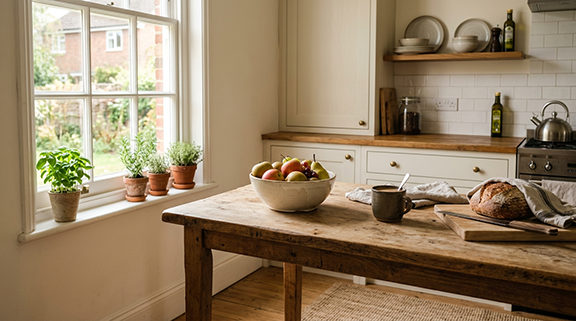
Shabbat food does not need to be fancy. It needs to be ready, generous, and repeatable.
A homestead table can be simple:
Soup made earlier in the day.
Bread, biscuits, or cornbread.
Eggs, roasted vegetables, or beans.
A jar of pickles or fermented vegetables.
Tea, coffee, cider, or wine depending on your household practice.
Something small that feels like delight.
The meal should not create so much work that it steals the rest it was meant to serve. A pot of soup and bread can carry a household well. So can a tray of roasted potatoes, greens, and eggs. So can leftovers warmed with care and served at a cleared table.

The point is not performance.
The point is to receive the food instead of rushing through it.
A Simple Shabbat Rhythm for a Small Homestead
You do not need a large farm, a separate dining room, or a silent house to keep Shabbat. You need a repeatable order that fits your actual home.
Here is a simple structure:
Before sundown, finish the necessary chores.
Clear the table or a small eating space.
Light candles if that is part of your practice.
Say a blessing or prayer.
Eat slowly.
Read Scripture, sing, talk, or sit together.
Leave nonessential work alone until after Shabbat.
For some households, Shabbat begins on Friday evening and continues through Saturday. For others, Sunday carries the Sabbath rhythm. The exact timing depends on conviction and tradition. The principle remains the same: the household needs a regular, protected stop.
You do not need a large farm, a perfect table, or a quiet life to keep Shabbat at home.
The work is not abandoned.
The work is put in its place.
A small-space homestead rhythm you can actually repeat. Download the Tiny Homestead Starter Kit.
What Still Gets Done During Shabbat
A homestead Sabbath still includes mercy and care.
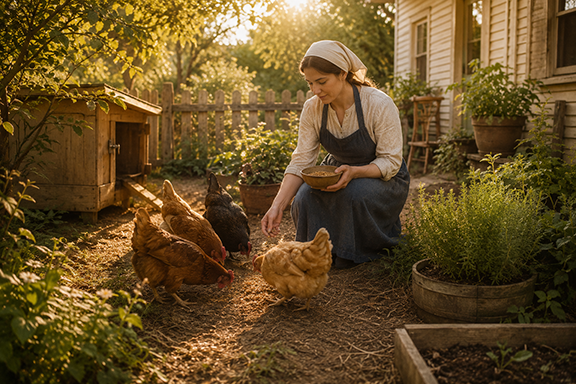
Animals get fed. Babies get changed. Dishes may be rinsed enough to keep the kitchen from becoming miserable. A sick person receives care. A plant in danger gets watered. Food gets served.
Shabbat is not neglect.
The question is whether the task serves life and peace, or whether it pulls the household back into ordinary production.
Feeding the chickens belongs.
Reorganizing the feed storage can wait.
Serving lunch belongs.
Deep-cleaning the pantry can wait.
Watering seedlings that would die belongs.
Starting a new garden project can wait.
This distinction protects the heart of the day. It also keeps Sabbath from becoming brittle and unrealistic.
How Shabbat Changes the Rest of the Week
A weekly Sabbath rhythm teaches the other six days how to behave.
When you know the work will stop, you make different choices before it does. You finish what matters. You simplify what has become too large. You stop pretending every task has equal weight.
Shabbat exposes disorder gently.
If Friday afternoon always feels frantic, the week may need a better rhythm.
If the house cannot stop because every system depends on last-minute effort, the systems may need simplifying.
If the Sabbath meal always becomes too much work, the meal needs to be humbler.
That is not failure. That is information.
A good Sabbath rhythm helps the household become more honest.
The homestead needs a weekly stop because good work can still become disordered when it never ends.
Shabbat in a Small Home or Apartment
Small-space Shabbat may be more realistic than people think. You do not need acreage to practice completion and alignment.
In a small home, the rhythm might be very plain:
Clear one table.
Cook one meal.
Put away one visible work pile.
Turn off one source of noise.
Light one candle.
Read one passage.
Take one walk.
That is enough to begin.
This matches the Tiny Homestead Habits standard: the practice should work without extra land, storage, or complicated systems. It should reduce friction instead of adding another burden.
What to Avoid
Do not turn Shabbat into a showcase.
Do not wait until the house is perfect.
Do not make the meal so complicated that everyone is tired before it begins.
Do not use Sabbath language to avoid necessary care.
Do not let unfinished work accuse the household all day.
The goal is not aesthetic rest.
The goal is faithful order.
A homestead Sabbath should feel grounded, not staged. It should help the household remember that work is good, limits are good, food is a gift, and God is not waiting for the house to be flawless before the day can be blessed.
A Weekly Shabbat Checklist
Use this as a simple guide, not a law.
Before Shabbat:
Choose the meal.
Handle necessary animal, plant, or household care.
Clear the table.
Wash enough dishes to make the next meal possible.
Put away visible work projects.
Set out candles, Scripture, bread, or anything used to mark the evening.
During Shabbat:
Eat without rushing.
Pray or bless the day.
Let necessary care stay simple.
Leave nonessential projects alone.
Take a walk, read, nap, talk, or sit outside.
After Shabbat:
Notice what made rest easier.
Notice what created friction.
Adjust the next week.
Keep the rhythm simple enough to repeat.
The Habit Beneath the Practice
Shabbat on the homestead is not about doing less because the work has no value.
It is about stopping because the work has value, and valuable things need boundaries.
Constant motion can cause things to shake apart. Hinges loosen. Soil compacts. Tempers thin. Bodies wear down. A household that never stops does not become more faithful or more productive. It begins to devolve into chaos.
The animals, the kitchen, the garden, the children, the meals, the repairs, the plans — all of it can become disordered when no stopping place exists. Shabbat gives the household a weekly way to say: enough has been done for now.
The work will be there after the Sabbath.
The home does not have to be held together by constant motion.
Like this kind of content? You’ll love The Homestead Blog Hop!

