
Apartment Kitchen Food Security: Reuse Glass, Skip Plastic, and Build Better Food Habits
Apartment kitchen food security does not begin with a basement pantry, a second freezer, or shelves stacked with matching containers. Most people living in apartments do not have that kind of space, and pretending they do only makes homesteading feel farther away than it really is.
A better place to begin is the glass jar already on the counter, the bowl already in the cabinet, the freezer-safe container already in use, and the food already passing through your kitchen. Small-space homesteading works when ordinary things get assigned useful jobs. It falls apart when every container gets saved “just in case.”
What Apartment Kitchen Food Security Actually Means
Food security in an apartment kitchen means you can feed yourself well with the space, money, and tools you already have. It does not mean storing a year of grain under the bed. It means wasting less, cooking more from what you own, stretching groceries with skill, and keeping enough useful staples on hand to handle a hard week.
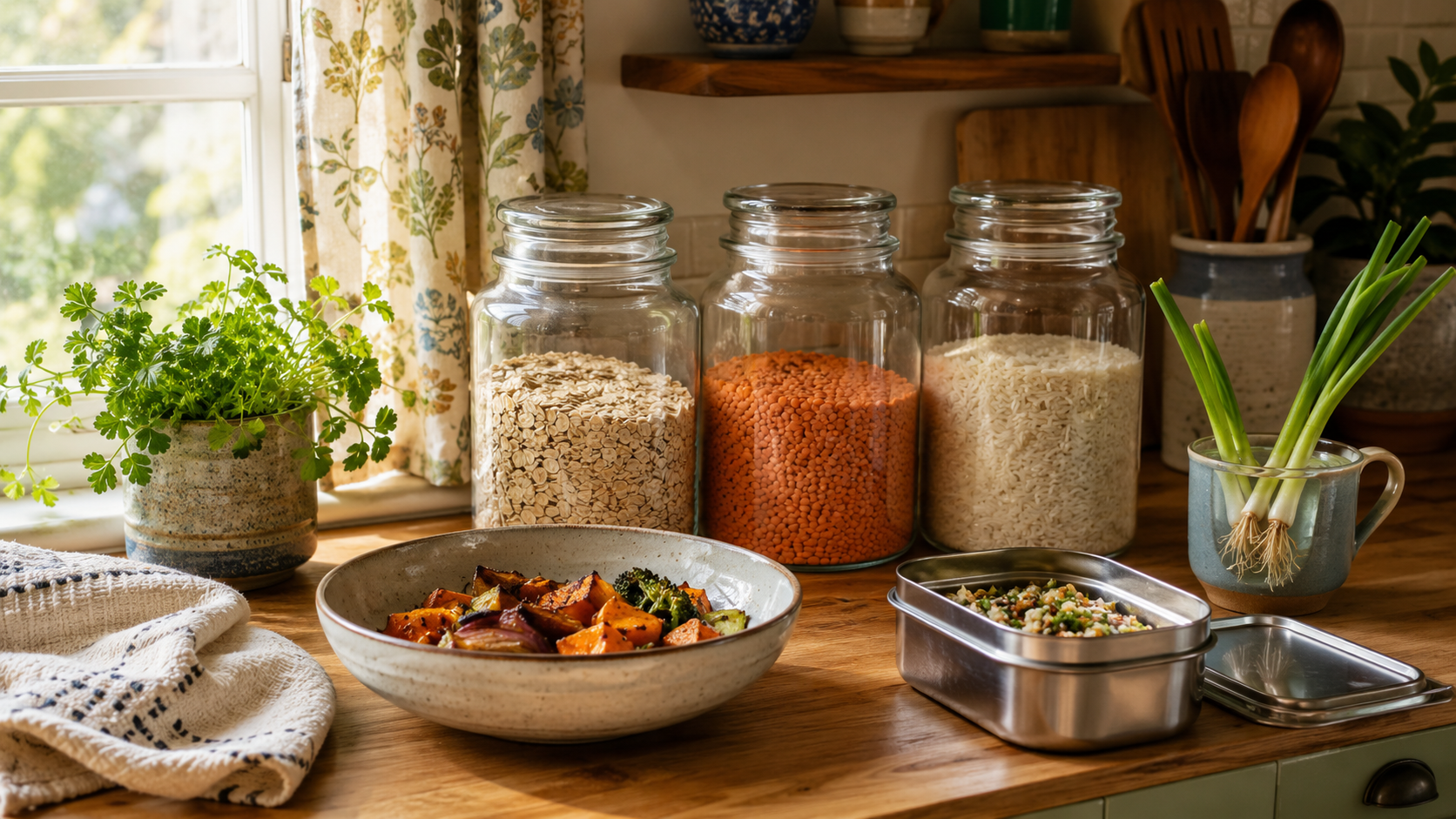
Apartment kitchen food security starts when ordinary containers get assigned real work: storing staples, saving leftovers, freezing broth, and keeping food visible.
That kind of security comes from daily kitchen competence. You know what food you have. You use what is close to expiring. You store leftovers where you can see them. You save useful scraps for broth. You keep a small working pantry, not a museum of forgotten ingredients.
Container reuse belongs in that picture, but only when the container helps food move toward a meal.
Reuse Glass, Not Every Container
Container reuse can be useful, but it needs limits. A small kitchen cannot afford a cabinet full of mystery lids, stained plastic tubs, and containers saved out of guilt.
In this kitchen, glass does the real work.
Reusing containers does not mean trusting every plastic tub. In a small homestead kitchen, glass does the serious work.
Reused glass jars can hold oats, lentils, rice, dried beans, chopped vegetables, broth, leftover soup, herb stems, and pantry odds and ends. Ceramic bowls can hold food in the fridge when covered with a plate or fabric bowl cover. Stainless steel containers can handle packed meals and sturdy storage. Baskets can hold dry produce where air circulation matters.
Plastic does not need to be part of the long-term system.
A container with no job is not preparedness. It is clutter with a lid.
That does not mean panic over every plastic container that has ever entered your house. It means you stop building your food-security habits around plastic. Heat, grease, acid, scratches, age, and repeated washing all make plastic a weaker choice for repeated food storage. The American Academy of Pediatrics advises using glass or stainless steel when possible and avoiding microwaving food in plastic or putting plastic food containers in the dishwasher.
The FDA still allows some phthalates in food-contact applications, while also noting that phthalates are not authorized to be directly added to food. The point for a home kitchen is simple: allowed does not always mean wise for repeated reuse in a small household system.
Save the glass. Use ceramic and stainless when you have them. Let the plastic go without guilt.
The Question Before You Keep Any Container
Before keeping any container, ask two questions:
Is it safe for repeated food use?
Does it already have a job?
Both answers need to be yes.
A glass jar that will hold lentils has a job. A shallow glass dish for leftovers has a job. A freezer-safe glass container for broth has a job. A ceramic bowl covered with a fabric bowl cover has a job.
A takeout tub with a warped lid does not need to become part of your kitchen system. A plastic container that stains, smells, scratches, or goes through the microwave does not need a second life with your food. A jar saved without a purpose is not preparedness. It is clutter.
Five Container Jobs That Build Food Security
1. Pantry Holding
A few reused glass jars can make pantry staples easier to see and use. Rice, lentils, oats, beans, pasta ends, dried herbs, and homemade seasoning blends all become more useful when they move out of torn bags and into clear containers.
This does not require a matching pantry. Matching containers look nice, but they do not cook dinner.
A small apartment pantry works better when you can see what needs to be used next. One jar of oats you actually eat matters more than twelve jars lined up for a photo.
A practical rule: keep jars only for dry goods you rotate through regularly. If you cook lentils every week, a lentil jar makes sense. If you bought one unusual grain two years ago and never used it again, that jar is storing indecision.
2. Leftover Rescue
Food security depends heavily on leftovers. Not fancy leftovers. Useful leftovers.
A small amount of cooked rice can become fried rice, soup filler, or breakfast with an egg. Half a cup of beans can stretch a tortilla, salad, or pot of broth. Roasted vegetables can go into eggs, pasta, or grain bowls. A few spoonfuls of sauce can become the base for soup.
Apartment kitchens need leftover containers that make food visible. Clear glass containers, shallow dishes, and jars work better than deep tubs that hide food until it spoils.
The habit is simple: when dinner ends, put usable portions into containers you can see. Set them at eye level in the fridge. Tomorrow’s meal should begin with what you already cooked.
3. Freezer Portions
Even a small freezer can hold more security than most people think. A few freezer-safe glass containers can help you freeze broth, cooked beans, rice, soup, tomato paste, chopped herbs, fruit, and small meal portions.
The key is portion size.
A large frozen block of soup can become useless if you live alone or cook for two. Smaller portions thaw faster and fit into real weekday meals.
Use freezer-safe glass only. Leave headspace so liquids can expand. Cool food before freezing. Label the lid or side with painter’s tape if needed. You do not need an elaborate freezer inventory. You need to know what the food is before frost turns it into a mystery.
4. Scrap Saving
Vegetable scraps can help an apartment kitchen stretch food without much effort. Onion ends, carrot peels, celery leaves, parsley stems, mushroom stems, and clean herb scraps can go into one freezer-safe container for broth.
One container is the whole system.
When it fills, simmer the scraps with water, strain the broth, and use it for rice, beans, soup, or braising greens. This turns food headed for the trash into cooking liquid.
Keep the habit tight. Do not start three more scrap containers because saving scraps feels productive. A small-space system only works when it has a limit.
5. Short-Term Growing
Container reuse also supports small edible growing. Green onions, herb cuttings, celery bases, and a small amount of sprouting can happen in glass jars, mugs, or shallow dishes near a window.
This does not mean producing all your food indoors. That expectation will frustrate most apartment dwellers.
Regrowing green onions will not replace your grocery budget, but it can keep fresh flavor within reach. A jar of herb cuttings can stretch what you already bought. A small sprouting jar can add fresh crunch without needing land.
Use one or two containers at a time. One jar of green onion roots on the windowsill makes sense. Twelve jars of struggling scraps do not.
Plastic-free kitchen habits work best when they replace one daily frustration, not when they create a new system to maintain.
What Not to Reuse for Food
Do not reuse containers that held cleaners, chemicals, paint, motor oil, strong fragrances, or anything unsafe for food contact.
Do not reuse cracked containers. Do not reuse containers that hold odors. Do not reuse lids that no longer seal. Do not reuse mystery plastics for hot, oily, acidic, or long-term food storage.
This is where frugality needs discipline. Reusing something unsafe is not thrift. It is false economy.
Food security should make your kitchen more dependable, not more questionable.
Replacing Plastic Wrap Without Creating Another Problem
Moving away from plastic containers often exposes the next weak spot: plastic wrap.
Most small kitchens do not need a complicated zero-waste system. They need a few reusable covers that handle the daily jobs plastic wrap used to do.
Beeswax wraps work well for cut produce, bread, cheese, sandwiches, herbs, and covering bowls for short-term fridge storage. Fabric bowl covers work well for rising dough, resting food, covering salad before serving, and keeping flies or dust off food on the counter.

Neither one replaces every lid. Neither one belongs on raw meat. Neither one should cover hot food. Beeswax wraps should not go in the microwave or dishwasher.
The goal is not perfection. The goal is replacing one common disposable habit with something washable, useful, and small enough to maintain.
I put together a simple companion guide called The No-Clutter Rule: Beeswax Wraps and Fabric Bowl Covers for Small Kitchens. It walks through how to make a small working set without filling a drawer with unused supplies.
The Small Working Set
A practical apartment kitchen does not need many containers or covers.
Start with:
Three to five glass jars for dry goods you use often.
Two or three clear glass containers for leftovers.
One freezer-safe glass container for broth scraps.
One or two freezer-safe containers for meal portions.
One small jar or mug for regrowing green onions or herbs.
Two fabric bowl covers sized to your most-used bowls.
Two or three beeswax wraps in sizes you will actually reach for.
That is enough to begin.
The system should fit inside your existing kitchen. It should not spread across the dining table, hallway, bedroom, or floor. The best small-space food systems disappear into daily use.
How This Builds Real Food Security
This kind of kitchen work is not dramatic. That is why it lasts.
You waste less because food stays visible. You cook more from what you already have because pantry staples are easy to grab. You stretch groceries because leftovers become ingredients. You make broth from scraps instead of buying every cooking liquid. You keep small amounts of fresh flavor growing without needing land.
Apartment kitchen food security is not built by saving every container. It is built by choosing the right tools and using them consistently.
Glass jars. Clear leftovers. One scrap container. Small freezer portions. A few plastic-free covers. Food that moves into meals instead of into the trash.
That is the work.
Where to Start This Week
Do not reorganize the whole kitchen.
Choose one container job.
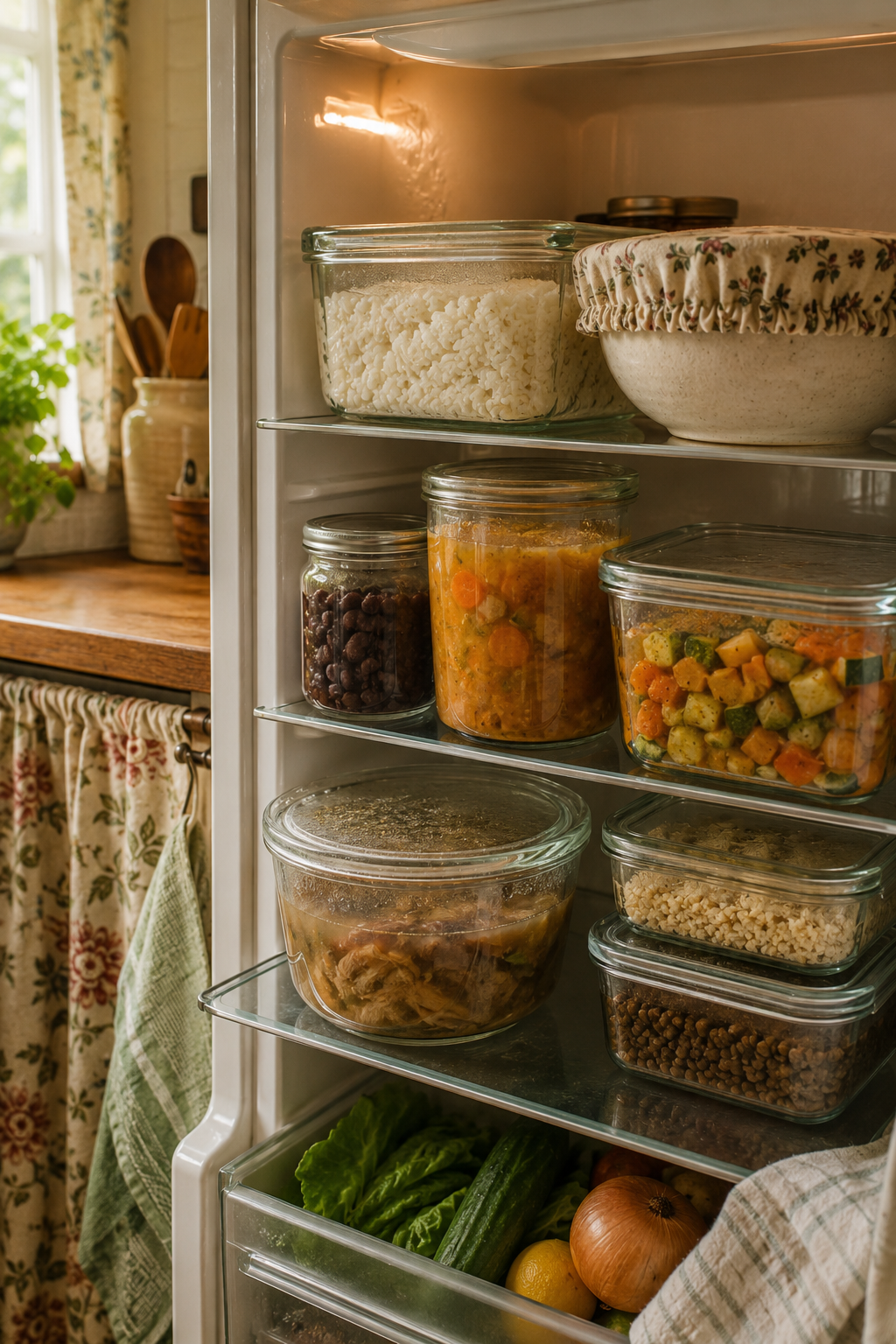
If your pantry has half-used bags, wash one glass jar and move the most-used staple into it. If leftovers keep disappearing, assign one clear container for tomorrow’s lunch. If vegetable scraps go into the trash every night, place one freezer-safe glass container in the freezer and start saving clean scraps for broth. If plastic wrap covers a bowl every week, make or buy one fabric bowl cover that fits that bowl.
One useful change is enough to start.
The Habit in One Line
Before keeping any container, ask: Is it safe for repeated food use, and does it already have a job?
Like this kind of content? Check out the Homestead Blog Hop

