
Raising Angora Rabbits in a Small Space: How to Keep Fiber Rabbits Without a Farm
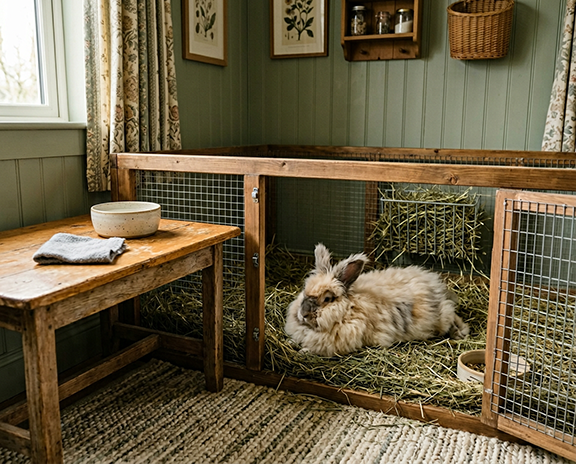
Angora rabbits change what a “fiber farm” can mean. You do not need pasture, a barn, fencing, or a flock. One well-kept rabbit in a spare corner can produce usable wool, teach steady animal care, and open a small income stream for someone who has no backyard at all.
But Angora rabbits are not decorative fluff with a side benefit. They are fiber animals. Their coats keep growing, matting, collecting hay, and holding heat whether you feel motivated or not. Raising Angora rabbits in a small space works when you treat them as livestock with pet-level handling, not pets with optional chores.
Angora rabbits make small-space fiber farming possible, but only for people willing to groom on schedule.
Why Angora Rabbits Fit Small-Space Homesteading
Angora rabbits work for small-space homesteaders because they produce fiber without requiring land. A rabbit can live indoors, in a garage with climate control, in a protected shed, or in a carefully managed small outbuilding. Some people litter train house rabbits, and the House Rabbit Society notes that rabbits tend to choose specific bathroom corners, with spayed or neutered rabbits usually easier to litter train.
That matters for the no-farm homesteader. A rabbit can live close enough for daily handling. You can groom at the kitchen table, harvest wool into a cloth bag, and store finished fiber in a bin instead of needing feed rooms, fencing, or pasture rotation.
The tradeoff is time. Angora rabbits need more grooming than short-coated rabbits. The National Angora Rabbit Breeders Club beginner guide says English, French, and Satin Angoras may produce about 10–16 ounces of wool per year, while Giants may produce more, but that fiber only becomes valuable if the rabbit stays clean, unmatted, and healthy.
The Four Main ARBA Angora Breeds
Before buying a rabbit, choose the breed that fits your space, schedule, and fiber goals. The American Rabbit Breeders Association recognizes English, French, Satin, and Giant Angoras, with the Giant listed as the largest ARBA Angora and a breed developed specifically for wool production.
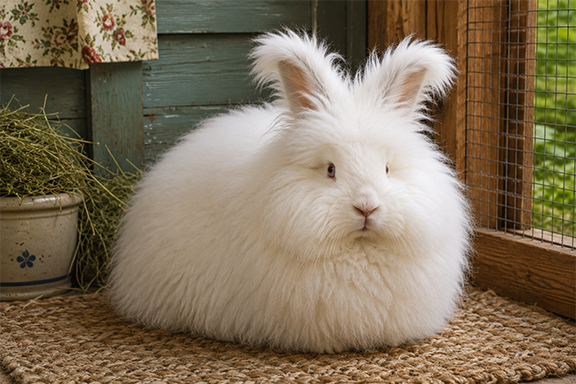
English Angora
English Angoras carry wool on the face, ears, and feet, which gives them the classic cloud-like look. ARBA lists the English Angora as a compact breed with a maximum weight of 7.5 pounds.
For a tiny homestead, English Angoras appeal because of their size. The downside is grooming. Their furnishings can mat quickly around the cheeks, ears, belly, and feet. Choose English only if you can commit to frequent grooming and calm handling.
Best for: experienced groomers, handspinners who want fine wool, people with steady daily routines.
Not best for: beginners who want the lowest-maintenance fiber rabbit.
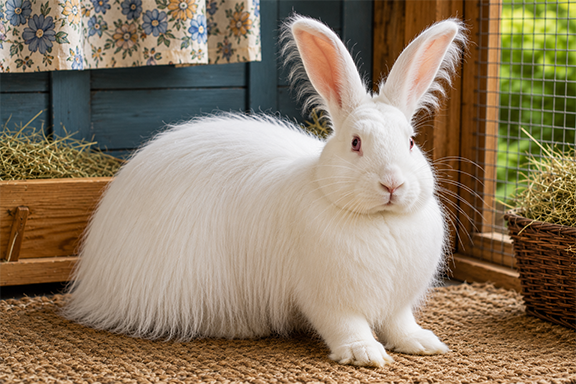
French Angora
French Angoras have cleaner faces and feet, which usually makes them easier for beginners. ARBA describes French Angoras as one of the four recognized Angora breeds and notes their docile nature and unique wool.
For a small-space income setup, French Angoras make sense because they balance fiber production with easier coat care. They still need regular grooming, but they do not usually mat around the face as aggressively as English Angoras.
Best for: first-time Angora keepers, small-space homesteaders, fiber sellers who want manageable care.
Not best for: people who want the highest possible wool yield per rabbit.
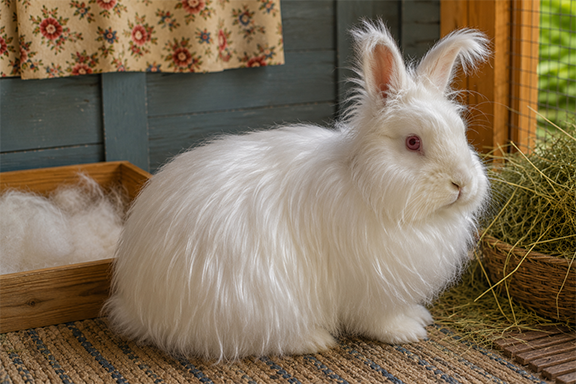
Satin Angora
Satin Angoras produce wool with a noticeable sheen. They usually produce less total fiber than Giants or German lines, but the fiber can be beautiful and desirable for blending.
Satin Angoras produce wool with a noticeable sheen. They usually produce less total fiber than Giants or German lines, but the fiber can be beautiful and desirable for blending.
A Satin Angora may suit a small operation focused on premium handspinning fiber rather than volume. The care routine stays similar: grooming, clean housing, steady diet, and careful harvesting.
Best for: specialty fiber, small-batch luxury wool, handspinners.
Not best for: income plans based on maximum ounces.
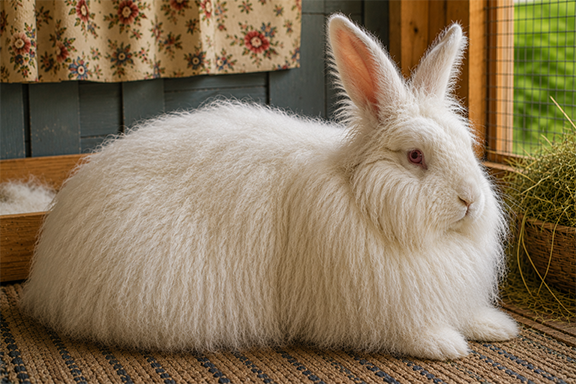
Giant Angora
Giant Angoras produce heavy wool and grow larger than the other ARBA-recognized Angoras. ARBA notes that Giants must be shorn because they do not molt.
Giant Angoras produce heavy wool and grow larger than the other ARBA-recognized Angoras. ARBA notes that Giants must be shorn because they do not molt.
That one detail matters. A molting rabbit may release fiber for plucking or combing during coat change. A Giant Angora needs shearing on schedule. If you miss that schedule, the coat keeps building.
Best for: serious fiber production, experienced rabbit keepers, people comfortable shearing.
Not best for: tight indoor setups with limited room for handling a larger rabbit.
What a Small-Space Angora Setup Actually Needs
A fiber rabbit does not need acreage. It needs clean housing, steady handling, good airflow, hay, water, and a caretaker who does not skip coat care.
A tiny fiber farm does not need acreage, but it does need a clean, repeatable setup.
You need:
A secure living space with enough room for the rabbit to stretch, turn, rest, eat, drink, and use a litter area.
Good airflow without drafts.
A solid resting board or mat if the enclosure has wire flooring.
A litter pan or waste area that you can clean easily.
Unlimited grass hay.
Clean water that never runs dry.
A grooming surface at comfortable working height.
A safe exercise area.
A storage spot for hay, pellets, grooming tools, and harvested wool.
The mistake is trying to make the setup cute before it works. A good Angora setup should make cleaning and grooming easy. If the hay feeder drops hay into the coat, move it. If the litter pan is hard to pull out, change it. If the grooming tools live in another room, put them closer.
Small-space systems fail when chores take too many steps.
Indoor Housing vs. Outdoor Housing
Indoor housing gives you the most control over temperature, predators, moisture, and daily observation. It also makes grooming easier because you see the rabbit constantly. A house-trained or partially litter-trained Angora can fit surprisingly well into a small home, as long as the space is rabbit-proofed and fiber management stays consistent.
Outdoor housing can work, but Angoras need strong protection from heat, dampness, predators, and dirty bedding. Heat matters because that wool insulates the rabbit. Angora breeders commonly warn that heat stress can become dangerous quickly in wool rabbits, especially during warm weather.
For a no-backyard homesteader, indoor or climate-controlled housing usually makes more sense. You can run a tiny fiber operation from an apartment or small home, but only if the rabbit’s comfort comes before the aesthetic.
Daily Care for Angora Rabbits
Daily care should take a few focused minutes, not your whole day. The key is catching problems early.
Every day, check:
Water level and cleanliness.
Hay supply.
Appetite.
Droppings.
Energy level.
Coat condition around the belly, tail, feet, and chest.
Temperature comfort.
Litter pan or waste area.
A healthy rabbit should eat, drink, move normally, and produce regular droppings. A rabbit that stops eating needs prompt veterinary attention. Merck Veterinary Manual warns that digestive problems in rabbits can become serious quickly, and stopped eating or digestive signs should be handled promptly.
Do not make daily care complicated. Open the enclosure. Look at the rabbit. Refill hay and water. Check the coat with your hands. Remove obvious hay bits. Notice what changed.
That is the daily rhythm.
Feeding Angora Rabbits for Health and Wool
Angora rabbits need a rabbit-appropriate diet first. Wool production does not override digestive health.
Rabbit Welfare Association guidance emphasizes hay or grass as vital for rabbits. Rabbit.org also describes an adult rabbit diet as unlimited hay, fresh greens, and limited pellets, with treats kept limited.
For Angoras, many keepers use a higher-protein pellet than a basic pet rabbit feed, especially during heavy wool growth, pregnancy, nursing, or growth. Work with a rabbit-savvy veterinarian or experienced breeder when changing feed. Sudden diet changes can upset digestion.
A practical feeding rhythm:
Morning: check water, refill hay, feed measured pellets.
Evening: check hay again, refresh water, offer greens if already introduced and tolerated.
Weekly: clean feed dishes and inspect hay quality.
Always avoid moldy hay, dusty feed, sudden treat binges, and loose “muesli” mixes full of seeds or colored pieces.
The rabbit’s coat may look like the product, but the gut runs the business.
Grooming: The Non-Negotiable Chore
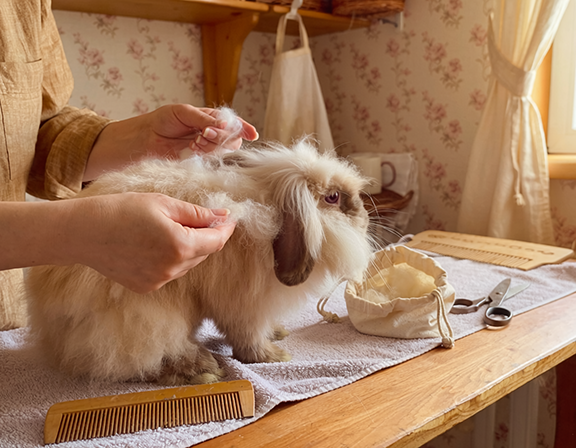
Angora rabbits must be groomed. Grooming protects the rabbit and preserves the fiber.
A basic grooming kit should include:
A slicker brush or appropriate wool brush.
A wide-tooth comb.
Small blunt-tip scissors for careful mat removal.
A grooming blower if your setup and rabbit can tolerate it.
A towel or nonslip mat.
A labeled fiber bag.
A small notebook or digital log.
You do not need a wall of tools. You need the right tools within reach.
How Often to Groom
Most Angoras need a quick coat check several times a week and a more thorough grooming at least weekly. Some coats need more. English Angoras and young rabbits going through coat changes may need closer attention.
A workable rhythm:
Daily: touch-check problem areas.
Twice weekly: comb belly, tail, feet, behind ears, and armpits.
Weekly: full grooming session.
At harvest time: pluck, comb, clip, or shear depending on breed and coat stage.
Mats do not start as disasters. They start as small tangles behind the ears, under the chin, near the tail, or along the belly. Remove them early.
Wool Harvesting: Plucking, Combing, Clipping, or Shearing
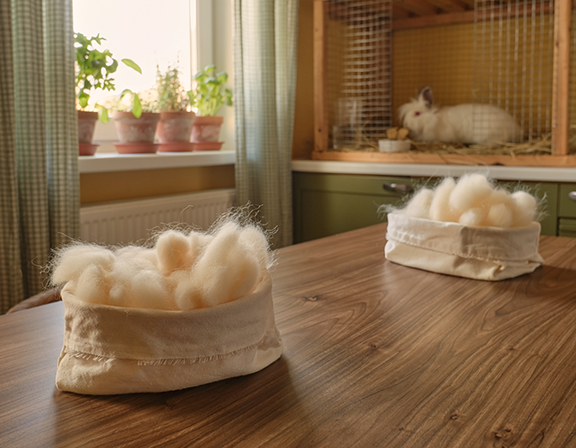
Angora wool can be harvested in different ways depending on breed, coat, and timing.
Plucking means gently removing loose fiber during a molt. This should not hurt. If the wool does not release easily, do not yank.
Combing collects loose fiber while grooming.
Clipping uses scissors or clippers to cut the coat.
Shearing removes the coat on a schedule and is required for breeds that do not naturally release wool well, such as Giant Angoras. ARBA specifically notes that Giant Angoras must be shorn because they do not molt.
Store harvested wool clean and dry. Do not stuff damp fiber into a sealed bag. Label it with the rabbit’s name, date, breed, and harvest method.
For income, consistency matters more than occasional big harvests. Buyers want clean, low-vegetable-matter fiber. Spinners notice how the rabbit was kept.
Preventing Wool Block and Digestive Trouble
Many Angora keepers talk about “wool block,” but modern rabbit care sources often frame hair accumulation as connected to gut slowdown rather than a simple blockage caused by hair alone. Kansas State Veterinary Diagnostic Laboratory notes that gastrointestinal stasis has often been mistakenly called wool block or hair balls, and hair accumulation may result from slowed gut movement.
That means prevention should focus on the whole rabbit:
Unlimited hay.
Clean water.
Regular grooming.
Exercise.
Low stress.
Prompt attention when appetite changes.
Do not rely on pineapple juice, papaya tablets, or folk remedies as your care plan. Groom the rabbit. Feed hay. Watch droppings. Call a rabbit-savvy veterinarian when eating slows or stops.
Exercise and Handling in a Small Home
An Angora rabbit should not sit untouched in a cage except during chores. Regular handling makes grooming easier, reduces stress, and helps you notice health problems sooner.
A small exercise area can be simple:
A washable floor mat.
An exercise pen.
Covered cords.
No access to houseplants.
No loose carpet edges.
A hide box.
A litter pan.
A hay basket or hay-safe container.
A rabbit does not need a whole room to benefit from movement. It needs safe time out of the enclosure and a caretaker who pays attention.
Handle the rabbit calmly. Support the hindquarters. Avoid flipping or rough restraint unless trained by a knowledgeable rabbit handler or veterinarian. Grooming should become familiar, not a weekly wrestling match.
Can Angora Rabbits Be House Trained?
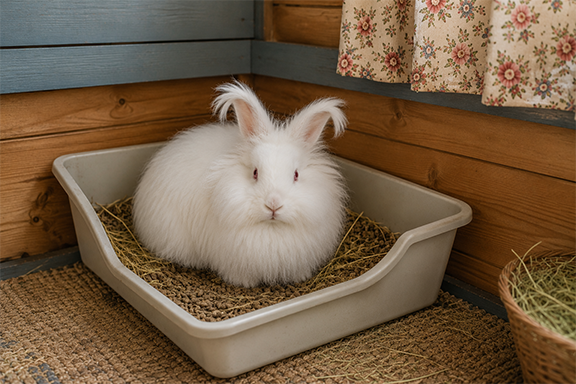
Many rabbits can be litter trained, especially when their space is set up around their natural bathroom habits. Rabbit.org notes that rabbits often choose corners for urine and much of their stool, and litter training works best when the box goes where the rabbit already wants to go.
For a fiber rabbit, litter training helps keep wool cleaner. Cleaner wool means less wasted fiber and less odor in the home.
Use a litter pan large enough for the rabbit to sit in comfortably. Put hay near or over the litter area so the rabbit can eat while using the box. Avoid dusty clay cat litter. Choose rabbit-safe litter and clean often.
House training does not remove the need for an enclosure. A rabbit still needs a secure base, especially when you are not supervising.
How Angora Rabbits Can Make Money
The money in Angora rabbits starts with healthy wool, and healthy wool starts with daily observation.
A small Angora setup can support several income paths, but none of them are instant.
Possible income streams include:
Raw Angora wool.
Cleaned and sorted fiber.
Blended batts.
Handspun yarn.
Needle felting fiber.
Breeding stock.
Pet-quality rabbits sold responsibly.
Workshops.
Digital education.
Local fiber demonstrations.
The simplest starting point is raw fiber. The more processing you do, the more value you may add, but also the more time, skill, and equipment you need.
Do not build the whole business before you can keep one rabbit well. Start with care. Then harvest. Then learn fiber handling. Then sell.
What to Track From the Beginning
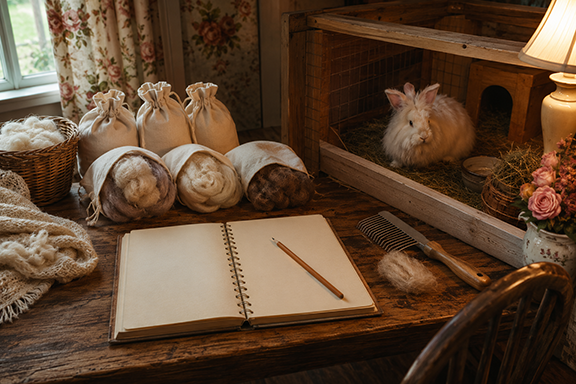
A tiny fiber farm needs records. Not complicated records. Useful records.
Track:
Rabbit name.
Breed.
Birth date if known.
Weight.
Grooming dates.
Harvest dates.
Fiber weight.
Health notes.
Feed changes.
Vet visits.
Temperament.
Buyer feedback if selling fiber.
This tells you which rabbits produce well, which coats mat easily, and whether your care rhythm works. Good records also help when you write listings, talk to buyers, or decide whether breeding belongs in your future.
The Real Cost of Raising Angora Rabbits
Angora rabbits cost more than the purchase price.
Budget for:
Rabbit.
Housing.
Exercise pen.
Litter pan.
Hay.
Pellets.
Water bowls or bottles.
Grooming tools.
Nail trimmers.
Emergency vet fund.
Fiber storage.
Climate control if needed.
Replacement supplies.
A free or cheap rabbit can become expensive if it arrives matted, sick, poorly bred, or unsocialized. Buy from a breeder who grooms, handles, tracks lines, and answers questions clearly.
For a money-making homestead project, healthy stock matters. Cheap rabbits are not always frugal rabbits.
Best Beginner Setup for a Tiny Fiber Farm
Start with one French Angora or another manageable, well-bred fiber rabbit from a reputable breeder.
Set up the enclosure before the rabbit comes home.
Keep the rabbit indoors or in a climate-controlled area.
Groom on a written schedule.
Learn to harvest clean wool.
Track every harvest by weight.
Use the first six months to learn the animal before planning breeding.
This slower start protects the rabbit and the business. A tiny fiber farm grows from skill, not from collecting animals.
Common Mistakes to Avoid
Skipping grooming because the coat “still looks fine.”
Buying breeding pairs before learning basic care.
Choosing English Angoras only for appearance.
Keeping rabbits in hot, stagnant air.
Letting hay fall constantly into the wool.
Using poor-quality feed.
Ignoring small droppings or reduced appetite.
Selling fiber full of bedding and debris.
Treating recordkeeping as optional.
Assuming small animals require small responsibility.
Angora rabbits are forgiving in some ways and completely unforgiving in others. Miss grooming long enough, and the coat will tell on you.
Is a Tiny Fiber Farm Practical?
Small-space homesteading works best when the animal fits the rhythm of the home, not when the home bends around an unrealistic farm fantasy.
Yes, raising Angora rabbits in a small space can be practical. It fits apartments, small homes, garages, and backyard-free homesteads better than almost any other fiber animal.
But practical does not mean effortless.
An Angora rabbit needs daily observation, steady grooming, good food, clean housing, safe temperatures, and respectful handling. When those pieces fit your life, one rabbit can turn a corner of your home into a real fiber-producing homestead project.
Start small. Keep the rabbit well. Learn the fiber. Build the income after the care rhythm holds.
That is how a tiny fiber farm begins.

