How to Make Sourdough Pita Bread for Sprouts and Microgreens
If you’re already growing sprouts on your kitchen counter or harvesting trays of microgreens, you only need one more skill to turn them into a complete, nourishing meal: homemade pita bread. This easy sourdough pita recipe creates soft, pocket-style flatbread perfect for stuffing with fresh sprouts, egg salad, cheese, or leftover chicken.
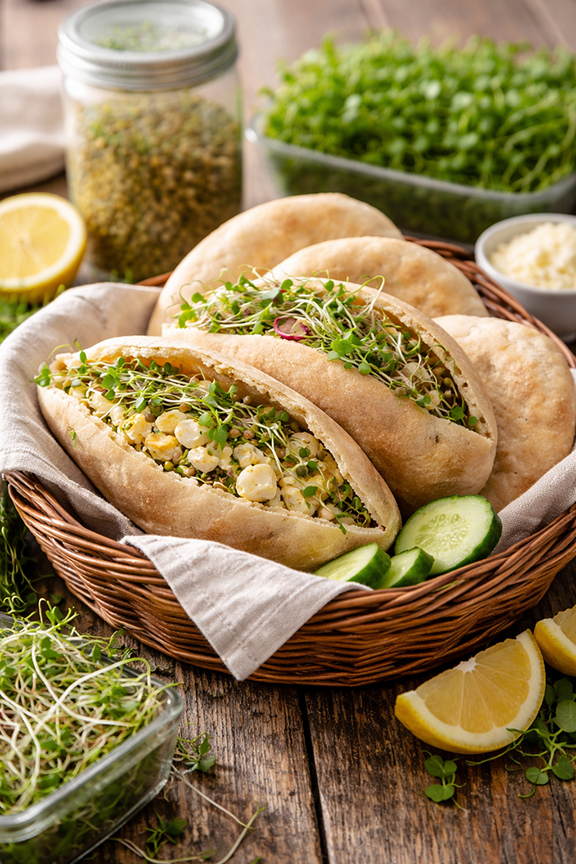
Fresh pita bread stuffed with living greens. Homemade glory!
Warm pita, split open and steaming, transforms a handful of mung bean sprouts or sunflower shoots into something hearty and satisfying. When you bake your own bread and grow your own greens, even a simple lunch becomes deeply nourishing.
Sprouting at home naturally leads here. Bread is the next layer. Let’s make the pocket that holds the harvest.
Why Sourdough Pita is Perfect for Sprouts and Microgreens
Pita bread is one of the best breads for fresh greens because it creates a natural pocket. Unlike sliced sandwich bread, pita holds delicate sprouts and microgreens without crushing them.
Homemade sourdough pita is:
• Soft but sturdy
• Naturally fermented and easier to digest
• Made with simple pantry ingredients
• Ideal for small-space homesteading kitchens
If you’re searching for ways to use fresh sprouts, how to eat microgreens daily, or what bread works best for homemade egg salad and sprouts, this recipe solves all three.
Easy Sourdough Pita Bread Recipe
Ingredients:
1 cup active sourdough starter (bubbly and recently fed)
1 cup warm water
2½–3 cups unbleached all-purpose or bread flour
1 tablespoon olive oil
1 teaspoon salt
1 teaspoon honey (optional)
Instructions:
In a large mixing bowl, combine sourdough starter, warm water, olive oil, and honey. Stir until blended.
Add 2½ cups flour and salt. Mix until a shaggy dough forms.
Turn onto a lightly floured surface and knead 5–7 minutes until smooth and elastic. Add small amounts of flour as needed.
Place dough in a lightly oiled bowl. Cover and let rise 4–6 hours, or until doubled. In cooler kitchens, allow more time.
Divide into 8 equal portions. Shape into balls. Cover and rest 20–30 minutes.
Preheat a cast iron skillet over medium-high heat or heat oven to 475°F with a baking stone inside.
Roll each ball into a 6–7 inch circle, about ¼ inch thick. Avoid excess flour, which prevents puffing.
Cook in hot skillet for 1–2 minutes until bubbles form. Flip and cook another 1–2 minutes until fully puffed. Wrap in a towel to keep soft.
If baking in the oven, place on hot stone and bake 3–4 minutes until puffed.
Allow to cool slightly before slicing open.
How to Use Pita Bread with Fresh Sprouts
Simple Egg Salad and Sprouts:
Mash boiled eggs with homemade mayonnaise, salt, pepper, and lemon juice. Fill pita and add fresh mung bean sprouts or radish microgreens.
Goat Cheese and Microgreens:
Spread soft goat cheese inside the pocket. Drizzle olive oil and add peppery microgreens for a simple vegetarian lunch.
Shredded Chicken and Sprouts:
Toss cooked chicken with olive oil and herbs. Add sprouts just before serving to keep them crisp.
Frequently Asked Questions
Can you freeze homemade pita bread?
Yes. Allow pita to cool completely, stack with parchment between layers, and freeze in an airtight bag for up to 2 months.
Why didn’t my pita puff?
Pita puffs when high heat creates steam inside the dough. Make sure your skillet or baking stone is fully hot before cooking.
Is sourdough pita healthier?
Sourdough fermentation can improve digestibility and may reduce phytic acid, making nutrients more available.
What sprouts are best for pita sandwiches?
Mung bean sprouts, sunflower shoots, pea shoots, radish sprouts, and broccoli microgreens all work beautifully.
Small-Space Homestead Lunch, Made Simple
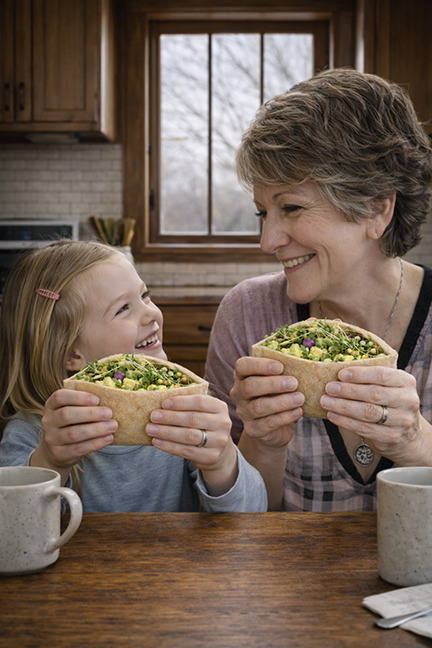
The love of pita sandwiches is handing down through the generations. The grandchildren love them as much as I do!
Growing sprouts at home and baking sourdough pita are small, steady skills that build a resilient kitchen. One comes from grain. The other from seed. Together they create a fresh, protein-rich meal that supports immune health and daily nourishment.
Simple ingredients. Real fermentation. Living greens.
That’s how we build strong kitchens.