
Spring Gardening Plans for a High-Desert Homestead
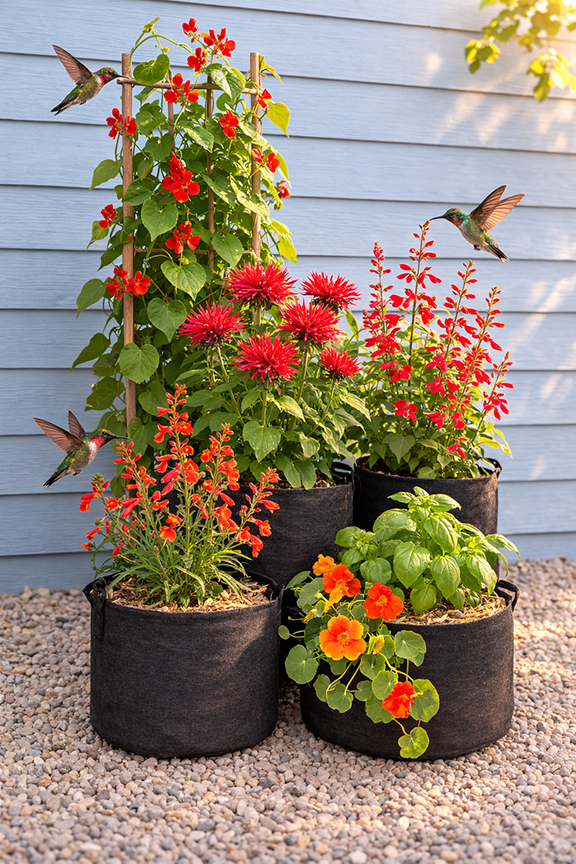
Hummingbird Gardens
There’s something quietly magical about a hummingbird garden. These tiny birds arrive like flashes of living color, hovering and darting through the flowers with a soft whir of wings. A few well-chosen plants can turn even a small corner of the yard into a place of constant movement and life. Once hummingbirds discover the nectar in your garden, they often return again and again throughout the summer, making daily visits that feel like a small gift of wild beauty right outside the door.
Every year, about six weeks before planting time, I start thinking about the garden again. Here in Grand Junction, spring doesn’t rush in. It arrives slowly, teasing us with warm afternoons before the last frost finally passes sometime around late April or early May. That makes early March the perfect time to sit down with a cup of tea and make a plan. This year I’m keeping things simple. Instead of trying to grow everything, I’m focusing on two things I love: herbs for the kitchen and plants that attract hummingbirds.
Our little garden space has some quirks that shape the plan. We don’t have a yard, per se. Our homeowners association doesn’t allow grass or planting in the ground. But that never defeats this country girl’s determination to grow things anyway!
The raised garden bed sits on the north side of the house, about three feet above the ground. That means it stays cooler and receives softer light. On the east side of the house, however, we get beautiful morning sun. Rather than fighting those conditions, I decided to design the garden around them.
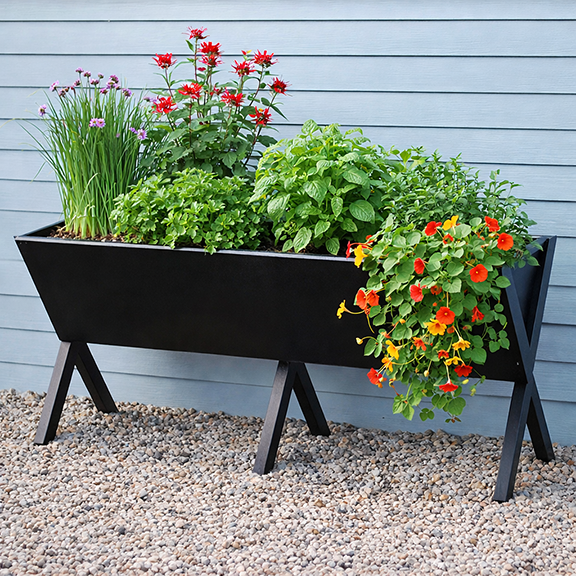
The raised bed will become an herb garden. Herbs are wonderfully forgiving plants, and several of them do quite well with partial sun. I’ll plant chives, parsley, and lemon balm there. Chives are one of my favorites because they come back every year and produce cheerful purple blossoms that bees adore. Parsley grows happily in cooler conditions and is always useful in the kitchen. Lemon balm fills the bed out nicely, and once it flowers it becomes a nectar plant for pollinators as well. Along the front edge of the bed I plan to tuck in nasturtiums later in the spring so they can spill gently over the side. Their bright flowers are edible and loved by hummingbirds.
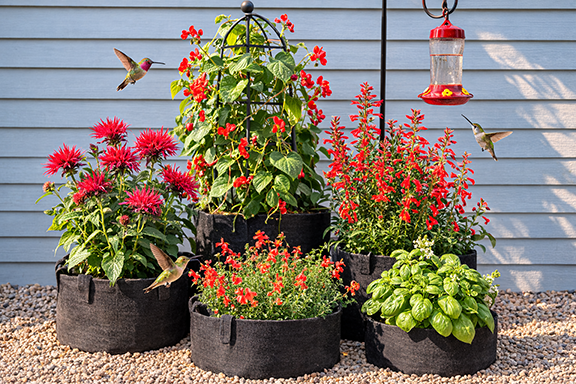
For the sunnier east side of the house, I’m trying something new this year: grow bags. If you haven’t used them before, they’re breathable fabric containers that work beautifully for container gardening. The fabric allows the roots to “air prune” instead of circling the pot, which keeps plants healthier. They also drain extremely well, which is helpful in our dry high-desert climate. I’ll group several grow bags together to form a small hummingbird corner.
In the tallest container I’ll plant scarlet runner beans and give them a trellis to climb. The vines grow vigorously and produce bright red blossoms that hummingbirds love. Nearby I’ll place bee balm and a red salvia, both of which are famous for their nectar-rich flowers. These two plants should bloom steadily through the summer and provide plenty of food for visiting birds. A smaller container will hold penstemon, a hardy western plant with tubular blossoms that hummingbirds find irresistible. And of course, I can’t resist adding a pot of basil for the kitchen.
One advantage of gardening this way is that it doesn’t require starting seeds indoors under lights. Instead, I’ll simply pick up a handful of healthy nursery plants in late April when the danger of frost has mostly passed. Once the weather settles, they can go straight into their grow bags and begin growing.
I’ll also hang a hummingbird feeder nearby. The feeder helps birds discover the yard early in the season, and once they find it they begin investigating the flowers around it. Over time they establish feeding routes and return regularly throughout the summer.
Gardening in a small space doesn’t mean you have to give up beauty or wildlife. A few well-chosen plants, placed thoughtfully where the light suits them, can transform even a modest corner of the yard. With herbs in the raised bed, flowers in the grow bags, and the occasional hummingbird darting through the garden, I’m hopeful this little plan will turn into a lively and fragrant space by early summer.
If you like content like this, check out The Homestead Blog Hop!
