
How to Prep a Simple Sabbath Meal Without Spending All Day in the Kitchen
Preparing a Sabbath meal does not require a full day of cooking or a complicated menu. What it requires is a small amount of intention early in the week and a Friday rhythm you can repeat without thinking too hard about it. If you have a working kitchen and about 90 minutes on Friday afternoon, you have enough to set a real table and sit down to something made with care.
This post walks through a practical approach to simple Sabbath meal prep — one that works in small homes, with limited storage, and without turning Friday into a second full workday.
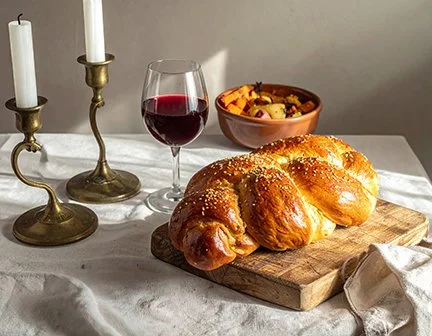
Why Sabbath Meal Prep Goes Wrong
Sabbath begins from completion, not collapse — your meal prep rhythm should reflect that.
Most people either over-plan or under-plan. Over-planning means attempting a multi-course meal that takes the whole day, leaving you exhausted before Sabbath even begins. Under-planning means arriving at sundown with nothing ready and reaching for whatever is easiest, which usually isn't satisfying.
Sabbath is meant to begin from a place of completion — not collapse. The meal is part of that completion. It should feel ready, not rushed.
What "Simple" Actually Means Here
Simple does not mean bare. It means choosing a small number of dishes that can be mostly or fully prepared before Friday afternoon, then finished quickly when you're ready to set the table.
A workable Sabbath meal for most households includes: one protein, one warm side, one cold or room-temperature side, bread, and something sweet. That's it. Five components. Most of them can be prepped Tuesday through Thursday without adding significant time to your regular cooking.
The Friday Rhythm That Works
A Sabbath meal does not need to be elaborate. It needs to be ready.
The goal is to have everything ready to serve — or close to it — before you need to light candles or begin your transition into Sabbath. Here is a rhythm that accomplishes that without turning Friday into a cooking project.
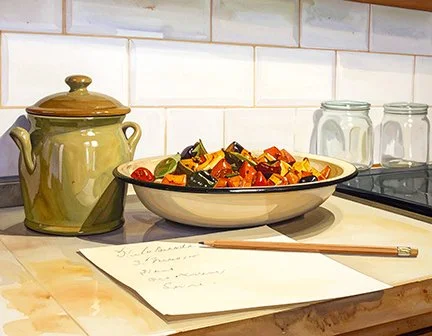
Wednesday or Thursday: Make your cold side or salad component. Roasted vegetables, a grain salad, a marinated bean dish — anything that holds well in the fridge for two days. This is your biggest time-saving move of the week.
Thursday evening: Prep your protein. If it's chicken, season it and refrigerate it overnight. If it's a bean or lentil dish, soak or cook it now. If it's fish, you'll cook it fresh on Friday, but have everything measured and ready.
If your cold side is made by Thursday, Friday cooking is a 45-minute task, not an all-day one.
Friday morning: Set out your bread — whether that's a loaf you baked earlier in the week, one you bought, or a simple quick bread you make in under an hour. Put out your candlesticks, your wine or juice, whatever you use for your table ritual. This is not cooking — it's arranging, and it takes ten minutes.
Friday early afternoon: Cook your protein and warm side. With everything prepped ahead, this is a 30–45 minute task, not a 3-hour one. While those cook, your cold side comes out of the fridge, your bread is on the board, and your table is already set.
By the time you need to stop cooking, you're done. The meal is ready. You are not.
What to Do When the Week Falls Apart
Keep your pantry stocked for the weeks that fall apart — that's not backup planning, that's Sabbath wisdom.
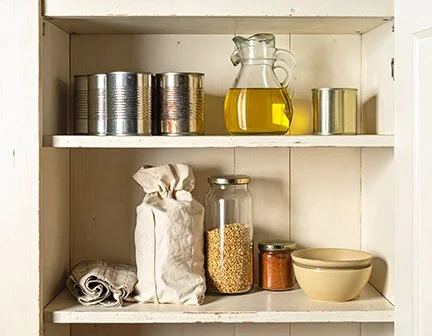
Some weeks the Wednesday prep doesn't happen. That's not a failure — it's a normal week. In those cases, pull from your pantry: canned beans dressed with olive oil and herbs, a simple egg dish, rice cooked fresh that afternoon. The Tiny Homestead Starter Kit includes a kitchen rhythm sheet that helps you keep staples on hand specifically for weeks like this, so you're never starting from zero on Friday.
If you haven't grabbed that yet, it's worth having. It also includes a pantry checklist that makes this kind of fallback cooking much easier.
A Note on the Meal Itself
The Sabbath meal is not a performance. You do not need matching dishes or an elaborate centerpiece. What makes it a Sabbath meal is that it's intentional — you made something, you set a table, you sat down together or alone and marked the end of the week as something worth marking.
That can happen with roast chicken and two sides. It can also happen with soup and bread. The meal is the container for the moment, not the point of it.
Here are other posts that may interest you.
