How to Build a Simple Kitchen Rhythm That Actually Works

Most people think a well-run kitchen comes from having the right system.

The right planner. The right routine. The right set of recipes.

It doesn’t.

A working kitchen comes from rhythm, not control.

In a small-space home, especially, you feel it quickly when things are off. Dishes stack up faster. Counters fill. Meals become reactive instead of intentional.

What helps is not doing more. It is doing the same few things at the same times.

A simple kitchen rhythm might look like this:

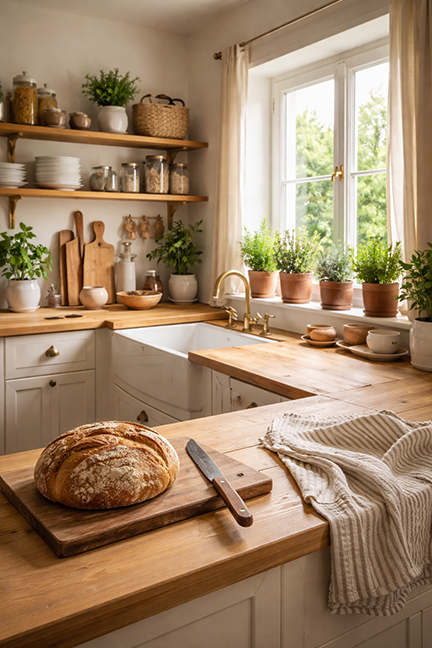
An orderly kitchen with open shelving and a loaf of bread, a knife, and a dish towel on a counter

Morning: reset and prepare


Start the day by clearing the sink and setting out anything needed for dinner. If meat needs to thaw, it comes out now. If bread is being made, it begins here.

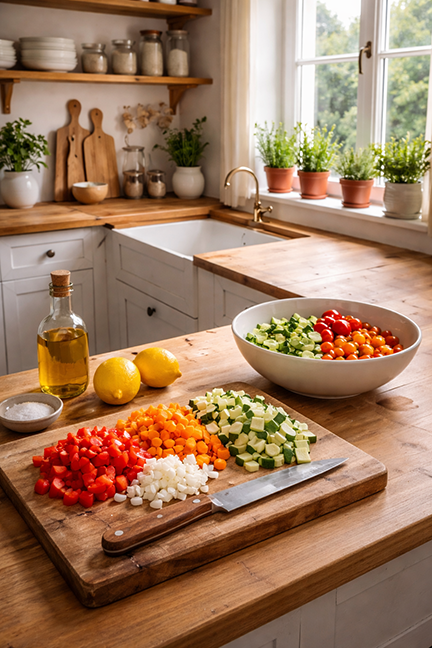
A rustic kitchen with a bowl of chopped vegetables, a chopping block with cut veggies, a knife, a bottle of oil and 2 lemons

Midday: light prep

Chop vegetables, mix dough, or assemble something simple. This is not a full cooking session. It is positioning dinner so it does not feel rushed later.

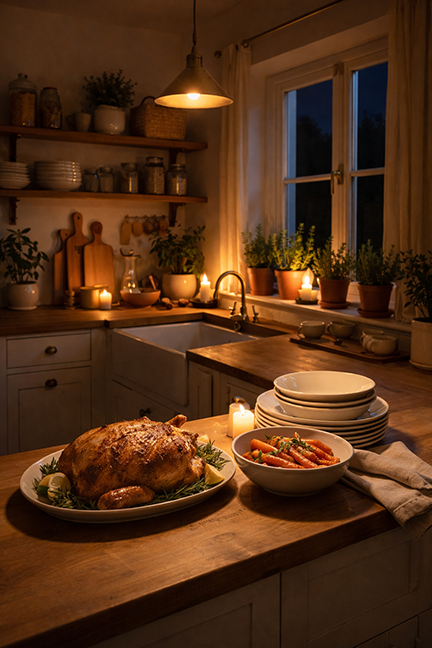
an evening in a candle-lit kitchen with a roast chicken, cooked carrots, and dishes on a counter

Evening: cook and close

Make the meal, then take five or ten minutes to reset the space. Wipe counters, load dishes, leave the kitchen ready for morning.

That is the whole rhythm.

It is not complicated, but it is steady.

Over time, this rhythm does something important. It removes decision fatigue. You stop asking, “What should I do now?” and begin moving naturally through the day.

Meals become simpler. Waste goes down. The kitchen begins to feel like a place of provision instead of pressure.

You do not need a perfect system to run your home well.

You need a rhythm you can return to.

Next
Next

How to Choose the Right Plants for Your Space (Not Someone Else’s Garden)