You Don’t Need Land to Start Homesteading
A lot of people postpone homesteading because they picture a place they do not have yet. Five acres. A barn. A fenced garden. Chickens in the yard. A pantry with deep shelves and every jar lined up like proof that the life has finally begun.
This is my dream, and the picture in my head. Is it yours, too?
That picture can become a trap. Land may give you more room, but it will not automatically give you skill, discipline, thrift, or rhythm. Those things can begin in a small kitchen, a rented house, an apartment, or a single shared pantry shelf.
I live in a single story condominium. I’m not allowed to plant things in the ground. But I’m a homesteader all the way.
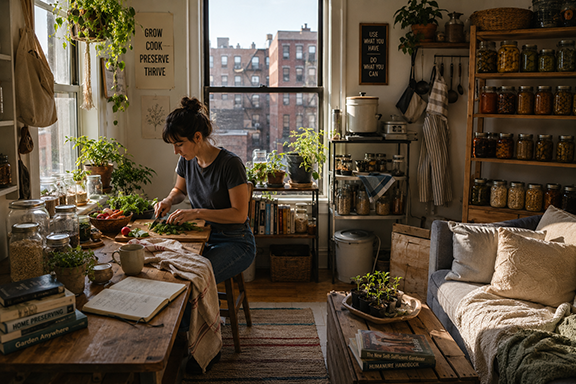
Live the rhythm. The life will follow.
Homesteading Begins With Household Competence
You do not need land to start homesteading because homesteading is not mainly about acreage. It is about becoming more capable inside the life you already have.
I’m looking for affordable land, but for now, that dream is still in the future. That doesn’t mean I’m waiting, though. And you don’t need to wait to start homesteading, either.
It means learning how to feed your household without relying on last-minute takeout. It means using up food before it spoils. It means knowing what is in your pantry before you buy more. It means cooking simple meals, keeping a small supply of useful staples, mending what can be mended, and building a home rhythm that does not collapse every time life gets full.
Homesteading starts with what you can practice today, not with the property you hope to own later.
Those skills matter on five acres. They also matter in a one-bedroom apartment.
A person who wastes less food, cooks from basic ingredients, keeps a working pantry, and understands the rhythm of a household has already started homesteading. The setting may be small, but the work is real.
The Land Will Not Do the Work for You
Land can be useful. It can give you space for gardens, animals, compost, fruit trees, tools, and larger systems. But land also magnifies disorder.
If your kitchen habits are already strained, a large garden will not fix them. It will give you more food to process before it spoils. If your pantry is already cluttered, bulk buying will not solve the problem. It will give you more places to lose things. If your weekly rhythm is already stretched thin, chickens, seedlings, and preservation projects will not make life simpler.
Land can expand a homestead, but it does not create the habits that keep one running.
This is why it makes sense to start small now.
A small-space homestead forces useful limits. You learn what you actually cook. You learn which staples earn their space. You learn how much food your household can use in a week. You learn what you can maintain when life is busy. Those lessons matter more than square footage.
Start With the Kitchen
The kitchen is the most practical place to begin homesteading without land.
Not with complicated recipes. Not with expensive equipment. Not with a wall of matching jars. Start with the ordinary work of feeding people well.
Cook one meal from pantry staples each week. Use the vegetables already in the fridge before buying more. Save bones or vegetable scraps only if you will actually use them. Learn one flexible soup, one bean dish, one bread product, one egg meal, and one leftover meal.
That is homestead work.
A small kitchen can teach you how to stretch food without making meals feel poor. It can teach you how to substitute ingredients, use odds and ends, and stop depending on a perfect recipe before dinner can happen. Those skills carry directly into garden season, harvest season, and preservation season later.
Build a Pantry That Works, Not One That Impresses
A useful pantry does not need to be large. It needs to be honest.
If you have one shelf, make it a working shelf. Keep food you know how to cook: rice, oats, beans, lentils, pasta, canned tomatoes, broth or bouillon, flour, sugar, salt, oil, vinegar, a few spices, and whatever your household uses often.
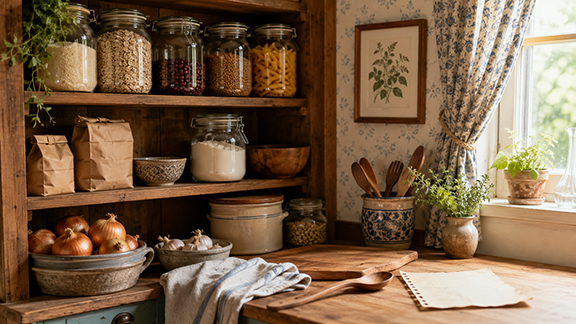
Do not stock a fantasy pantry for a fantasy version of yourself.
If you do not cook dried beans, start with canned beans. If you rarely bake, do not buy twenty-five pounds of flour. If your family will not eat lentils, do not keep buying lentils because they seem homestead-worthy.
A homestead pantry should lower friction. It should help you make dinner, prevent waste, and reduce unnecessary shopping. It should not become another place where good intentions go to expire.
The Tiny Homestead Habits framework keeps this kind of work small: one repeatable habit, no extra storage, limited time, and no system that creates more friction than it removes.
Learn to Waste Less Before You Grow More
Food waste is one of the clearest places to practice homesteading now.
Before you grow tomatoes, learn to use the tomatoes you already bought. Before you plant herbs, learn how to keep store-bought herbs from turning black in the fridge. Before you preserve a bushel of apples, learn to use the last two apples in the bowl.
This does not require guilt. It requires attention.
Once a week, look for the food most likely to go bad first. Maybe it is a soft zucchini, a half-bag of spinach, a few carrots, a jar of sauce, or a container of cooked rice. Build one meal around that item before opening something new.
A small kitchen can teach thrift, food skill, preservation, and rhythm long before acreage ever enters the picture.
This is small, but it changes how a household runs. You stop shopping as though the fridge is empty when it is not. You stop letting produce become compost by neglect. You begin to see food as something to steward, not just something to store.
Practice Preservation Without a Big Setup
You can start preserving food without a canner, cellar, or garden harvest.
Dry herbs in small bundles or on a plate. Freeze chopped onions, peppers, berries, broth, or cooked beans in portions you will actually use. Make refrigerator pickles with cucumbers, onions, carrots, or radishes. Turn soft fruit into a small jar of fridge jam. Freeze tomato paste in spoonfuls instead of letting the rest of the can mold.
Preservation begins with saving usable food in a form your household will eat later.
That matters more than the method. Canning is a valuable skill, but it is not the only doorway into food preservation. Small-batch freezing, drying, fermenting, and refrigerator preserving all teach the same basic lesson: handle food before it is too late.
Grow Something Small
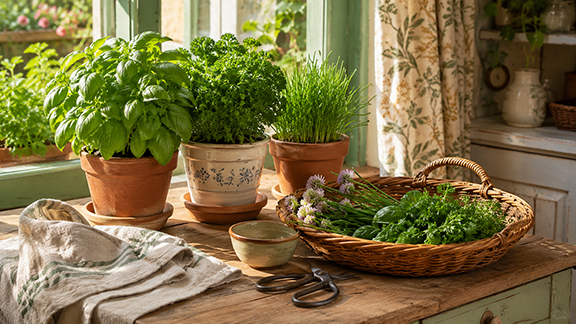
You do not need a garden to learn from plants.
A pot of basil on a sunny windowsill can teach timing. A container of parsley can teach harvesting. A few green onions in water can teach regrowth. A porch tomato can teach watering, pruning, pests, and patience.
Keep it small enough to notice.
Many beginners plant too much because enthusiasm feels like progress. Then the plants need watering, thinning, harvesting, cooking, and preserving all at once. One herb pot cared for well teaches more than twelve neglected containers.
The first homestead skill is not gardening. It is learning to use what you already have well.
Herbs make a good starting point because they connect the garden to the kitchen immediately. You can learn when to harvest, how much to cut, how to dry the extra, and how fresh herbs change simple food. That is useful homesteading in a very small footprint.
Make Your Home Easier to Keep
Homesteading also includes the daily condition of the home.
Not perfection. Not constant cleaning. A working home.
A clear sink at night. A swept floor after dinner. A basket for mending. A place for the grocery list. A towel near the stove. A small weekly rhythm for laundry, food, and rest.
These things sound ordinary because they are. That is the point.
A homestead depends on ordinary work done consistently. If the home cannot absorb daily life, bigger homestead projects will become another layer of stress. The goal is not to create a flawless house. The goal is to reduce friction so food, work, rest, and care can happen without constant recovery.
Buy Fewer Tools and Build More Skill
Beginning homesteaders often want gear because gear feels like progress.
A dehydrator. A grain mill. A pressure canner. Raised beds. Grow lights. Compost systems. Fermentation weights. Specialized baskets. More jars than the household can fill.
Some tools are useful. Many are premature.
Before buying equipment, practice the skill in its simplest form. Dry herbs without a dehydrator. Bake bread before buying specialty pans. Cook beans before buying bulk storage. Grow one herb before building a garden system. Make refrigerator pickles before buying canning supplies.
Skill tells you which tools deserve space. Buying tools first often creates clutter before competence.
Build Rhythms You Can Keep
A homestead life needs rhythm more than intensity.
A person can do a dramatic pantry overhaul in one weekend and still waste food the next month. A person can plant a garden in May and abandon it by July. A person can make a beautiful meal plan and ignore it by Wednesday.
Small repeatable rhythms do more good.
Check the fridge before shopping. Cook one pantry meal each week. Harvest herbs in the morning when they need cutting. Start a simple soup when vegetables are fading. Set aside one short block to reset the kitchen before Sabbath or the start of the week.
These are not glamorous habits. They are load-bearing habits.
What You Can Start This Week
Start with one homestead skill you can actually repeat.
Do not choose five. Do not reorganize your whole kitchen. Do not start with a project that requires a shopping trip, new containers, or a free weekend.
Choose one:
Cook one meal from pantry staples.
Use up the vegetable closest to spoiling.
Put store-bought herbs in a jar of water so they last longer.
Freeze one leftover ingredient before it goes bad.
Wipe down the kitchen after dinner with one towel.
Check your pantry before buying duplicates.
Start one pot of herbs near a sunny window.
Use the Tiny Homestead Starter Kit to choose one small habit to start this week
The habit should fit your real home. It should work when you are tired. It should save food, time, money, or attention. It should make tomorrow slightly easier.
That is where homesteading begins.
The Homestead You Have Now Counts
Waiting for land can become an excuse to delay obedience to the work already in front of you.
You can feed your household better now. You can waste less food now. You can learn basic preservation now. You can grow a little now. You can make your home steadier now.
The future homestead will not be built only by what you buy later. It will be built by what you practice now.
Land may come. More space may come. Gardens, chickens, fruit trees, and long pantry shelves may come. But the habits that make those things fruitful can start today, right where you are.
You do not need land to start homesteading. You need one useful skill, practiced faithfully, in the home you already have.
Chances are, if you have read this far, you like this kind of content. For more, check out these posts.
How to Know When to Harvest Herbs for the Best Flavor
How to Preserve Food Without Canning
How to Use Up One Vegetable Before It Goes Soft
And for even more homesteading content, check out the Homestead Blog Hop!