
Breeding Angora Rabbits in a Small Space: How to Raise Fiber Rabbits Responsibly
Breeding Angora rabbits can turn a tiny fiber setup into a real homestead business, but it can also overwhelm a small home fast. Kits grow. Coats develop. Pens multiply. Feed costs rise. Buyers ask questions. The work shifts from caring for one charming wool rabbit to managing generations.
That does not make breeding a bad idea. It makes breeding a serious one. In a small-space fiber farm, every breeding should have a purpose before the doe ever visits the buck.
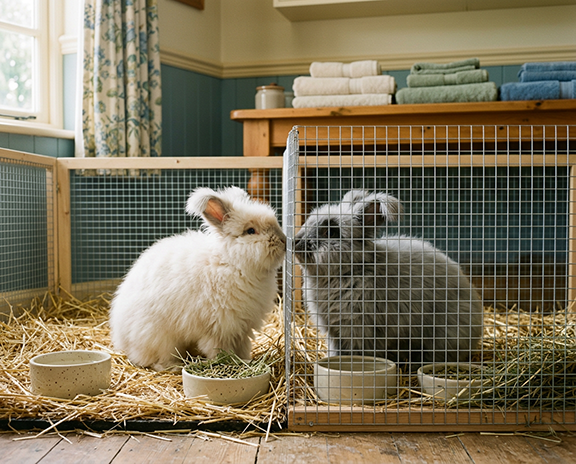
Start With the Hard Question: Should You Breed?
Do not breed Angora rabbits because people say baby rabbits are easy to sell. Do not breed because you bought a pair. Do not breed because one rabbit has a sweet personality and the other has pretty wool.
Breed only when you can answer these questions:
What trait am I trying to improve?
Do I have buyers or a use for the kits?
Can I house every kit if sales fall through?
Can I groom the adults and the growing juniors?
Can I separate young rabbits by sex on time?
Do I have a rabbit-savvy veterinarian?
Do I understand the risks to the doe?
Can I cull from the breeding program without pretending every rabbit should reproduce?
Small-space breeding needs discipline. A backyard breeder can sometimes absorb an extra grow-out pen. An apartment or small-home breeder cannot.
Do not breed Angora rabbits until you can groom, feed, house, and sell responsibly without the breeding income.
What Breeding Adds to a Tiny Fiber Farm
Breeding can add income in several ways:
Selling quality fiber rabbits.
Keeping replacement stock.
Improving wool type in your line.
Selling harvested fiber from more animals.
Offering education or demonstrations later.
Building a recognizable small rabbitry.
Breeding also adds expenses:
More cages or pens.
More feed.
Nest boxes.
Emergency supplies.
Extra grooming tools.
Extra cleaning time.
More recordkeeping.
Possible vet costs.
Lost sleep during kindling windows.
The income comes later. The responsibility arrives immediately.
Choose Breeding Stock for Fiber, Health, and Temperament
A breeding rabbit should earn its place.
For Angoras, evaluate:
Coat density.
Texture.
Matting tendency.
Ease of grooming.
Fiber yield.
Body condition.
Fertility history if known.
Temperament.
Heat tolerance.
Cleanliness.
Nursing ability in does from proven lines.
Structure and soundness.
Do not breed a rabbit that mats badly under good care. Do not breed a rabbit that panics during basic grooming. Do not breed a rabbit with chronic digestive issues, poor condition, weak body structure, or unclear background.
For small spaces, temperament matters more than people admit. A rabbit that fights grooming can wreck your schedule and teach kits nervous behavior through daily handling patterns.
A small-space rabbitry needs fewer rabbits, better records, cleaner housing, and stricter decisions.
Buck, Doe, or Outside Stud?
You do not have to own both sexes right away.
A tiny fiber farm may start with:
One excellent doe and an outside stud.
Two does and access to a proven buck.
One buck only if you have a clear plan for outside breedings.
A buck takes space year-round, even when you only need him for a few minutes at breeding time. He may spray, mark, or become harder to litter train when intact. The House Rabbit Society notes that unaltered rabbits are more likely to mark territory, which matters when breeding stock lives near people.
Outside stud service can reduce housing pressure, but it brings biosecurity concerns. Never casually move rabbits between homes without asking about health, quarantine, mites, respiratory symptoms, and sanitation.
Age and Condition Before Breeding
Do not breed a doe simply because she can become pregnant. Breed when she has reached appropriate maturity, carries good body condition, handles grooming well, and has enough reserve to raise a litter.
Larger Angora breeds mature later than small commercial breeds. Many breeders wait until a doe is physically mature and well grown before her first litter. A doe that still needs energy for growth should not also be asked to grow kits and produce wool.
Before breeding, check:
Weight.
Body condition.
Coat condition.
Nails.
Vent area.
Appetite.
Droppings.
Teeth if you know how, or through a vet exam.
Temperament during handling.
No mats around the belly or hindquarters.
Trim or manage the coat before kindling so kits can nurse easily and the nest stays clean.
The Rabbit Breeding Timeline
Rabbit gestation usually runs about 28–32 days, often around 30–31 days. Agricultural rabbit breeding guidance commonly places gestation in that range and recommends placing a nest box in the cage before kindling.
A simple checklist for building a small-space homestead rhythm
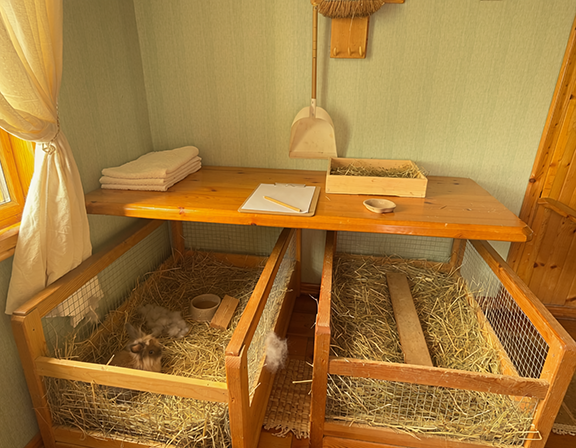
A practical small-space timeline:
Day 0: Breeding.
Day 10–14: Optional palpation by someone trained, or simply continue care and avoid stress.
Day 21: Prepare supplies and check housing.
Day 25–28: Add nest box, depending on your system and doe behavior.
Day 28–32: Kindling window.
Day 1 after birth: Quick nest check.
Days 1–14: Minimal disturbance, daily nest checks, steady feed and water.
Around day 10: Kits begin opening eyes.
Weeks 3–4: Kits become more active and start nibbling hay and feed.
Weeks 6–8: Many small breeders begin weaning depending on kit development, doe condition, and management style.
Weeks 8–12: Sex, separate, evaluate, and plan placements.
Research on rabbit reproduction notes that small farms often use natural mating, with weaning under extensive systems commonly occurring around 35–42 days or later depending on management.
Breeding fiber rabbits should improve the next generation, not simply produce more animals.
How to Breed Rabbits Safely
Always take the doe to the buck’s space, not the buck to the doe’s space. Does can become territorial. Supervise the breeding. Do not leave rabbits together unattended.
A successful breeding is usually quick. Many breeders allow one or two fall-offs, then return the doe to her own pen. Record the date immediately.
Write down:
Doe name.
Buck name.
Date.
Time.
Number of observed fall-offs.
Doe behavior.
Buck behavior.
Expected kindling date.
Nest box date.
Do not rely on memory. Rabbit breeding moves fast, and small-space breeders cannot afford surprise litters.
Housing a Pregnant Angora Doe
A pregnant Angora doe needs calm, cleanliness, and enough room for a nest box. She does not need fussing.
Set up her space so you can:
Refill water without disturbing the nest.
Feed heavily during late pregnancy and nursing.
Clean the toilet area without moving kits.
Check the nest quickly.
Keep hay from tangling in her coat.
Protect kits from drafts.
Keep the area quiet.
A doe with a litter drinks more water and eats more feed. Running out of water can create serious problems. Make water checks part of your morning and evening rhythm.
Nest Boxes in Small Spaces
A nest box should fit the doe and protect the kits. It should not take over the enclosure so badly that the doe cannot move.
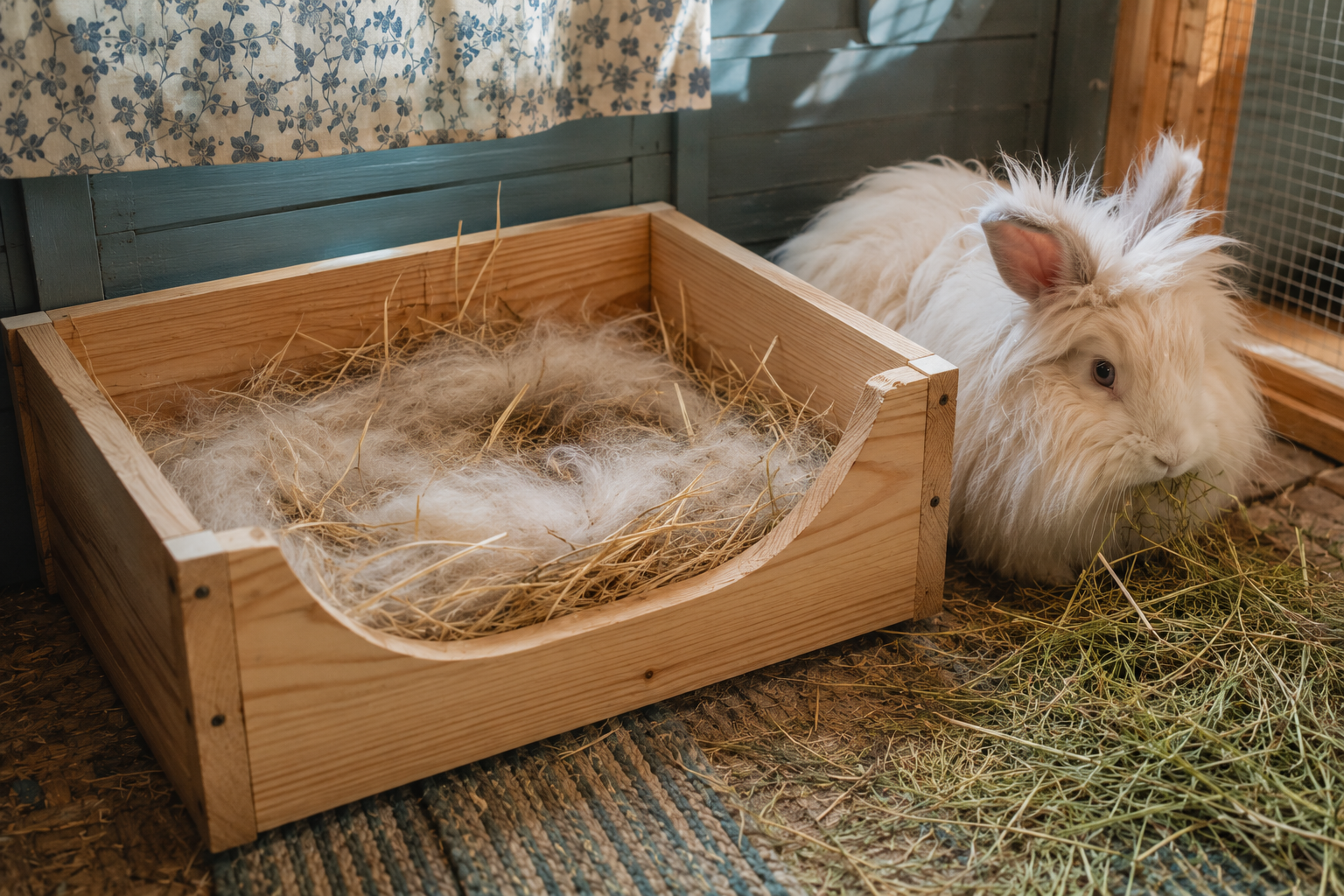
Use clean bedding. Many breeders use straw or hay, depending on availability and the doe’s habits. The doe will usually pull wool to line the nest shortly before kindling.
With Angoras, watch the nest material carefully. Wool is useful insulation, but long fiber can tangle around kits. Keep the nest warm, dry, and clean without letting it become a matted wad.
Do not over-handle the nest. Do check it.
A daily nest check should confirm:
Kits are warm.
Bellies look fed.
No dead kits remain in the box.
Bedding stays dry.
No kit has tangled fiber around a leg or neck.
The doe has food and water.
Kindling: What to Expect
Most does kindle quietly, often when the house is still. You may walk in and find a finished nest with kits tucked under pulled wool.
Do not panic if you do not see the doe sitting with them. Rabbit does usually nurse briefly, often once or twice a day, rather than lying with kits like a dog or cat.
Check the nest with clean, warm hands. Remove any dead kits. Count the litter. Cover the kits back up. Then leave the doe alone.
Call a rabbit-savvy vet or experienced mentor if:
The doe strains without kindling.
The doe seems weak or distressed.
Kits are scattered and cold.
The doe refuses feed.
You see blood beyond normal kindling mess.
The doe injures kits.
Your job is not to hover. Your job is to notice trouble early.
Feeding the Doe During Pregnancy and Nursing
A nursing doe needs excellent nutrition. She produces milk, maintains her body, and often grows wool at the same time.
Keep unlimited hay available. Increase pellets gradually according to her condition, litter size, and the feed guidance you use. Keep water full. Introduce no sudden new treats.
A rabbit’s digestive system does not appreciate dramatic changes. Rabbit.org emphasizes hay, greens, limited pellets, and limited treats for adult rabbits, and digestive changes should be managed carefully.
For a working Angora doe, the goal is steady condition. She should not become thin while raising kits. She should not sit on rich feed with no hay. Watch her body, not just the feed scoop.
Caring for Angora Kits
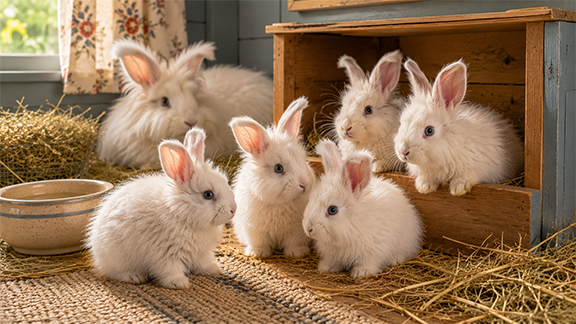
Angora kits look like ordinary kits at first. The fiber traits show as they grow.
Handle briefly and calmly once the litter is stable. Small daily contact helps kits become manageable adults. That matters because every future fiber rabbit must tolerate grooming.
The best breeding plan starts with the question nobody likes: where will every kit go?
At three to four weeks, kits begin exploring and nibbling. Keep hay clean and reachable. Make sure water access works for smaller bodies. Watch for messy bottoms, poor growth, or kits that lag behind.
As wool grows, begin tiny grooming sessions. Do not wait until they are junior fluff balls with mats. Teach the handling rhythm early:
Lift calmly.
Touch feet.
Check belly.
Run fingers through coat.
Brief comb introduction.
Set down safely.
Reward with calm, not chaos.
The best fiber rabbits are made partly through genetics and partly through early handling.
Weaning Without Creating a Mess
Weaning should match kit readiness, doe condition, and your housing capacity. Many small breeders wean between six and eight weeks, though systems vary. Research on rabbit farm reproduction discusses 35–42-day weaning under extensive systems, but Angora breeders often consider coat, growth, and management needs as well.
Do not wean into overcrowding. Before breeding ever happens, know where kits will go at weaning.
At weaning, track:
Kit weight.
Sex.
Coat notes.
Temperament.
Health.
Placement plan.
Keep changes limited. Do not separate, change feed, move rooms, and introduce new stress all on the same day if you can avoid it.
Sexing and Separating Kits
Small-space breeders must separate young rabbits before accidental breeding becomes possible. Learn to sex kits from an experienced breeder, veterinarian, or mentor. Check more than once. Mistakes happen.
Create a separation plan before kindling:
Doe grow-out pen.
Buck grow-out pen.
Hold-back pen.
Sale-ready space.
Quarantine space if a rabbit returns.
That sounds like a lot because breeding in a small space is a lot. If you cannot house the possible outcomes, skip the breeding.
Evaluating Kits for Fiber Quality
Do not choose keepers only by color.
Evaluate:
Coat density.
Texture.
Crimp or character.
Guard hair balance.
Matting tendency.
Growth rate.
Body type.
Temperament during grooming.
Cleanliness.
Health history.
A pretty kit with a difficult coat may not serve a tiny fiber farm. A less flashy kit with excellent wool and calm handling may become the better producer.
Track each kit from birth. By the time buyers ask questions, you should know more than “very sweet and fluffy.”
Selling Angora Rabbits Responsibly
Responsible sales protect the rabbits and your name.
A sales listing should include:
Breed.
Birth date.
Parents.
Color.
Fiber notes.
Grooming needs.
Temperament.
Housing expectations.
Diet.
Whether the rabbit is breeding quality, fiber quality, or pet quality.
Price.
Pickup requirements.
Support offered.
Do not sell Angoras to people who do not understand grooming. A neglected Angora can suffer quickly. Screen buyers kindly but firmly.
Ask:
Have you kept rabbits before?
Do you understand Angora grooming?
Do you have housing ready?
Do you plan to breed?
Do you have a rabbit-savvy vet?
What will you do if the coat mats?
A buyer who resents basic questions may not be a buyer you want.
Keeping Breeding Records
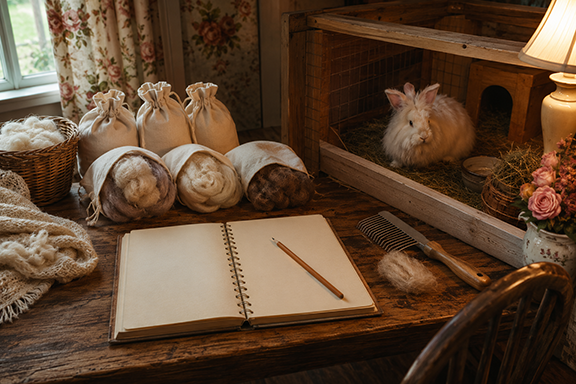
A small rabbitry needs good records from the first breeding.
Track:
Pedigree.
Breeding dates.
Kindling dates.
Litter size.
Stillborn kits.
Kit weights.
Weaning dates.
Health notes.
Fiber harvests.
Coat comments.
Temperament.
Sales.
Buyer contact.
Follow-up outcomes.
This recordkeeping helps you improve the line and avoid repeating poor pairings. It also helps you speak honestly about your rabbits.
Breeding for Income Without Overbreeding
The easiest way to lose money with rabbits is to produce more animals than your market can absorb.
Before breeding, know your likely buyers:
Handspinners.
Small homesteaders.
4-H or youth exhibitors.
Pet homes prepared for grooming.
Other Angora breeders.
Fiber artists.
Local farm education programs.
Do not assume “everyone loves rabbits” equals sales. Many people love looking at rabbits. Fewer want the daily work of Angora care.
A small-space breeding program may only need a few litters a year. Scarcity can be better than surplus. Well-raised rabbits from a careful breeder can command more trust than constant litters with unclear goals.
Biosecurity for the Tiny Rabbitry
Small spaces spread problems quickly. One mite issue, respiratory infection, or messy quarantine decision can affect every rabbit you own.
Use simple biosecurity:
Quarantine new rabbits.
Do not share grooming tools without cleaning.
Wash hands between outside rabbits and your own.
Avoid rabbit playdates.
Ask health questions before stud service.
Keep visitors away from kits unless necessary.
Clean carriers after transport.
Watch for sneezing, crusty noses, head tilt, poor appetite, diarrhea, and sudden behavior changes.
A tiny rabbitry has no room for casual disease management.
When Not to Breed
Do not breed when:
You are already behind on grooming.
Your housing is crowded.
You cannot afford emergency care.
The doe is underweight or overweight.
The rabbit has a poor temperament.
You have no buyer plan.
You are moving soon.
Summer heat will hit during late pregnancy or early kits.
You cannot separate grow-outs.
You want babies more than you want responsibility.
This is not negativity. This is good husbandry.
A Practical First-Year Breeding Plan
For a small-space Angora setup, a conservative first-year plan works best.
Months 1–6: Keep one or two Angoras. Learn grooming, feeding, harvest, and fiber storage.
Months 6–9: Track wool yield and temperament. Build local fiber connections. Study pedigrees and breeding goals.
Months 9–12: Choose whether breeding still makes sense. Secure housing and buyers first.
Year 2: Breed one carefully chosen doe once. Keep records. Evaluate the litter honestly.
That pace may feel slow, but it prevents the most common disaster: too many rabbits before enough skill.
The Bottom Line on Breeding Angora Rabbits in a Small Space
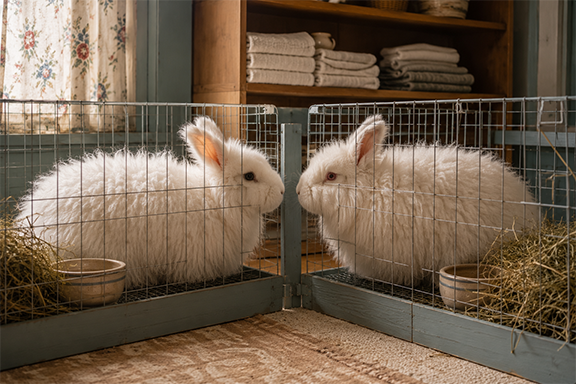
Breeding Angora rabbits in a small space can support a tiny fiber farm, but only when the breeding program stays smaller than your capacity.
Start with care. Build records. Choose breeding stock carefully. Plan every kit’s future before breeding. Keep the doe healthy. Handle kits early. Sell honestly.
A small-space rabbitry should not try to look big. It should be clean, deliberate, and easy to manage well.
That is how breeding becomes part of a homestead business instead of a pileup of cages, coats, and regret.
Fiber Rabbits: Keeping Livestock in your home You Don’t Have to Kill

