
Tiny Homestead Habit: The Kitchen Rhythm Sheet
Some days the kitchen runs you. Other days, you run the kitchen. The difference is rarely skill—it’s rhythm.
A kitchen rhythm sheet is a simple daily routine that organizes your kitchen into three parts—morning reset, midday maintenance, and evening close—so dishes, meals, and mess stay under control without overwhelm.
When the Kitchen Feels Out of Control
Sometimes, if you want an orderly kitchen, you feel chained there. Dishes stack, meals feel reactive, and the space never quite resets. Other days, the same kitchen feels manageable, even calm.
The difference is not skill. It is rhythm.
A kitchen rhythm sheet gives your day structure without turning it into a rigid schedule. It replaces reacting with repeating. Instead of deciding what to do next every time you walk into the kitchen, your hands already know.
What a Kitchen Rhythm Sheet Is
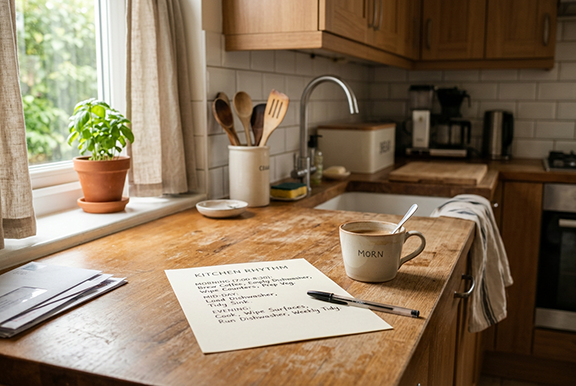
A simple morning check-in keeps your day in order.
A kitchen rhythm sheet is a simple guide that divides your kitchen work into three anchor points across the day: morning, midday, and evening. It is not a checklist you complete perfectly. It is a pattern you return to.
The goal is predictability. When tasks happen at consistent times, the kitchen stays in motion without building into overwhelm.
“A kitchen rhythm sheet turns scattered effort into steady movement.”
“When the pattern is clear, the kitchen stops demanding your attention all day long.”
How to Use a Kitchen Rhythm Sheet
You do not need a complicated system. You need three clear moments in your day where the kitchen resets and stays functional.
Morning Reset
The morning reset establishes your starting point. Clear the sink, run or empty the dishwasher if needed, wipe down surfaces, and take a quick look at meals for the day. This is not deep cleaning. It is setting the kitchen back to ready so the rest of the day has a stable foundation.
Midday Maintenance
Midday is where you prevent buildup. Put items back instead of letting them collect. Rinse dishes instead of stacking them. Handle small messes while they are still small. A few minutes here keeps the kitchen from tipping into disorder later.

Kaisen says “do it now,” and the Kitchen Rhythm says “you’ll be glad you did.”
Evening Close
The evening close matters most. Clear the sink, wipe counters, and reset the space before you stop for the day. Think through tomorrow’s meals or set out anything you will need in the morning. Walking into a ready kitchen the next day removes friction before the day even begins.
Simple Kitchen Rhythm Example
Morning
Clear sink
Start or empty dishwasher
Wipe counters
Check meals
Midday
Put items away
Rinse dishes
Wipe small messes
Evening
Clear sink
Wipe counters
Reset for morning
This is not about doing more. It is about doing small things at the right time.
Why This Habit Works
The kitchen does not become overwhelming all at once. It builds slowly through delayed decisions and postponed tasks. A rhythm sheet removes those decisions by placing tasks in predictable points throughout the day.
It also reduces mental load. When you are not constantly asking what needs to be done next, you free up attention for more important things—conversation, creativity, and rest.
This habit pairs naturally with a Tiny Homestead Habit: Keep a “Working Bowl” on the Counter and a simmer pot habit, both of which keep the kitchen active without adding complexity. Together, these small systems create a kitchen that runs steadily instead of reactively.
How to Start (Without Overbuilding It)
Start with the three anchors only: morning, midday, evening. Write down two or three tasks for each. Follow it loosely for a week.
Adjust what does not fit your household. Remove anything you avoid. Add only what you will actually repeat. The system should support your life, not control it.
FAQ
What should be on a kitchen rhythm sheet?
A kitchen rhythm sheet should include a few essential tasks for morning reset, midday maintenance, and evening close. Focus on dishes, surfaces, and meal awareness.
Is a kitchen rhythm the same as a cleaning schedule?
No. A rhythm focuses on daily flow and preventing mess, while a cleaning schedule focuses on deeper, less frequent tasks.
How long does a kitchen rhythm take each day?
Most tasks take only a few minutes each. The goal is consistency, not long cleaning sessions.
What if I miss part of the rhythm?
Start again at the next anchor point. The system works because it repeats, not because it is done perfectly.
Does this work for small kitchens?
Yes. In small kitchens, rhythm matters even more because clutter builds faster.
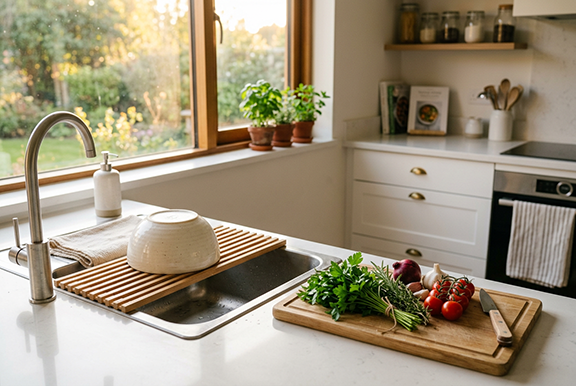
Beautifully clean and ordered for the next meal!
Final Thought
A kitchen does not stay manageable by accident. It stays manageable because small actions happen at the right times.
A kitchen rhythm sheet gives those actions a place to live.
Follow it for a week. Adjust it until it fits. Then stop thinking about it and let it carry the work.
Continue the Tiny Homestead Habits Series
If this kind of rhythm works for you, you can explore more here:
Tiny Homestead Habit: Keep a Working Bowl
