
Tiny Homestead Rhythms: How I Finished My Week Before Shabbat
I want to tell you a story.
When we lived in Russia, I hired a woman to clean my house. For two weeks, I showed her exactly what needed to be done. I explained it clearly, reminded her often, and gave her every opportunity to succeed. Nothing changed. The work was not getting done.
So I let her go.
When I told her I no longer needed her, she said, “Oh, Suzi. Don’t fire me. I’ll do what you asked.”
That told me everything I needed to know. She already knew what I wanted. She knew how to do it. She had all the instructions. She just was not following them.
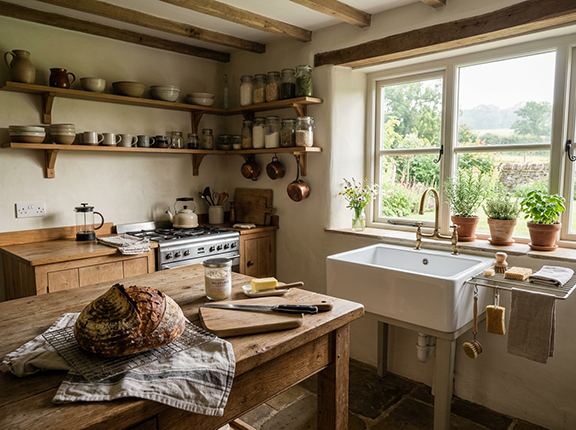
That is exactly how many of us run our homes. We know what needs to be done, we know how to do it, and we have systems and routines in place. But the work still piles up, and by the end of the week everything lands on one day. For me, that day has usually been Shabbat preparation day.
This week was different.
I followed my Tiny Homestead Rhythms system the way it was meant to be followed. I did not work harder or add more hours. I simply followed the rhythm instead of ignoring it and hoping things would come together at the end.
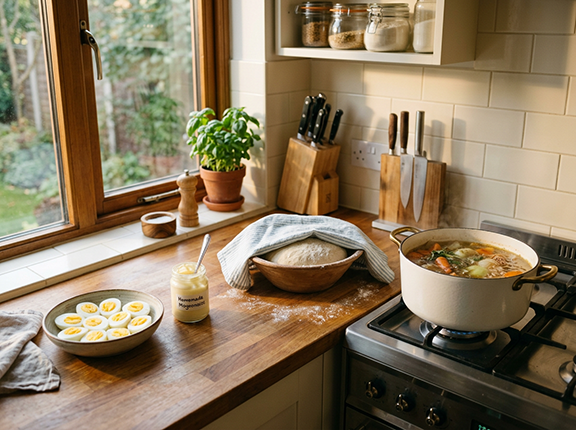
By Thursday, I was ahead. The laundry was done, the floor was cleaned, and the refrigerator was reset. Sourdough bread was baked, mayonnaise was made, eggs were boiled and peeled, and cream had been skimmed. Later that day, I made pita and chicken broth. Tomorrow, my normal Shabbat preparation day, will be light.
That is a success story if ever there was one.
What Is Tiny Homestead Rhythms?
Tiny Homestead Rhythms is a weekly homemaking system that spreads cooking, cleaning, laundry, food prep, and Shabbat preparation across the week so nothing piles up on one day. Instead of trying to rescue the house at the end of the week, you move through small, repeatable tasks day by day and arrive at Shabbat with most of the work already done.
“Tiny Homestead Rhythms spreads the work of the home across the week so nothing piles up on one day.”
If you have ever searched for how to prepare for Shabbat without stress, how to create a weekly homemaking routine that works, or how to stay caught up on cooking, cleaning, and laundry, this is the structure that answers those questions.
How to Prepare for Shabbat Without Stress
The usual problem is not ignorance. Most of us already know the jobs that need to be done. The problem is timing. Too much is left for Friday, and Friday carries the full weight of the house. Cooking, cleaning, straightening, and final preparation all compete for the same limited time.
Tiny Homestead Rhythms changes that by moving the work earlier in the week. The early days establish the foundation, midweek resets anything that is drifting, and preparation day becomes a finishing point instead of a rescue mission. By the time Shabbat arrives, most of the work is already complete.
“Shape the flow of the week, not control every hour.”
A Simple Weekly Homemaking Routine That Actually Works
Most homemaking systems fail because they rely on large bursts of effort. They assume you will eventually have the time and energy to handle everything at once. That approach works briefly and then collapses.
A simple weekly homemaking routine works differently. It keeps the kitchen moving daily, breaks food preparation into smaller steps, keeps laundry in motion, and assigns cleaning in ways that prevent buildup. Nothing is left long enough to become overwhelming, which means you are no longer catching up. You are maintaining.
What Is Included in Tiny Homestead Rhythms?
Tiny Homestead Rhythms is built around six core rhythms that work together across the week. The Kitchen Rhythm keeps dishes, food prep, and daily reset under control. The Cleaning Rhythm touches the home consistently to prevent buildup. The Food Rhythm structures baking, preparation, simple meals, and restocking. The Laundry Rhythm keeps loads small and finishable. The Garden Rhythm supports steady care in small spaces. The Shabbat Rhythm shifts preparation earlier so Friday remains light.
Each rhythm is simple on its own, but together they create a complete weekly flow.
How to Stay Caught Up on Cooking, Cleaning, and Laundry
This week proved something clearly. Staying caught up is not mainly about effort. It is about timing.
When the kitchen is reset daily, there is no backlog. When food is prepped in small steps, meals come together more easily. When laundry is handled consistently, it never becomes overwhelming. When cleaning is done in small passes, the home stays livable without requiring a full-day reset.
Small tasks done on time are lighter than large tasks done late. That is obvious, but living like it requires structure. This system provides that structure.
Why the Kitchen Rhythm Matters First
If you only fix one area, fix the kitchen. That is where everything backs up first.
When the kitchen is behind, meals become harder, dishes pile up, and the sense of disorder spreads into the rest of the house. When the kitchen is functioning, the home becomes manageable again. That is why the Kitchen Sheet is available as a free download. It gives you a clear place to begin without requiring you to adopt the entire system at once.
The Unexpected Result: Margin
One of the most unexpected outcomes this week had nothing to do with housework. I walked every day. That became possible because the mental load was lower. I even had time to make candles with my granddaughter.
When the home is not constantly behind, the mind is not constantly behind either. That creates space for things that usually get pushed aside.
“A well-structured rhythm does more than manage a home. It creates margin.”
Shabbat Feels Different When the Work Is Already Done

This system is not about productivity. It is about how you enter Shabbat.
When preparation is delayed until the last moment, Shabbat begins under pressure. When the work has already been carried through the week, Shabbat is entered with clarity and peace.
“When the work is already done, Shabbat becomes rest instead of recovery.”
If You Want the Full Tiny Homestead Rhythms System
The Kitchen Sheet is the starting point, but the full Tiny Homestead Rhythms system provides a complete weekly structure. It integrates kitchen work, cleaning, food preparation, laundry, garden care, and Shabbat preparation into a single, repeatable flow designed for real homes and real schedules.
One Week Was Enough to Prove the Point
This was only one week, but it was enough to prove the point. The difference did not come from increased effort or motivation. It came from following a simple structure consistently. When that structure is easy to repeat, it continues working week after week.
Continue the Tiny Homestead Habits Series
If this kind of rhythm works for you, you can explore more here:
Tiny Homestead Habit: Kitchen Rhythm Sheet
Tiny Homestead Habit: Keep a Simmer Pot
Tiny Homestead Habit: Clear One Surface
Rest Is a Homestead Skill: Why Systems That Never Pause Eventually Fail
