Homestead Technology: How Modern Homesteads Are Using Tech Without Losing Practical Skills
Homestead technology sounds like a contradiction until the pipes freeze, the greenhouse overheats, the power flickers, or the garden dries out while life keeps moving. Most homesteads do not need more gadgets. They need better timing, fewer surprises, and tools that help people notice what matters before a small problem turns expensive.
The old work still matters. You still need to know how dough feels under your hands, how soil feels when it needs water, how a pantry should rotate, how much heat a brooder needs, and what a healthy chicken looks like before something goes wrong.Technology should not replace that knowledge. It should support it.
Good homestead technology does not replace skill. It protects attention, reduces waste, and helps you act sooner.

What Homestead Technology Actually Means
Homestead technology is not about turning a homeplace into a sterile smart house. It means using simple tools to watch the systems that already matter: water, food, energy, temperature, animals, and household rhythm.
That might look like a soil moisture sensor in a garden bed, a freezer alarm, a solar battery monitor, a weather station, a programmable irrigation timer, a camera on a kidding stall, or a spreadsheet that tracks pantry staples. None of those tools make a person self-sufficient by themselves. They only help when they serve real work.
The useful question is not, “What can I automate?” The useful question is, “Where do I keep losing time, money, food, water, or attention?”
That is where technology belongs.
Why This Matters to Me
I built a GPT (grab it, it’s free) to help people run their homesteads because I know how much time gets lost between the question and the answer. Homesteading is full of traditional skills: baking bread, raising chickens for meat or eggs, preparing an animal for an FFA competition, planning a garden, preserving food, troubleshooting a sick plant, or figuring out what to do next when a project stalls.
Those skills still matter. They are the work. Technology should not flatten them into shortcuts or replace the learning that makes a person capable. But a good tool can take the guesswork and long hours of research out of the equation so people can spend more time doing the work itself.
That is where I see technology fitting into modern homesteading. Not as a replacement for hands-on knowledge, but as a steady helper that can point someone toward the next right step. If a person wants to bake their first loaf of bread, raise broilers well, keep laying hens healthy, or prepare livestock for a show ring, they should not have to dig through twenty conflicting answers before they can begin.
A well-built homestead tool should preserve the old skills while making them easier to access, practice, and pass on.
The best tech on a homestead gives clear information at the right time, then gets out of the way.
1. Smart Watering Without Guesswork
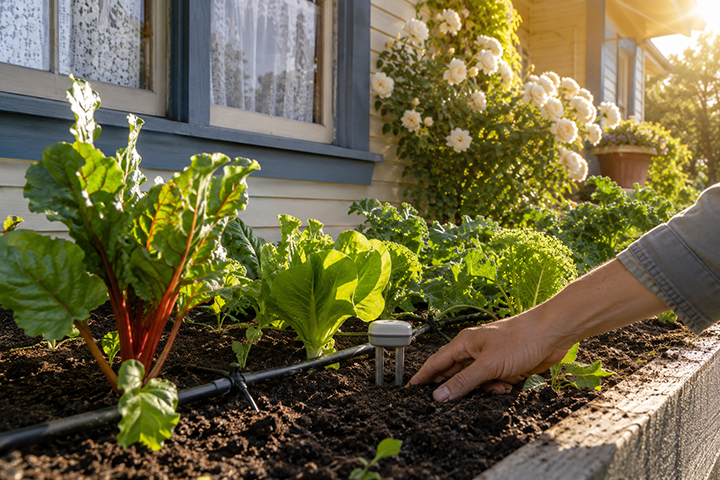
Water management may be the clearest place where homesteads can use tech well. Gardens, orchards, container plants, greenhouses, and pasture edges all need water at the right time, not just on a fixed schedule.
Smart irrigation tools use information like soil moisture, weather, and plant need instead of running water because a timer says so. Oklahoma State Extension notes that smart irrigation controllers and sensors can reduce outdoor water use by watering based on plant need instead of a fixed schedule.
For a small homestead, this does not have to mean a complicated system. It could be as simple as:
A soil moisture meter used before watering raised beds
A drip line on a timer for the hottest months
A rain sensor that prevents unnecessary watering
A greenhouse thermometer that reminds you when to vent or shade
The point is not to stop observing the garden. The point is to stop wasting water because you were busy, tired, or guessing.
For small farms, USDA’s precision agriculture materials describe site-specific crop management as using technology to respond to differences in soil, moisture, nutrients, weeds, and growth conditions instead of treating every area as if it were the same. A homestead can use that same principle at a smaller scale: the tomato bed may need water while the shaded herb bed does not.
2. Sensors That Catch Problems Early
The most useful homestead tech often does one humble thing: it warns you early.
A freezer alarm tells you when stored meat or berries are at risk. A temperature monitor in a seed-starting area tells you why germination failed. A humidity sensor in a basement pantry can catch damp conditions before food storage suffers. A greenhouse thermometer can keep seedlings from baking under spring sun.
This kind of technology works because it protects work already done. A freezer full of food represents planting, feeding, harvesting, butchering, cooking, or preserving. Losing it because no one noticed a power issue is not old-fashioned resilience. It is preventable waste.
Smart sensor technology has become a major part of precision farming because it can provide information about soil conditions, plant growth, and environmental factors. USDA’s NIFA describes precision agriculture as collecting high-resolution data, analyzing it, and using it to make more precise decisions about timing or location.
On a homestead, that might simply mean putting a low-cost thermometer where your hand does not reach often enough.
3. Energy Monitoring for Solar, Backup Power, and Daily Use
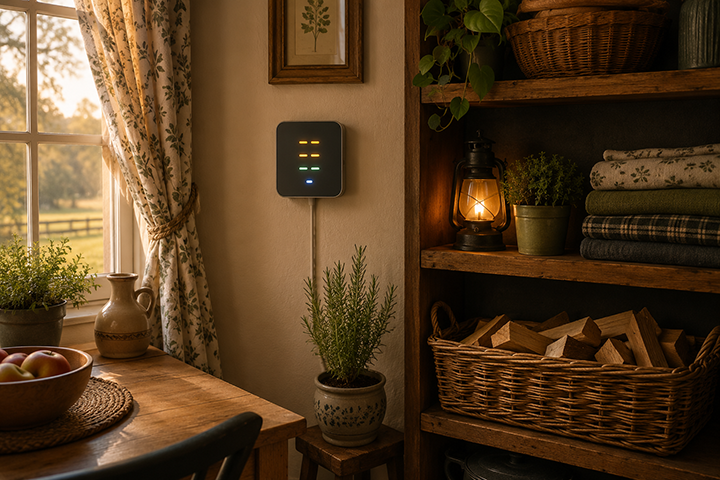
Many homesteads now use some mix of grid power, solar panels, battery backup, generators, wood heat, or propane. Technology can help make those systems less mysterious.
A basic energy monitor can show which appliances use the most power. A solar inverter app can show when batteries charge, when the house draws from the grid, and when energy use spikes. A smart plug can measure how much power a freezer, incubator, dehydrator, or brooder lamp actually uses.
This matters because homestead energy is rarely abstract. Power runs freezers, pumps, heat lamps, well systems, refrigerators, internet routers, medical devices, and lights. Knowing your real usage helps you decide what needs backup first.
Home battery systems have also become more app-integrated, giving households more control over stored power and automated operating modes. That does not mean every homestead needs a full battery wall. It means energy planning can become more specific than “hope the generator starts.”
Start with essentials:
What must keep running during an outage?
What can stay off for twelve hours?
How long can your freezer hold temperature unopened?
Which loads quietly drain power every day?
A homestead does not need flashy energy tech. It needs honest numbers.
4. Food Storage and Pantry Tracking
Technology can help with food storage, but the best version stays simple. A complicated pantry app that no one updates will fail. A shared note, printed inventory sheet, freezer list, or phone reminder can work better.
The goal is rotation. Food should move through the household before it expires, freezer-burns, molds, or gets forgotten behind newer food. Choose a simple weekly pantry habit and start with that.
A small-space homestead especially benefits from low-friction food tracking because extra storage is limited. The habit needs to remove friction, not add another system.
Useful options include:
A freezer inventory taped near the freezer
A phone note titled “Use First”
A monthly reminder to check dry goods
A simple spreadsheet for bulk staples
A label maker or masking tape and marker for dates
The technology can be plain. The habit matters more than the tool.
5. Cameras and Remote Checks for Animals
Not every homestead has livestock, but for those that do, cameras and remote sensors can reduce unnecessary trips and catch trouble sooner.
A camera in a barn, brooder, coop, kidding stall, or lambing pen can help you check behavior without disturbing animals. It can also help during weather events, predator pressure, or late-night birthing seasons.
This is where balance matters. A camera should not replace walking the fence line, handling animals, checking feed, cleaning bedding, or noticing small changes. It should help you decide when to go out now instead of later.
The best use is practical:
Watch a broody hen without opening the coop repeatedly
Check whether heat lamps are still on
See if an animal is restless before labor
Confirm waterers have not tipped
Check predator activity after dark
Technology should sharpen your response, not make you detached from the animals.
6. Weather Stations and Local Conditions
Weather apps help, but homesteads often have microclimates. The north side of the house may frost before the front yard. A greenhouse may run twenty degrees hotter than the outside air. A low garden bed may hold moisture while containers dry out by noon.
A simple home weather station or thermometer setup can give better local information. That helps with planting, frost protection, ventilation, watering, and harvest timing.
This is especially useful for small homesteads, apartment balconies, and backyard gardens. You do not need acreage to have different growing conditions. A sunny wall, windy balcony, shaded side yard, or enclosed porch can change plant care completely.
Technology helps when it answers a real question:
Did the greenhouse drop below freezing last night?
How hot did the seed shelf get in the afternoon?
Does this porch stay warm enough for starts?
Does the garden actually need water today?
Good information prevents both neglect and overcorrection.
7. Digital Planning Without Letting the Screen Run the Homestead
Some homestead tech lives on a phone or computer: calendars, notes, checklists, budgeting tools, garden maps, hatch records, seed starting schedules, food preservation logs, and household routines.
These tools can help if they stay close to the work. A garden map that tracks where tomatoes grew last year can prevent rotation mistakes. A preservation log can show how many quarts of applesauce your household actually eats. A shared calendar can keep animal care, planting dates, Sabbath preparation, and market days from colliding.
But digital planning can also become a way to avoid the actual work. The test is simple: does the tool make the next action clearer?
If not, simplify it.
A homestead planner should answer questions like:
What needs doing today?
What food needs using first?
What did we plant, harvest, preserve, or lose?
What should we not repeat next year?
What needs buying, repairing, or preparing before the season turns?
That is enough.
Where Technology Can Go Wrong
Technology fails when it adds fragility. A system that needs constant updates, subscriptions, replacement parts, cloud access, perfect internet, and daily troubleshooting may not belong at the center of a homestead.
Precision agriculture research and adoption discussions often name cost, uncertain return, and complexity as barriers. That applies on a home scale too. A tool can be impressive and still not be worth the money, attention, or maintenance.
Before adding tech, ask:
What specific problem does this solve?
What happens when it breaks?
Can I still do the work manually?
Does it save time after setup, or only promise to?
Does it require a subscription?
Will I actually check the data?
Does it make the household more resilient or more dependent?
A homestead should not become helpless without Wi-Fi.
A Better Rule: Automate the Reminder, Not the Responsibility
The best homestead technology usually handles reminders, measurements, and alerts. It does not take moral responsibility for the household.
A smart homestead is not the one with the most devices. It is the one where tools serve food, water, shelter, and rhythm.
Let a sensor remind you the greenhouse is too hot. You still decide how to vent it.
Let an energy monitor show the freezer’s power draw. You still decide what needs backup.
Let a calendar remind you to rotate pantry goods. You still cook the food.
Let a camera show movement near the coop. You still go outside and check the animals.
That approach keeps skill in human hands while reducing preventable loss.
How to Start Without Buying a Pile of Gadgets
Do not start with a shopping list. Start with one repeated problem.
If the garden keeps drying out, start with water. If food keeps getting lost, start with pantry tracking. If outages threaten food storage, start with energy monitoring. If seedlings fail, start with temperature. If chores slip, start with a shared checklist.
Start with one simple homestead system. Pick one system and make it easier to notice.
For many households, the first useful tech upgrade is not expensive. It might be:
A freezer thermometer with an alarm
A soil moisture meter
A phone reminder for pantry rotation
A plug-in power meter
A greenhouse thermometer
A shared household checklist
A simple weather station
Use it for one season. If it helps, keep it. If it nags without improving anything, remove it.
Technology belongs on the homestead when it makes the work more faithful, not more fragile.
The Homestead Is Still the Point
Modern homesteads are using technology because the work is real and time is limited. Water costs money. Food takes labor. Power outages matter. Animals need care. Gardens do not pause because the week got crowded.
The right tools help a household respond sooner, waste less, and build steadier rhythms. The wrong tools create another layer of noise.
A good homestead remains hands-on. It still depends on attention, judgment, repair skills, seasonal knowledge, and daily faithfulness. Technology earns its place only when it serves those things. Keeping the best rhythms is paramount.
The goal is not a smart homestead. The goal is a well-tended one.
That is why I believe the best homestead technology should keep traditional skills within reach. It should help someone bake the bread, raise the chickens, prepare the animal, plant the garden, preserve the harvest, and ask better questions along the way.
Technology belongs on the homestead when it makes the work more possible, not when it replaces the work. It should shorten the distance between uncertainty and action so more people can build capable, grounded, useful homes.
This is posted on The Homestead Blog Hop along with so much more from other homesteaders!