Growing Mushrooms Indoors: Working With Conditions, Not Control
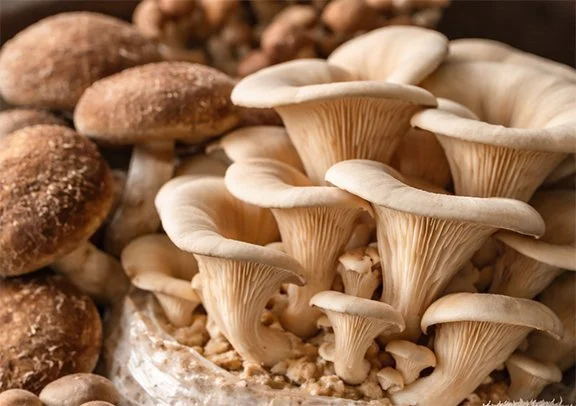
Growing mushrooms indoors appeals to many small-home homesteaders because it promises food production without land. No garden beds, no animals, no outdoor infrastructure. Just a quiet corner and patience.
What most people don’t realize at first is that mushrooms don’t respond well to control. They respond to conditions. Once you understand that difference, indoor mushroom growing becomes far more successful—and far less frustrating.
What growing mushrooms indoors is actually good for
Indoor mushroom growing works best as a supplemental food system, not a primary one. Mushrooms provide fresh food in small quantities, teach careful observation, and fit well into homes where space and energy are limited.
They are especially well suited to small homes because they require little light, minimal space, and no daily intervention. They reward consistency and restraint rather than effort and optimization.
The conditions mushrooms need
Mushrooms care far more about environment than technique. They do not need soil or sunlight, but they do need stable conditions. Most beginner-friendly indoor mushrooms, especially oyster mushrooms, prefer temperatures between 55–70°F, steady humidity, gentle airflow, and low, indirect light. A north-facing window, a well-lit room, or even ambient artificial light is enough.
What matters most is consistency. Sudden changes in temperature, drying air, or frequent handling disrupt growth far more than imperfect conditions. When the environment stays calm and predictable, mushrooms grow without intervention. When it does not, no amount of checking or adjusting will force success.Why control usually backfires
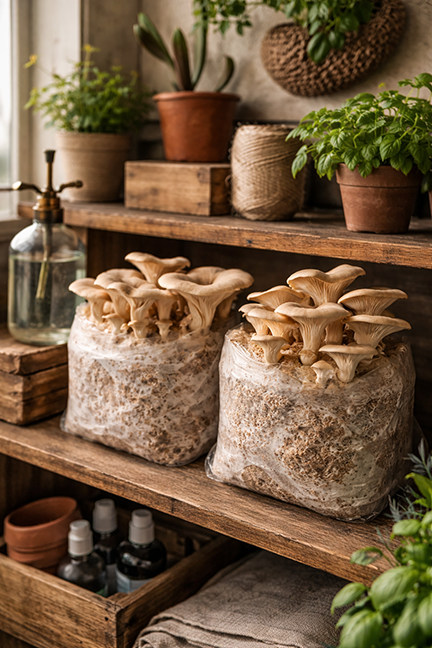
Many new growers struggle because they treat mushrooms like plants. They water too often, adjust constantly, or attempt to “fix” slow growth. Mushrooms interpret this as disturbance.
Over-handling, fluctuating conditions, and frequent changes often lead to stalled growth or contamination. Successful indoor mushroom growing looks surprisingly quiet. Once conditions are set, the best action is often no action at all.
Kits versus DIY for small homes
For most small-home homesteaders, mushroom kits are the better place to start. They remove variables, reduce the risk of contamination, and make it easier to learn how mushrooms respond to their environment.
DIY setups require more space, more monitoring, and a tolerance for trial and error. They can be rewarding, but they are rarely the best first step indoors. In a small home, simplicity protects both your space and your motivation.
Where to Buy Mushroom Kits
The following links are provided for your convenience only. I do not receive compensation or commissions from these companies, and they are not affiliated with this site. In fact, they don’t know I’m linking them.
There are many sources for mushroom growing kits, and these are simply a few starting points. I have not personally purchased from these companies, and I am not responsible for your purchasing decisions.
North Spore Back to the Roots Far West Fungi Field and Forest Products Mushroom Adventures
When growing mushrooms indoors is not worth it
Indoor mushroom growing may not be a good fit if you expect high yields, fast results, or total predictability. It may also be frustrating if you prefer systems that respond immediately to effort or intervention.
Mushrooms grow on their own schedule. They cannot be rushed, corrected, or optimized without consequence. If that feels stressful rather than grounding, another indoor food system may suit you better.
Why mushrooms belong in small-home homesteading
Mushrooms fit naturally into a homestead built around restraint and stewardship. They use little space, make use of existing indoor conditions, and do not demand constant attention.
Like worms or other quiet systems, mushrooms teach you to notice rather than manage, to provide rather than force. In a small home, that posture often matters more than output.