
Start Where You Are: A Realistic Guide to Small-Space Gardening
“This post is the first in a weekly series about growing food in places that don’t look like “ideal” gardens. It’s for small-space gardeners, container growers, and anyone working with limited sun, awkward layouts, or less-than-perfect conditions—and who is tired of advice that assumes otherwise. Each week, this series will build step by step, moving from honest assessment to practical strategy: learning how to read your space, choosing crops that actually make sense for it, and redefining what success looks like when you garden where you truly live. The goal is not abundance for its own sake, but confidence, competence, and steady progress—from I wish I could to I bet I can, with a little know-how.”
Start Where You Are (Not Where You Wish You Were)
It’s mid-winter. The garden is dormant. The containers are empty or resting under old mulch. And if you’re anything like me, this is the season when the questions creep in.
Why didn’t that work last year? Am I just bad at this? Is my space too small, too shady, too cold, too wrong?
If you are trying to grow food in a small space—especially one that doesn’t match the glossy garden advice online—this post is for you.
Before we talk about what to plant, when to plant, or how to plant, we have to start with something far more important:
Honesty.
Not discouraging honesty. Grounding honesty.
Most gardening advice assumes a specific kind of place. South-facing. Open sky. Six to eight hours of sun. In-ground soil. Good airflow. Long, warm summers.
That is not where many of us live.
Some of us garden on patios, balconies, or narrow strips of gravel next to a building. Some of us garden in containers because we have no choice. Some of us garden on the north side of a house where the sun shows up briefly—if at all.
That does not make you a failed gardener. It makes you a site-specific gardener.
Every successful garden begins with an honest reading of its conditions. Not the conditions you wish you had. The conditions you actually have.
In my case, that looks like this:
• A very small footprint •
Containers and two raised planters
• North-facing exposure
• Short direct sun hours
• No winter sun at all
• Zone 6B winters
• Gravel ground that reflects heat but not moisture
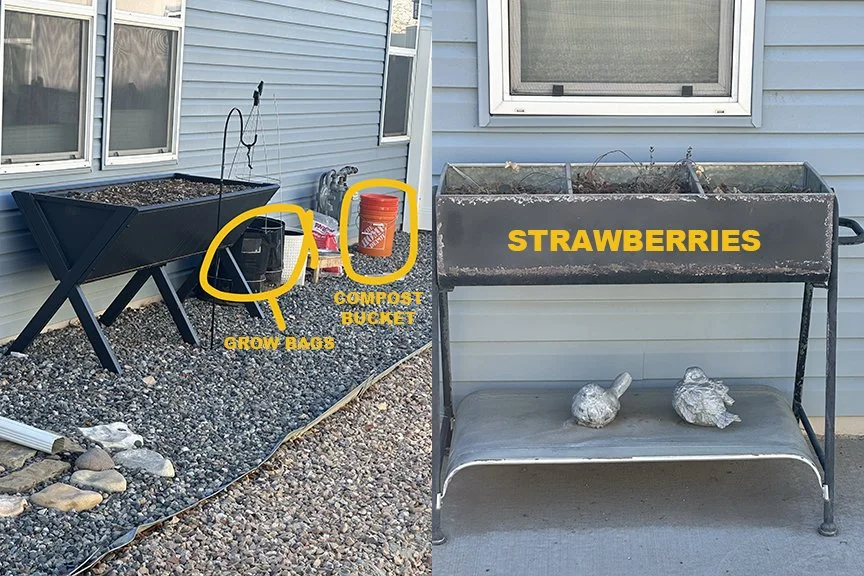
On the left: 1 raised garden bed, 2 grow bags (and my homemade compost bucket); on the right: a divided raised bed where my strawberries live.
None of those things are “ideal.” All of them are real.
The mistake I made early on—and the mistake I see many new small-space gardeners make—is trying to grow plants that require ideal conditions in a space that simply cannot provide them.
When that happens, the problem isn’t effort or care. It’s mismatch.
Plants are not inspired by optimism. They respond to light, temperature, soil, and timing. If those needs aren’t met, no amount of enthusiasm will compensate.
This is where many people quietly give up.
They try tomatoes that never thrive. They start seeds that never really take off. They water faithfully, fertilize carefully, and still end the season discouraged.
But there is another way to garden.
Instead of asking, “What do I want to grow?” the better question is:
“What can this space reliably support?”
That question changes everything.
It shifts the goal from abundance to consistency. From imitation to observation. From disappointment to competence.
This series is not about conquering limitations. It is about learning to work wisely within them.
If you garden in a small space, a shady space, or a space that doesn’t fit the standard advice, you are not alone. You are also not doomed.
You simply need a different starting point.
To help you get started with small-space and low-sun gardening, I’ve created two practical downloads you can use together. The North-Side Garden Crop Chart shows which plants are most likely to succeed in shaded or limited-sun spaces—and which ones usually aren’t worth the effort. The “Should I Even Try This Plant?” decision tree walks you through a few quick questions about sun exposure, containers, and expectations before you buy seeds or starts. Use the chart to narrow your choices, then use the decision tree to double-check each plant. Together, they’re designed to help you garden with confidence, even in less-than-ideal conditions.
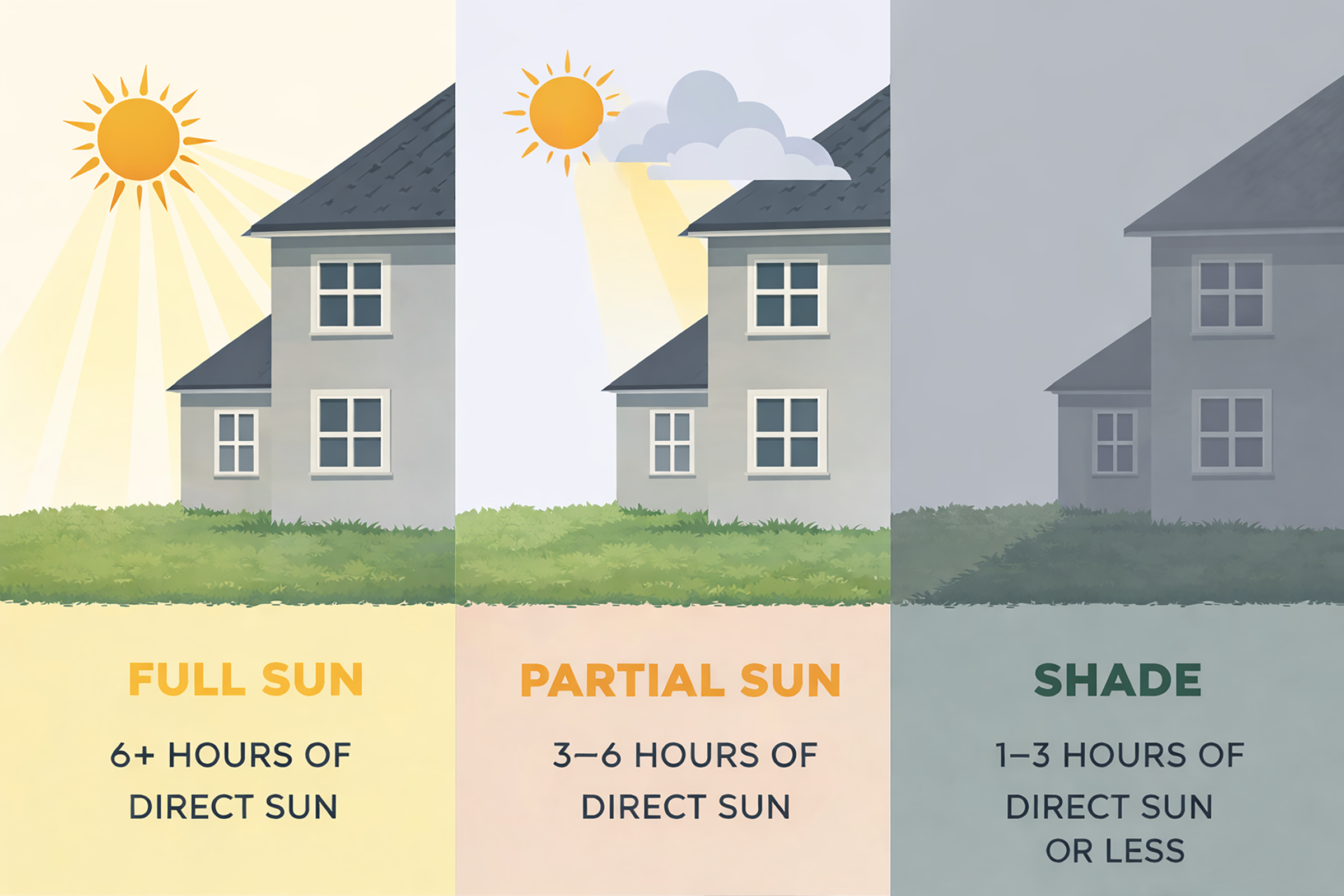
In the next post, we’ll talk about how to read light honestly—how to understand what your space is actually offering over the course of a year, not what you hope it might offer.
Because once you see your space clearly, everything else becomes easier.
Check back next week!
Featured on the Homestead Blog Hop
