
What Keeping Sabbath Looks Like in Real Life
What Does Keeping Sabbath Really Mean?
Keeping Sabbath in real life means setting apart the seventh day for rest, worship, fellowship, food, Scripture, and intentional release from ordinary work. It begins before the day arrives, is practiced through simple rhythms, and ends with a clear transition back into the week.
Keeping Sabbath sounds lofty until Friday afternoon arrives and the house still looks lived in, the laundry is not magically folded, and someone is asking what we are eating for dinner. Sabbath is holy, but it enters ordinary homes. That means it has to be practiced in ordinary ways.
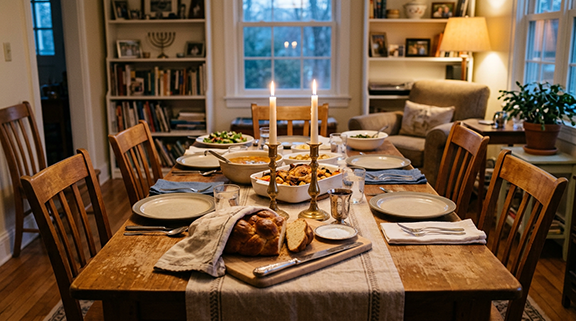
For us, Sabbath begins Friday evening. Not because everything is perfect, but because the time has arrived. The work is set down, the pace changes, and we cross the threshold from preparing to receiving.
What Does Keeping Sabbath Look Like?
Keeping Sabbath looks like stopping ordinary work, gathering with God’s people, sharing food, making room for worship, and letting the day be shaped by rest instead of productivity. It does not have to be elaborate. It does need to be intentional.
That is the part I think many people miss. Sabbath is not an aesthetic. It is not a curated table, a flawless home, or a quiet family that suddenly behaves like a devotional stock photo. Sabbath is a weekly act of trust.
We begin on Friday evening. We bless the day, share a meal, and let the house settle into a different kind of time. Sometimes that feels peaceful right away. Sometimes it takes a while for our bodies and minds to catch up.
Our Sabbath Rhythm
On Sabbath morning, we meet with our kahal, our local fellowship of worshippers. We worship together, learn together, and remember that Sabbath is not only private rest. It is also covenant community.
After service, we share oneg. That shared meal matters. Food has a way of making Sabbath tangible, and sitting at the table together slows everyone down in a way a lecture never could.
I also teach Sabbath school with the tweens. That is part of my Sabbath service, not a break from Sabbath. Teaching the next generation to love God’s Word is one of the ways Sabbath becomes rooted in a community instead of remaining an idea.
After that, we come home. The rest of the day is quieter. We do not try to turn Sabbath into a performance, and we do not treat it like a weekly collapse after six days of overdoing everything.
Sabbath Is Rest, Not Recovery From Ruin
This distinction matters. Sabbath is not supposed to be the day we fall apart because the rest of the week has consumed us. It is the day set apart by God as completed time, a holy pause that reminds us we are not held together by our own effort.
That does not mean we always feel rested. Real homes contain real bodies, real needs, real dishes, real interruptions, and sometimes real exhaustion. But the goal is not to crash. The goal is to re-enter God’s order.
“Sabbath is not collapse after exhaustion. Sabbath is alignment with completed time.”
That is why preparation helps. A simple Friday rhythm, a realistic meal plan, and a house that is functional rather than perfect can make Sabbath easier to enter. The point is not to earn the rest. The point is to make room to receive it.
Closing Sabbath With Havdalah
We finish Sabbath after sundown with Havdalah. That closing ritual helps us mark the difference between holy time and ordinary time. It gives the day a clear ending instead of letting it dissolve into Saturday night errands and unfinished tasks.

Havdalah also teaches something important. Sabbath ends, but it is not lost. The sweetness of the day is meant to follow us into the week.
“Havdalah does not erase Sabbath. It carries its fragrance into ordinary time.”
That weekly return matters. Sabbath forms us slowly, one week at a time. We stop, worship, eat, teach, rest, bless, and begin again.
A Practical Sabbath Is Still a Holy Sabbath
Keeping Sabbath in real life will not look the same in every home. Some families have small children, aging parents, chronic illness, work schedules, tiny kitchens, long drives, or community responsibilities. The shape may vary, but the heart remains the same.
Stop ordinary work. Gather with God’s people if you are able. Share food. Bless the day. Let the week loosen its grip. Close the day with intention.
Sabbath does not need to be impressive to be faithful. It needs to be received.
See all the Sabbath Rest posts!
