
Sabbath Rest: The Work Is Already Complete
By the time Sabbath comes, most people are tired.
Not just physically—though that is real—but deeply, inwardly spent. The week has taken something, and rest feels like the attempt to get it back.
So we collapse.
We sleep longer. We move slower. We try to recover what was drained.
But that is not what Sabbath is.
Sabbath is not the recovery of what was lost.
It is the recognition of what was already finished.

Erev Shabbat
Completion Comes First
In Genesis, the order matters.
God does not rest because He is tired.
He rests because the work is complete.
“The heavens and the earth were finished…” (Genesis 2:1)
Only then does He sanctify the seventh day.
Completion makes sanctification possible.
If the work were still unfinished, rest would be premature. It would be avoidance. It would be escape.
But Sabbath is neither.
It is the dwelling place of finished work.
Why We Struggle to Enter It
We live inside unfinished loops.
There is always more:
One more task
One more improvement
One more thing we should have done
So when Sabbath arrives, we bring all of that with us.
We sit down, but we do not arrive.
Our bodies stop moving, but our minds continue measuring.
This is why Sabbath can feel strangely difficult, even when we long for it.
We are trying to rest inside incompletion.

The ritual of a Shabbat meal at sundown moves us gently into rest
A Different Kind of Entrance
Sabbath requires a decision before it requires a feeling.
You stop not because everything is done—but because God says it is enough.
You lay the work down.
Not forever. Not irresponsibly.
But truthfully.
You acknowledge a boundary in time where striving does not cross.
This is not denial.
It is alignment.
What It Means to “Remember”
To remember the Sabbath is not to think about it.
It is to enter it.
To step into a different kind of time—one that is not driven by output, urgency, or accumulation.
You light the candles.
You set the table.
You bless the day.
And in doing so, you are not creating Sabbath.
You are stepping into something already set apart.
The Quiet Shift
When Sabbath is kept this way, something changes.
You begin to feel that rest is not something you manufacture.
It is something you receive.
The world continues.
The unfinished remains.
Nothing outward is resolved.
But inwardly, the posture shifts.
You are no longer trying to hold everything together.
You are being held.
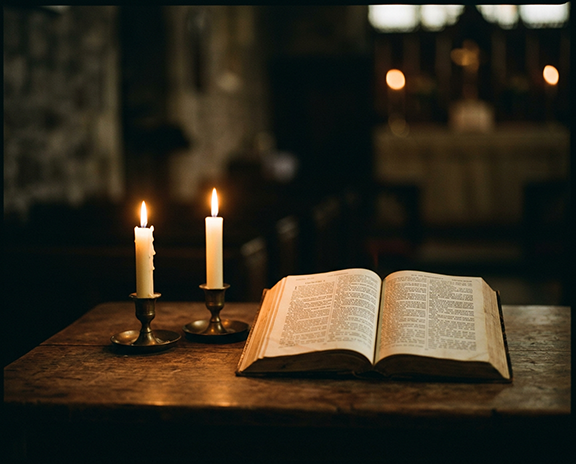
True rest
A Final Thought
Sabbath is not the end of exhaustion.
It is the beginning of trust.
The work is not finished because you completed it.
It is finished because God declared it so.
And for one day each week, you are invited to live as if that is true.
