
Why Does God Give Two Reasons for Shabbat?
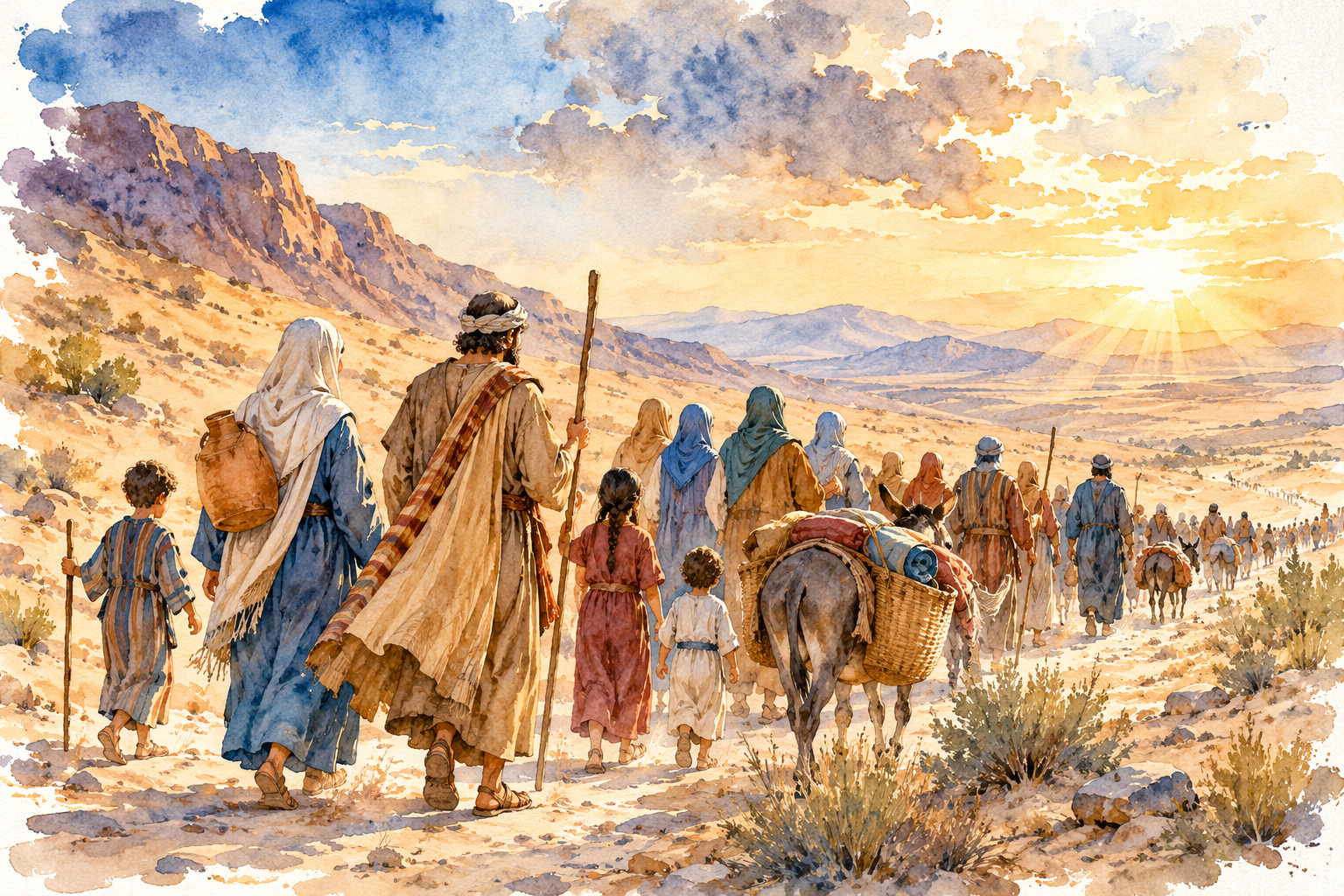
The fourth commandment is familiar enough that it is easy to read straight through it without noticing something rather surprising. In Exodus, when Israel stands at Sinai and hears the commandments, Adonai tells them to remember Shabbat because He created the heavens and the earth in six days and rested on the seventh. Forty years later, when Moses repeats the commandments to the generation preparing to enter the Promised Land, Shabbat is still there, but the reason given for keeping it is different. This time Moses tells Israel to remember that they were slaves in Egypt and that Adonai brought them out with a mighty hand and an outstretched arm.
The commandment has not changed, but the explanation has. In Exodus, Shabbat is rooted in creation. In Deuteronomy, it is rooted in redemption. Those two reasons tell us far more about Shabbat than either one would tell us alone.
Shabbat and the God Who Created
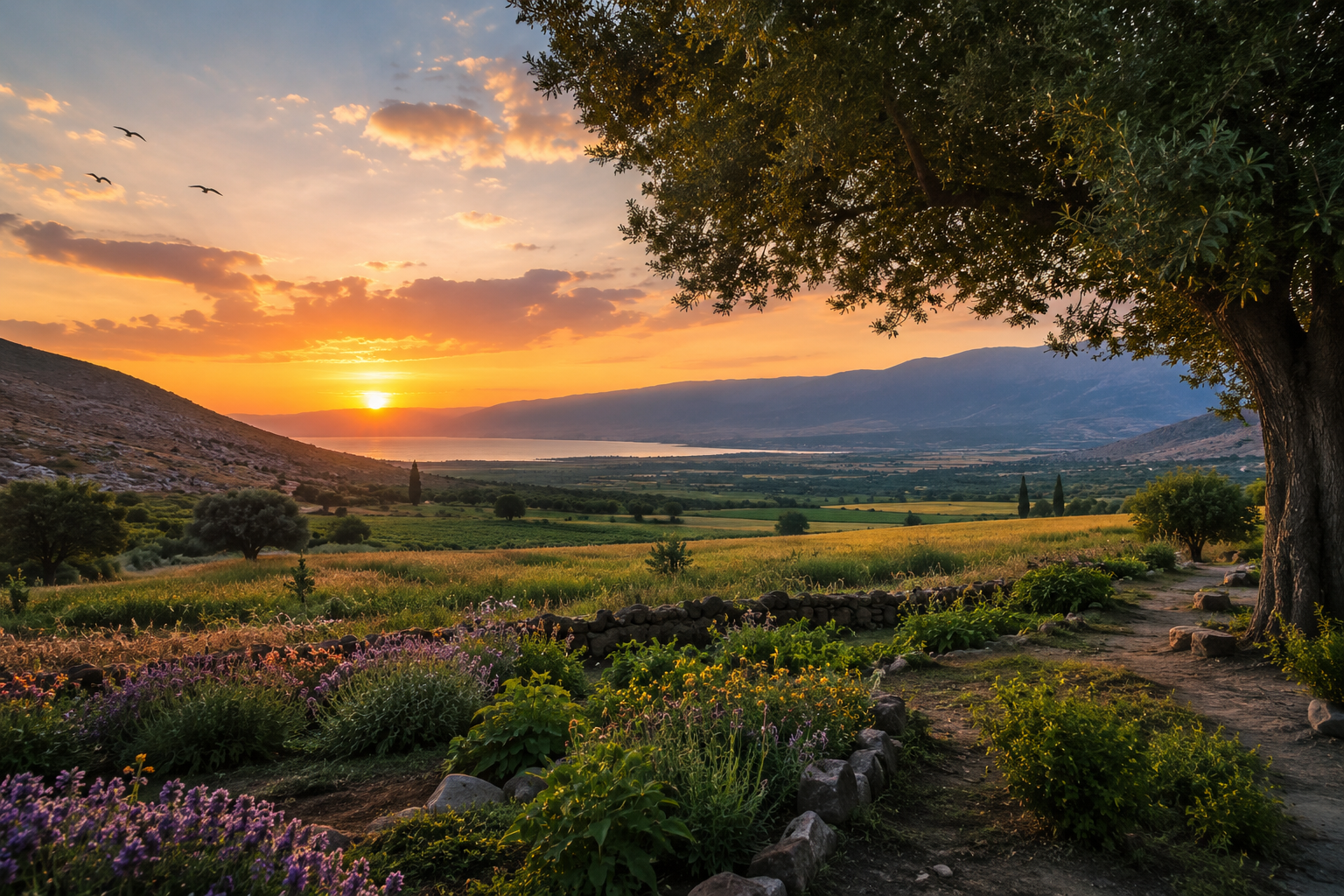
At Sinai, the commandment reaches all the way back to the opening chapter of Scripture.
“For in six days Adonai made heaven and earth, the sea, and all that is in them, and rested on the seventh day. Thus Adonai blessed Yom Shabbat, and made it holy.”
—Exodus 20:11
Israel had only recently left Egypt. They had spent generations in a land filled with gods associated with the sun, the Nile, fertility, crops, animals, death, and kingship. Now the God who had brought them out was telling them who He was. He was not one more god who ruled one particular corner of the natural world. He was the One who made it all. The sea they had just crossed belonged to Him because He made the sea. The wilderness through which they were traveling belonged to Him. So did the heavens above them and the earth beneath their feet.
Shabbat placed Israel inside the rhythm established by that Creator. God worked for six days and ceased on the seventh, blessing and sanctifying the day. Israel's work would follow that pattern. Their six days of labor mattered, but every seventh day they would deliberately put that labor down and acknowledge that they were creatures living in a world they had not made.
That is still one of the quiet lessons of Shabbat. Human beings are extraordinarily good at becoming impressed with our own importance. We build, plant, teach, repair, cook, invent, organize, and plan, and because our work genuinely matters, it is easy to slip into believing that everything depends upon us. Then Shabbat arrives and we stop while creation continues without us. Seeds germinate while the gardener rests. The sun sets without our help and rises again the next morning. God continues sustaining what He has made while our hands are still. Shabbat does not tell us that our work is meaningless; it reminds us that our work has a proper place within a world governed by God.
Shabbat and the God Who Redeems
When Moses speaks to Israel in Deuteronomy, the setting is very different. The people listening are not standing at Sinai shortly after leaving Egypt. They are on the edge of the Promised Land, preparing to build homes, plant fields, establish communities, raise families, hire workers, acquire livestock, and live as a settled people. Soon they will possess the very things slaves in Egypt could not possess. They will have land, households, crops, animals, and authority over their own labor.
It is to that generation that Moses says:
“You must remember that you were a slave in the land of Egypt, and Adonai your God brought you out from there with a mighty hand and an outstretched arm. Therefore Adonai your God commanded you to keep Yom Shabbat.”
—Deuteronomy 5:15
A slave does not control his own time. Someone else decides when the work begins, what must be produced, and when—if ever—it may stop. Israel knew what it meant to live under a ruler whose answer to every demand was more production. When Pharaoh accused them of laziness, he did not reduce their quota of bricks. He took away the straw and demanded the same number. Their bodies, their time, and their labor belonged to someone else.
Adonai brought them out of that system. Now, as they prepared to become landowners and masters of households themselves, they needed to remember what freedom was for.
The wording of the Shabbat commandment in Deuteronomy makes that impossible to miss. Israel was not merely permitted to rest while everyone beneath them continued working. Sons and daughters rested. Male and female servants rested. The stranger within their gates rested. Even the ox and donkey were released from labor. Moses explains why with a phrase that is easy to pass over: “so that your male and female slave may rest as you do.”
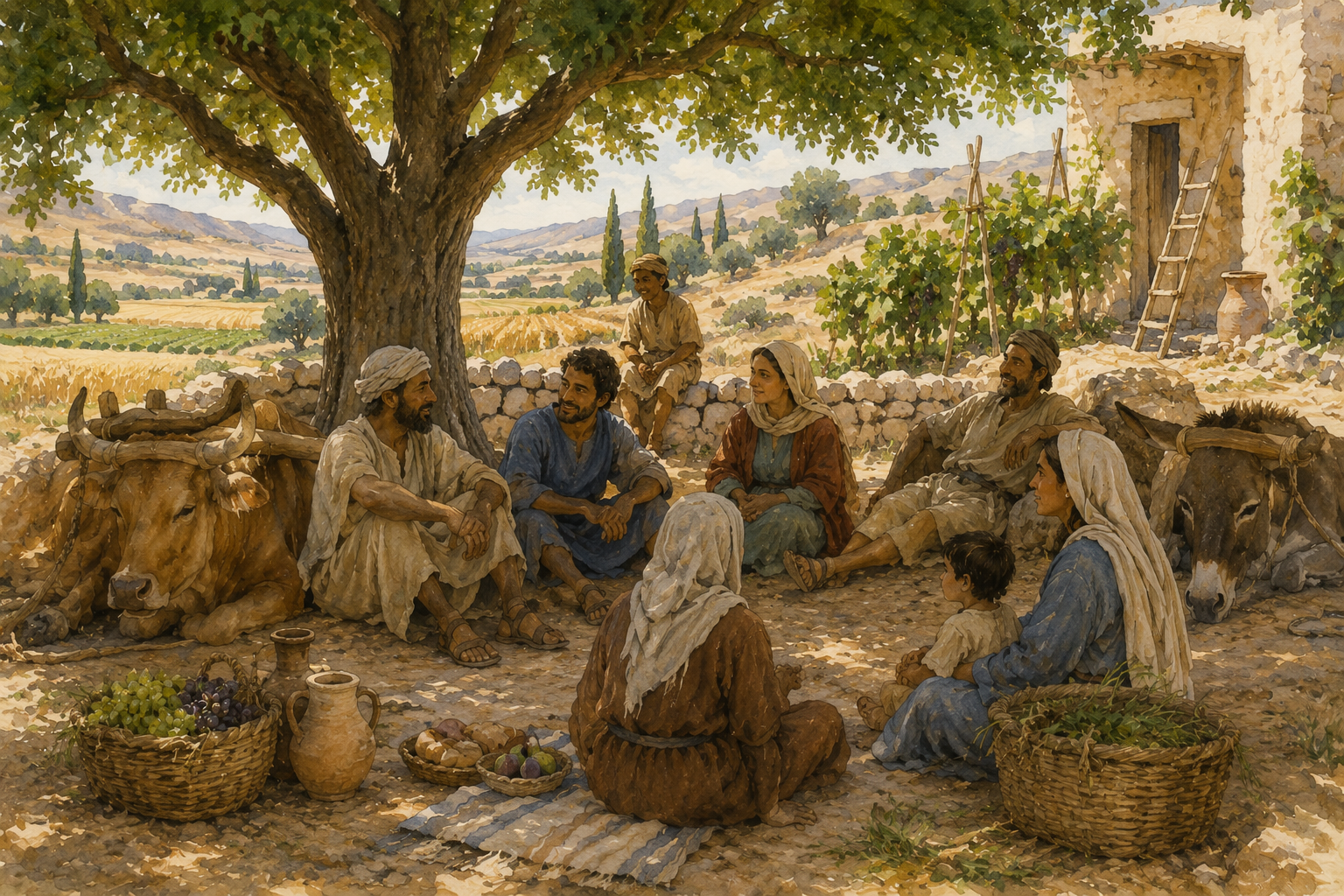
The people who had suffered under Pharaoh were forbidden to become Pharaoh to someone else.
The people who had suffered under Pharaoh were forbidden to become Pharaoh to someone else.
That gives the commandment an ethical dimension that is much harder to see if we read only the creation account. Remembering Egypt meant remembering what it felt like when someone with power could demand your labor without regard for your need to stop. Every Shabbat, an Israelite with servants had to surrender that power. He could not enjoy his own rest by making someone else work to provide it. The freedom Adonai had given him had to extend through his household to the people—and even the animals—under his authority.
Creator and Redeemer
So why does Scripture give two reasons for the same commandment? Because Shabbat bears witness to two truths that belong together.
The God who commands Shabbat is Creator, and the God who commands Shabbat is Redeemer. Exodus points back to Genesis and says, in effect, Remember who made you. Deuteronomy points back to Egypt and says, Remember who freed you.
Those memories protect us from two different kinds of bondage. Remembering creation keeps us from imagining that the world depends upon our constant activity. Remembering Egypt keeps us from allowing work—our own or someone else's—to become a master again. One teaches us humility before God; the other teaches us mercy toward people.
There is another beautiful order here as well. Israel did not earn Shabbat by becoming obedient enough. God rescued them first. Before Sinai, before the full giving of Torah, before Israel had demonstrated whether it would be faithful or faithless, Adonai had already heard their cries, judged Egypt, brought them through the sea, and provided manna in the wilderness. In fact, He began teaching them the rhythm of the seventh day through the manna before they ever stood at Sinai.
Rescue came before instruction.
The freedom Adonai gave Israel was never meant to stop with them. Their servants—and even their animals—were to rest as they did.
That pattern matters because Shabbat can easily become something we think we accomplish for God. We can become very concerned with whether we have prepared correctly, stopped at precisely the right moment, or observed the day as beautifully as we intended. Those things can have value, but they are not the foundation of Shabbat. Its foundation is what God has done. He created. He delivered. He provided. Israel's response was to remember.
A Day That Remembers Two Beginnings
Creation and the Exodus are, in a sense, two beginnings. Genesis tells the story of God bringing an ordered, fruitful world out of what was formless and empty. Exodus tells the story of God bringing a people out of bondage and forming them into a nation belonging to Him. One is the beginning of the world; the other is the beginning of Israel as a redeemed people.
Shabbat belongs to both stories.
That may be why the two versions of the commandment complement one another so beautifully. When we remember creation, we remember that our lives begin with God rather than with our own labor. When we remember the Exodus, we remember that freedom begins with God rather than with our ability to free ourselves. Both memories turn our attention away from what our hands can accomplish and toward what Adonai has already done.
And both point beyond themselves. Scripture begins with a good creation and ends with creation restored. Between those two stands the long story of redemption, culminating in Messiah and moving toward the day when all that sin has broken will finally be made right. Hebrews speaks of a rest that remains for the people of God, carrying the theme of the seventh day forward into that greater hope.
So each Shabbat tells a much larger story than simply, “It is time to stop working.” It reminds us that the world has a Creator, that slaves can be made free, that those who have received freedom must not deny it to others, and that God's purposes for His creation are moving toward restoration.
Exodus tells us to look back and remember the beginning.
Deuteronomy tells us to look back and remember the rescue.
Shabbat asks us to remember both.

