Havdalah: Ending Shabbat and Returning to Ordinary Time
Shabbat begins with a boundary.
The sun sinks. The candles are lit. I lay aside my work, and the week that has been tugging at my sleeve is told, for a little while, to wait.
Then Saturday evening comes.
The light changes. The sun disappears. Eventually the first stars appear, and the seventh day gives way to the first. Shabbat is ending, and I am about to step back into ordinary time.
Jewish tradition gives us a beautiful way to mark that moment: Havdalah.
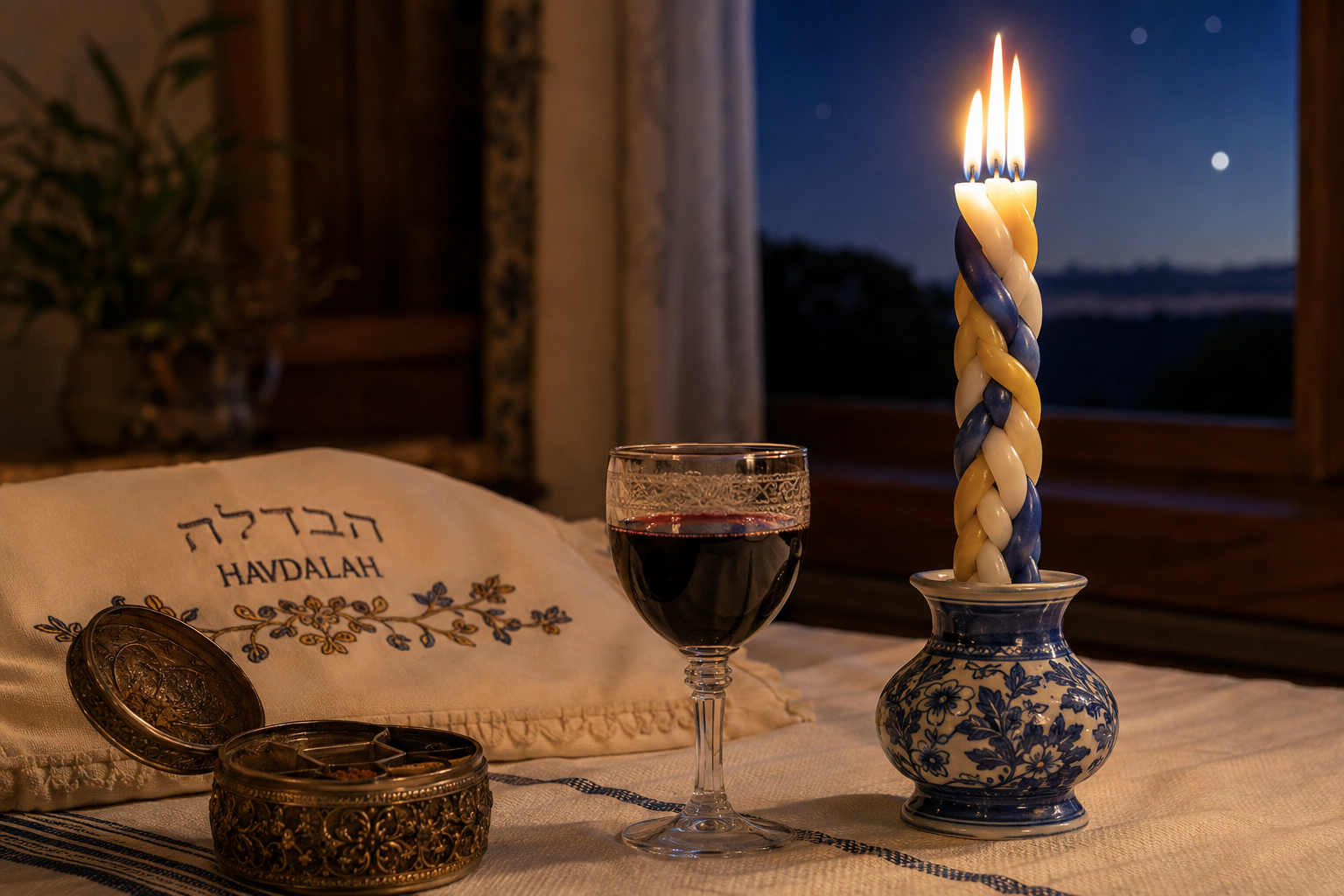
Havdalah (הבדלה) means separation or distinction, and separation is one of the first things God does in Scripture. In Genesis 1:4, “God separated the light from the darkness.”
Light and darkness. Day and night. Holy and ordinary.
Havdalah gives me a way to stop at one of those boundaries and notice that I am crossing it.
As a follower of Yeshua who treasures the biblical rhythm of Shabbat, I find Havdalah deeply meaningful. But I also think it is important to be clear about what it is and what it isn't. Shabbat is God's commandment. The Havdalah ceremony, as we know and practice it, comes to us through Jewish tradition.
I don't need to confuse the two in order to treasure both.
Commandment and Tradition
Torah commands Shabbat. God blessed the seventh day and made it holy, and at Sinai He commanded Israel to remember and guard that day as set apart.
Torah does not give us the Saturday-night Havdalah ceremony with its cup, fragrant spices, multi-wicked candle and prescribed blessings.
Within Judaism, the question is actually a little more nuanced than simply saying Havdalah is optional. Rabbinic authorities have differed over whether the obligation to verbally distinguish Shabbat from the weekdays is biblical or rabbinic, while Havdalah specifically over a cup of wine is understood to be rabbinic.
That distinction matters to me.
I don't want to say that God commanded something when Scripture doesn't say He did. But neither do I want to discard centuries of Jewish tradition simply because a practice isn't commanded in Torah.
Good traditions can help us remember. They can teach our children. They can give physical expression to truths we already know from Scripture.
Havdalah does that beautifully.
And if I am going to receive something from Jewish tradition, I want to receive it respectfully. I don't want to remove everything Jewish from it and then recreate it as something Christian. I want to understand what the Jewish tradition means first and allow it to teach me.
Waiting for Shabbat to End
Havdalah is observed after nightfall on Saturday evening. Traditionally, nightfall is associated with the appearance of three medium-sized stars.
I rather like the waiting.
I hurry toward enough things during the week. I don't need to hurry away from Shabbat.
The dishes can wait a few more minutes. The phone can remain quiet. Whatever work is waiting for me can wait just a little longer.
I can let Shabbat linger.
Then, when Shabbat has truly departed, I mark the change.
A Celebration for the Senses
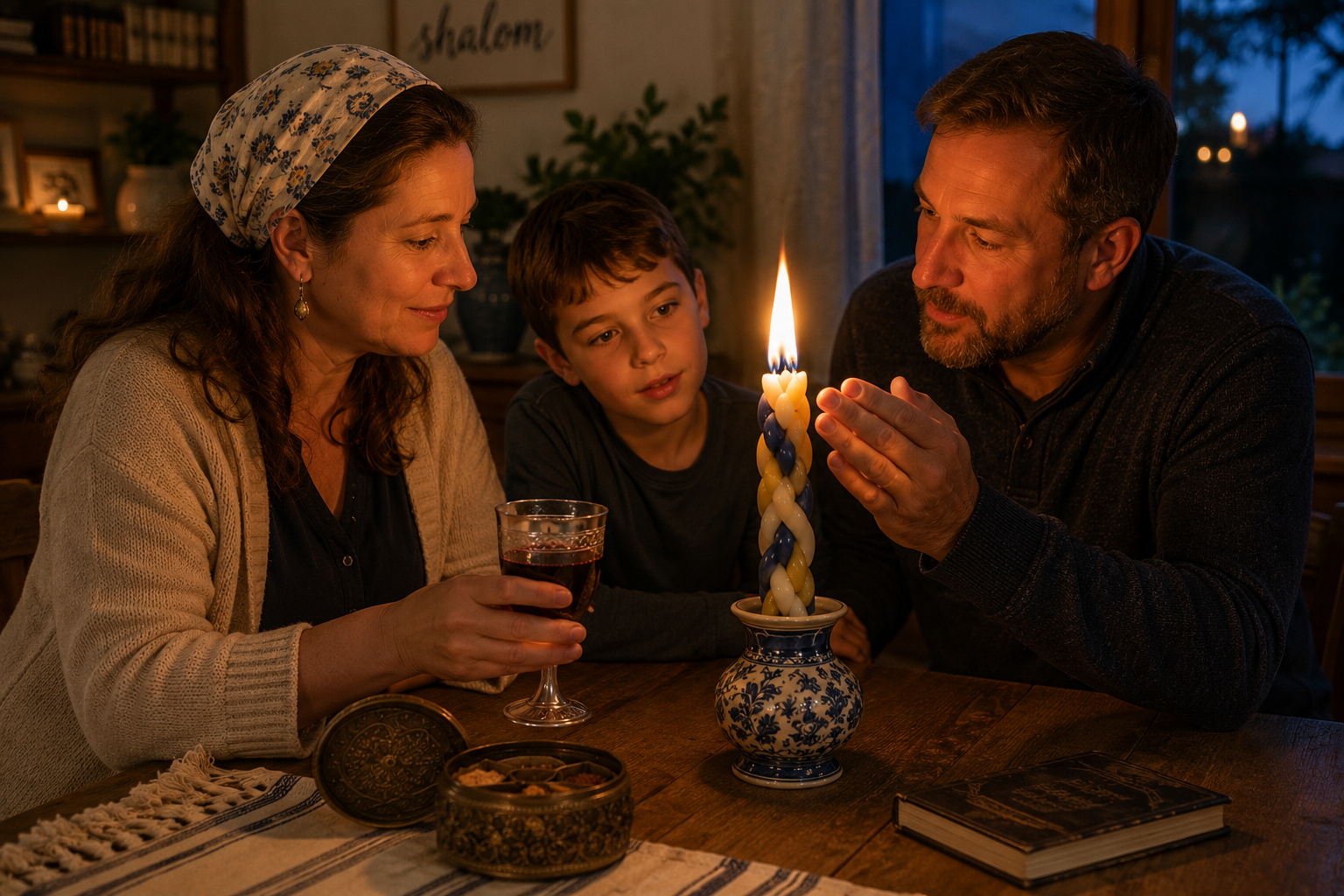
One of the things I love most about Havdalah is how physical it is. I don't merely say that Shabbat has ended. I taste wine. I breathe in the fragrance of spices. I see the fire and feel its warmth. I hear Scripture and blessing.
All my senses are involved in crossing this boundary.
I especially love that for children. A child may not remember my careful explanation of kodesh and chol, but she may remember the enormous braided candle. She may remember turning her fingers toward the flame and watching the shadows appear. She may remember the smell of cloves passed around the table every Saturday night.
Faith becomes attached to memory.
Scripture does that repeatedly. God gives His people physical things to do so that they will remember.
Havdalah isn't one of those commanded memorials, but Jewish tradition uses that very human principle remarkably well.
Beginning the Week with Salvation
Traditional Havdalah begins with a collection of biblical verses expressing trust, deliverance, joy and salvation.
Among them are Isaiah's words:
“Behold, God is my salvation. I will trust and will not be afraid.”
—Isaiah 12:2
As a follower of Yeshua, I hear those words with an additional depth.
I don't need to rewrite the traditional passage or insert Yeshua's name into every line to make Havdalah Messianic. I can simply hear the Scriptures knowing the salvation of the God of Israel that I have received through Israel's Messiah.
And what a wonderful confession to make at the beginning of another week: God is my salvation. I will trust Him. I will not be afraid.
I have no idea what the coming six days will contain. There may be work, appointments, unexpected problems, wonderful surprises, things that break and things that bloom.
But I know Who goes with me into them.
The Cup
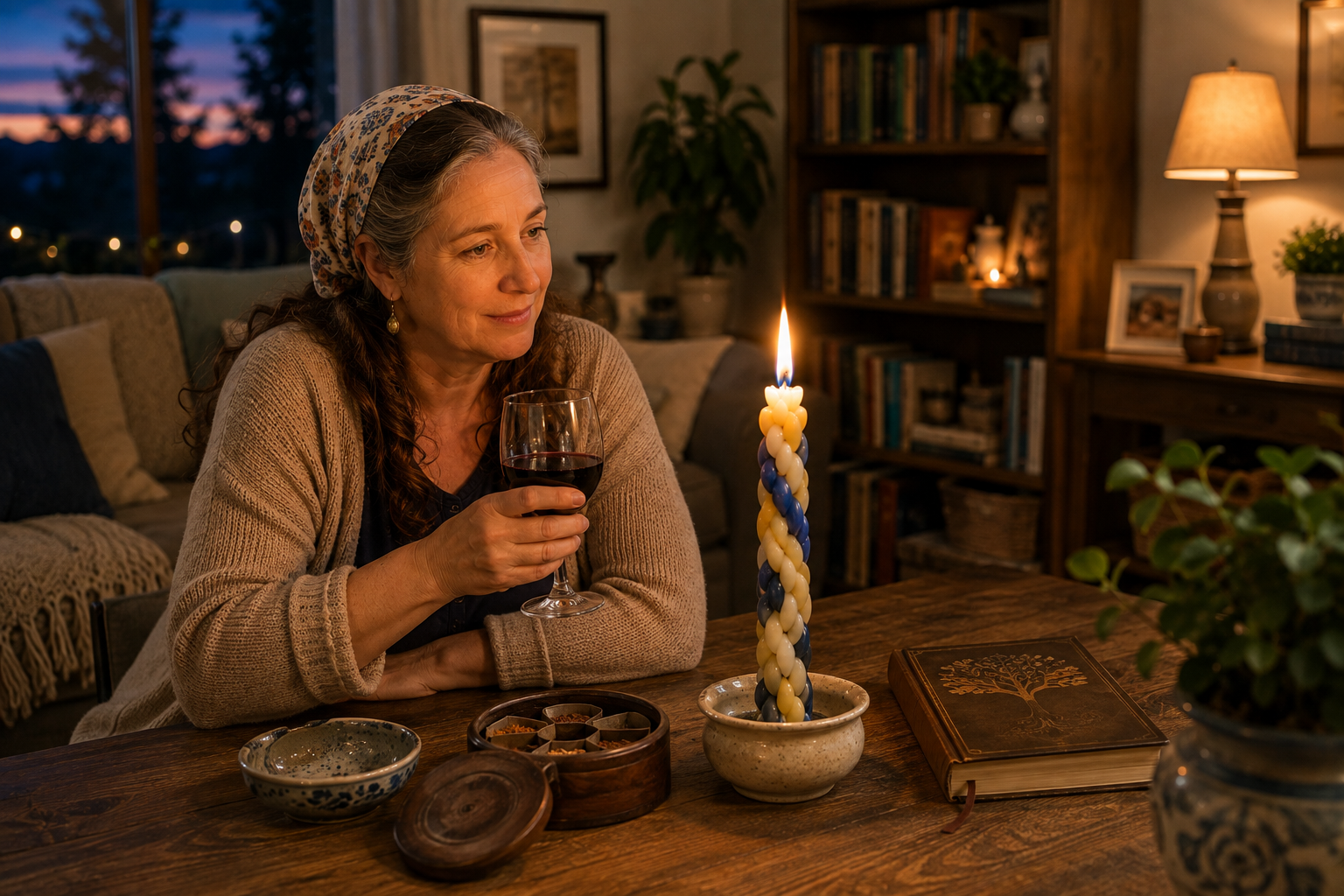
The first blessing is over the fruit of the vine:
Baruch atah Adonai, Eloheinu Melech ha'olam, borei p'ri hagafen.
Blessed are You, Adonai our God, King of the universe, who creates the fruit of the vine.
I love that wine stands at both ends of Shabbat in Jewish tradition. At Kiddush, I receive the day. At Havdalah, I release it.
The cup stands at both boundaries.
As a believer in Yeshua, the fruit of the vine naturally carries other associations for me because of the cup Messiah shared with His disciples. But I don't need to turn the Havdalah cup into Communion. It isn't.
I can let Havdalah mean what Havdalah means while also acknowledging the memories that the fruit of the vine awakens in me as a follower of Messiah.
One meaning doesn't have to erase the other.
The Spices
Next come the besamim—the fragrant spices.
Baruch atah Adonai, Eloheinu Melech ha'olam, borei minei v'samim.
Blessed are You, Adonai our God, King of the universe, who creates varieties of spices.
I breathe deeply of their fragrance and pass them around the table.
Jewish tradition has given several explanations for this practice, including the lovely idea that the fragrance comforts us as the special delight of Shabbat departs.
But even without explaining every symbol, I understand what the action does to me. It makes me stop. It makes me breathe. It makes me notice.
It lets me remember the sweetness of the day I have just been given.
Smell has an extraordinary connection with memory. I love the thought of a child growing up with the fragrance of cloves on Saturday evening and, years later, encountering that scent somewhere unexpected and suddenly remembering the Shabbat table.
That's one of the gifts a good tradition can give us.
The Light
Then comes fire.
Baruch atah Adonai, Eloheinu Melech ha'olam, borei m'orei ha'esh.
Blessed are You, Adonai our God, King of the universe, who creates the lights of fire.
The Havdalah candle traditionally has multiple wicks, producing one bright flame. I hold my hands toward it and turn them, noticing the light on my fingernails and the shadows between my fingers.
As a follower of Yeshua, I can hardly encounter the biblical imagery of light without remembering His words:
“I am the light of the world. The one who follows Me will no longer walk in darkness, but will have the light of life.”
—John 8:12
The Havdalah candle does not “represent Jesus” in traditional Judaism, and I don't want to pretend that it does.
But when I look at light, I remember Messiah.
I don't have to erase the Jewish meaning in order to recognize what light means to me as His follower.
In fact, as I prepare to return to the ordinary world—to work and errands, laundry and appointments, gardens and classrooms and difficult conversations—I find that reminder especially precious.
Yeshua does not remain behind at my Shabbat table.
The Light goes with me into the week.
Holy and Ordinary
Finally comes the blessing that gives Havdalah its name. God is blessed as the One who distinguishes between holy and ordinary, light and darkness, Israel and the nations, the seventh day and the six days of work.
That distinction between kodesh and chol matters to me.
Kodesh is holy—set apart. Chol is ordinary or common.
Sometimes English translations use “sacred and profane,” but profane sounds to my ears as though I am leaving God's presence and stepping into something ungodly.
I'm not.
I'm moving from set-apart time into ordinary time.
God is still King on Sunday morning. Yeshua is still Lord when I'm doing laundry. The Spirit of God is still with me when I'm answering emails, pulling weeds, teaching, cooking, making appointments, baking bread or doing any of the hundred small things that fill an ordinary week.
Shabbat is different because God made it different.
Havdalah helps me notice the boundary without making me despise what lies on the other side of it.
Melaveh Malkah: Escorting the Queen
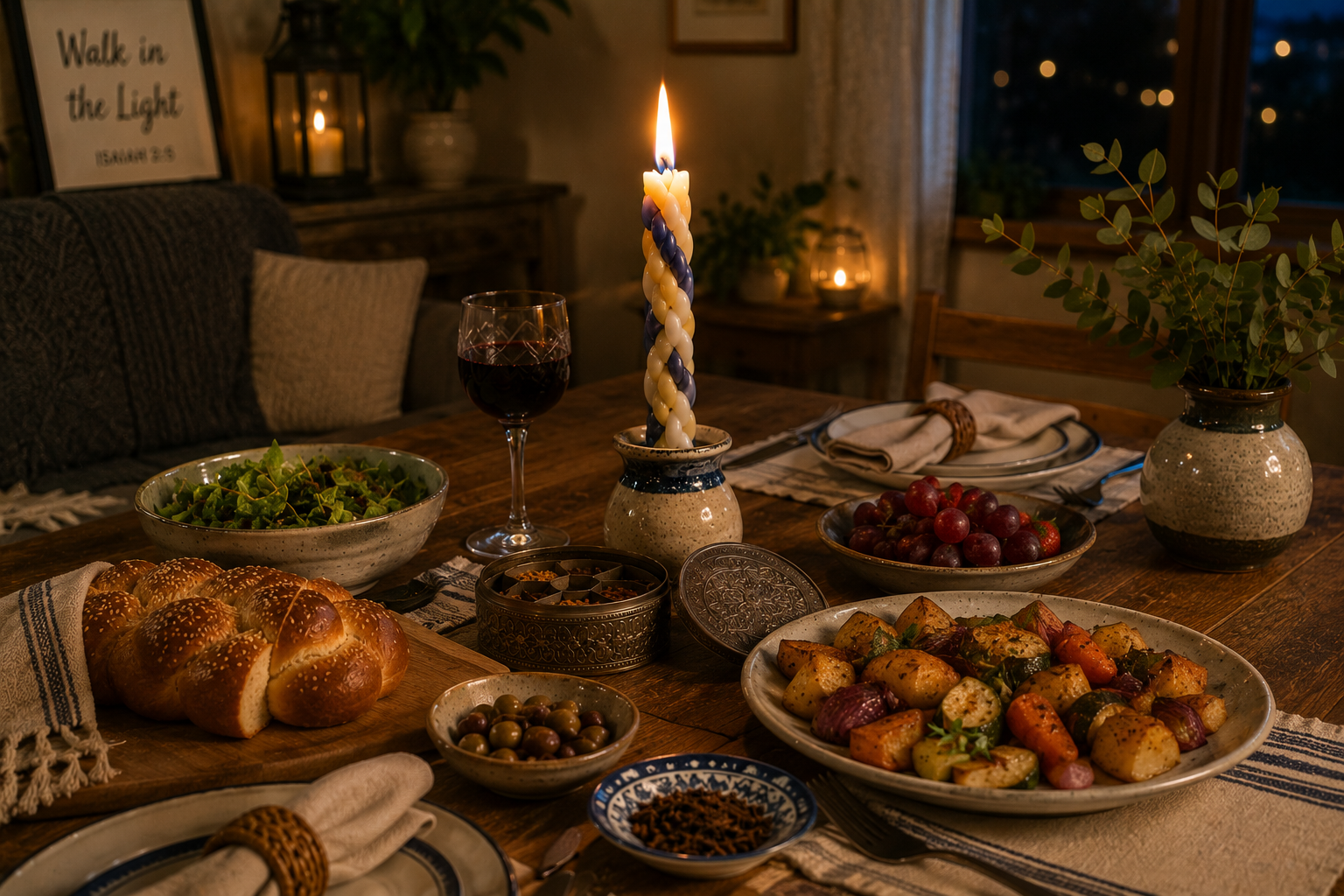
Jewish tradition gives us one more image that I especially love.
Don't shove Shabbat out the door. Escort her.
The traditional Saturday-night meal called Melaveh Malkah means accompanying or escorting the Queen—Shabbat.
When an honored guest leaves my home, I don't close the door while she's still walking toward it. I walk with her. I linger. I say one more thing. I stand there until she has really gone.
Melaveh Malkah allows some of the sweetness of Shabbat to spill gently into Saturday evening. There may be food, songs, Torah, stories and conversation.
Shabbat really has ended. I am not trying to extend the commandment beyond its boundary.
I'm simply reluctant to say goodbye too quickly.
I think Christians can learn something from that. We are awfully good at rushing from one thing to the next. Jewish tradition teaches me to linger.
As a Christian, Can I Practice Havdalah?
I think this is an important question, especially for Christians who are beginning to discover the beauty of Shabbat and the Jewish roots of our faith.
In our house, Jeff is Jewish and I'm Jew-ish. That's the slightly tongue-in-cheek way I sometimes describe a distinction that actually matters to me. I am not Jewish, and practicing Jewish traditions doesn't make me Jewish. I am a Gentile follower of a Jewish Messiah, married to a Jewish man, and I have come to deeply love the rhythms, traditions and heritage of the people through whom God gave us the Scriptures—and our Messiah.
So I don't need to pretend to be Jewish in order to practice Havdalah.
But neither do I want to invent a completely “Christian Havdalah” that strips away its Jewish character.
I would rather learn.
I can learn the traditional blessings and what they mean. I can learn why the cup is there, why we smell the spices and why we look at the light. I can remember that this tradition was developed and preserved by the Jewish people.
And then, where knowing Messiah naturally deepens my understanding, I can allow it to do so.
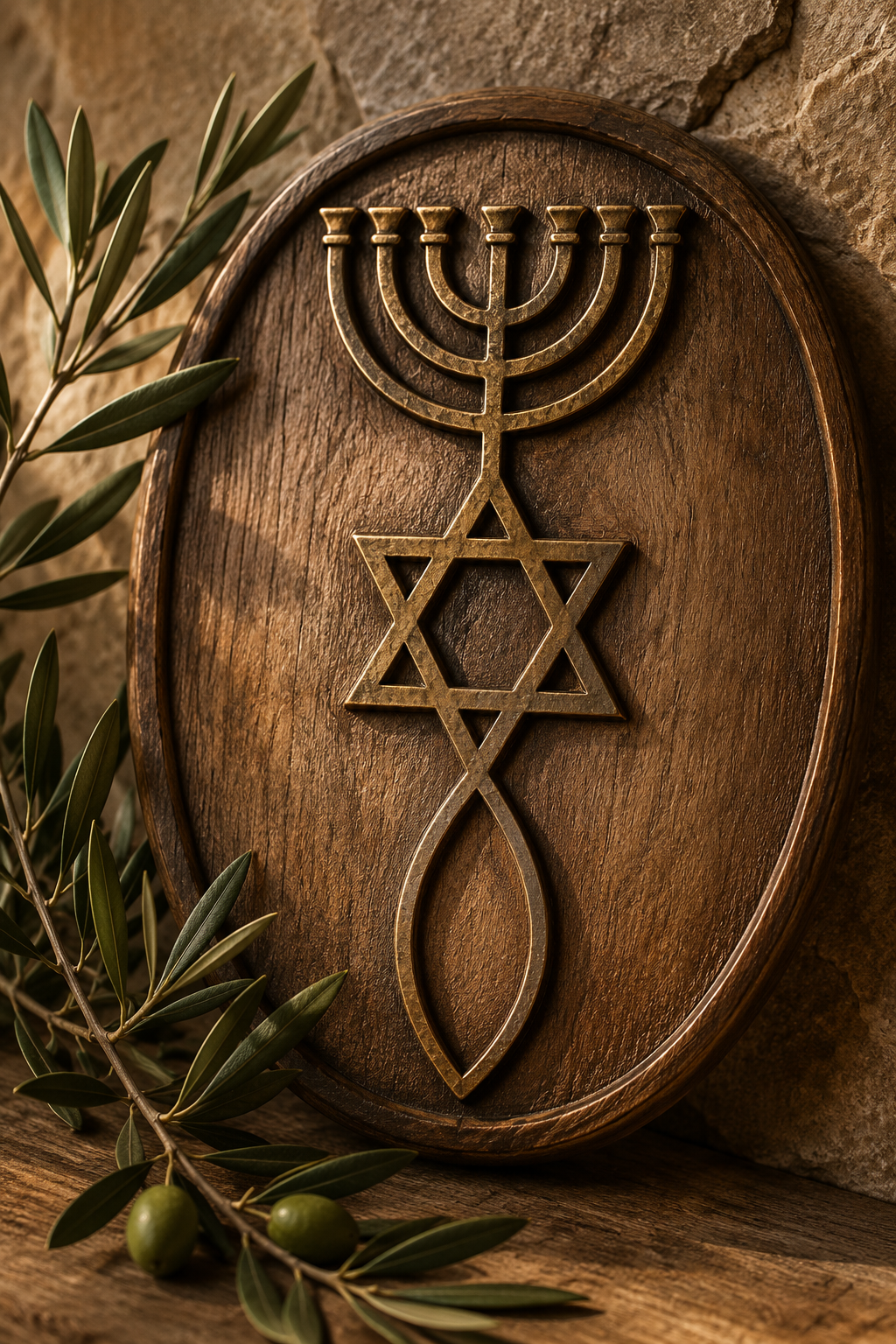
When I hear the words of salvation, I remember my Savior. When I see the light, I remember the Light of the World. When I bless the God of Israel, I remember that through Messiah I have been brought near.
And when the traditional blessing distinguishes between Israel and the nations, I don't need to erase that distinction.
Paul didn't.
In Romans 11, he doesn't picture Gentile believers as replacing Israel. He describes wild branches being graciously grafted into a cultivated olive tree.
That picture keeps me humble.
I am not practicing Havdalah because I need to become Jewish. I am practicing it because I find something beautiful and meaningful in the way the Jewish people have learned to mark the boundary between Shabbat and the ordinary week.
Jeff is Jewish. I'm Jew-ish.
And I am very grateful to have been grafted in.
Tradition Doesn't Need to Become Torah
This may be the most important thing I want to say about Havdalah.
I don't honor Jewish tradition by pretending that every Jewish practice was commanded at Sinai. And I don't honor Scripture by rejecting everything that developed afterward.
Instead, I've learned to ask two different questions: What has God commanded? And how have the Jewish people traditionally remembered, celebrated and lived out what God has given them?
Those aren't the same question.
They don't need to have the same answer.
Sometimes the answer to the second question is extraordinarily beautiful.
Havdalah is one of those times.
God commanded Shabbat. Jewish tradition gives us wine and spices and fire and blessing as we stand at its departing edge.
Knowing the difference doesn't diminish Havdalah for me.
If anything, it makes me appreciate it more.
Returning to Ordinary Time
Eventually, somebody has to load the dishwasher.
Laundry remains stubbornly unmiraculous.
The calendar opens again. Work resumes. Gardens need tending. Children need teaching. Bills need paying. Bread needs baking. Life begins moving at its ordinary pace again.
But I don't think I return to it quite the same way I left it.
For one day, I stopped.
I remembered that God is Creator and I am not. I received time instead of trying to conquer it. I remembered His provision and His salvation.
Now I can return to six days of making, tending, teaching, cooking, building, planting, repairing and creating.
And I don't go alone.
The Messiah who is Lord of Shabbat is Lord of Monday morning too.
So I extinguish the candle. The fragrance of the spices still lingers. I say Shavua tov—have a good week.
And I step back into ordinary time carrying a little of the fragrance of Shabbat with me.
Six days from now, the sun will begin to sink again.
The candles will be lit. The work will stop.
And Shabbat will return.