
Creating a Sabbath Table
Friday evening has a way of arriving whether I am ready for it or not.
Dinner may still need attention. Something that has no business being on the dining table may still be sitting there. The kitchen may not be as tidy as I intended it to be, and I can almost always think of one more thing I meant to accomplish before sundown.
And yet, week after week, I prepare the table.
I don't do it because Shabbat requires an impressive tablescape. I don't need matching dishes, elaborate flowers, or bread that looks as though it came from a bakery. I prepare the table because this meal is different.
The Sabbath table isn't about setting a beautiful table. It's about setting apart a table.
A Table That Says, “This Day Is Different”
During the week, our table is an ordinary part of ordinary life. We eat there, but like most tables, it has a tendency to collect whatever happens to be passing through the house.
Then Friday comes.
I clear away what doesn't belong. I set the table for the evening meal and bring out the things we use to welcome Shabbat. Slowly, an ordinary table begins to look different.
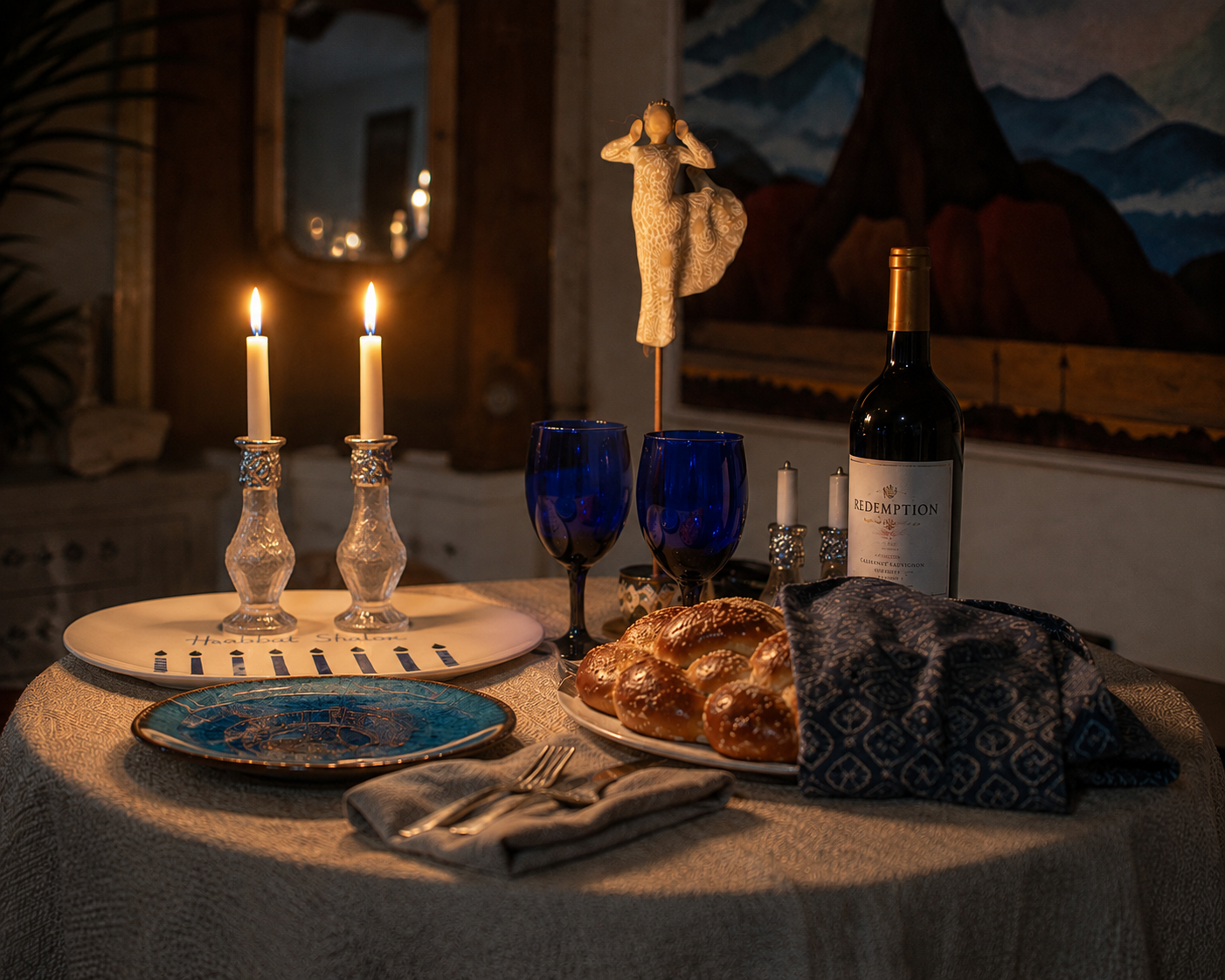
I have come to appreciate that small transformation because it makes something invisible visible. Scripture tells us to remember the Sabbath day and keep it holy—to set it apart. Preparing our table is one of the ways I physically mark that transition from the six ordinary days of the week into Shabbat.
Jewish families have developed beautiful traditions over many generations for welcoming the Sabbath, and so many of them center around the table.
Many Messianic Jewish families continue these same traditions, celebrating Shabbat while also recognizing Yeshua as Messiah.
We light candles. We speak blessings. We share wine or grape juice. We bless and break bread. We eat together, talk, sing, pray, and linger.
For me, all of those familiar actions say the same thing:
The workweek has ended. Shabbat is here.
What I Put on Our Sabbath Table
Our Sabbath table isn't complicated.
I put out candles because lighting them helps mark the beginning of Shabbat for us. We have wine or grape juice for Kiddush and bread for HaMotzi. I set the table for the meal I've prepared, and those simple things are enough to make Friday evening feel different from an ordinary dinner.
Over the years, I've come to love the objects associated with Shabbat, but I don't believe beautiful objects are what make a Sabbath table.
Candlesticks, Kiddush cups, challah boards, embroidered covers, special dishes, and linens can become treasured parts of a family's observance. In fact, I think objects used faithfully week after week have a wonderful way of gathering memories. Eventually a candlestick is no longer merely a candlestick. It reminds me of all the Friday evenings its light has illuminated.
But those things serve Shabbat. Shabbat does not depend upon them.
If I had two ordinary candles, a drinking glass, a loaf of bread, and the same plates we used the night before, I could still welcome Shabbat.
That matters to me because I never want the beauty surrounding a tradition to become a barrier to actually keeping it.
Bread, Wine, and Light
I love the simplicity of the things that have come to represent the Sabbath table.
Bread. Wine. Light.
Traditionally, Kiddush—the blessing that sanctifies the day—is spoken over wine. Then HaMotzi, the blessing over bread, is said before the meal. These are ancient Jewish traditions, connecting our little table with countless other Sabbath tables across generations.
As a Messianic believer, I also cannot share bread and wine without thinking of Yeshua.
For me, that doesn't erase their Jewish meaning or turn the Sabbath meal into something else. It adds another layer of gratitude to things that were already rich with meaning.
Bread is provision. Wine is celebration. Light pushes back darkness.
They are very ordinary things.
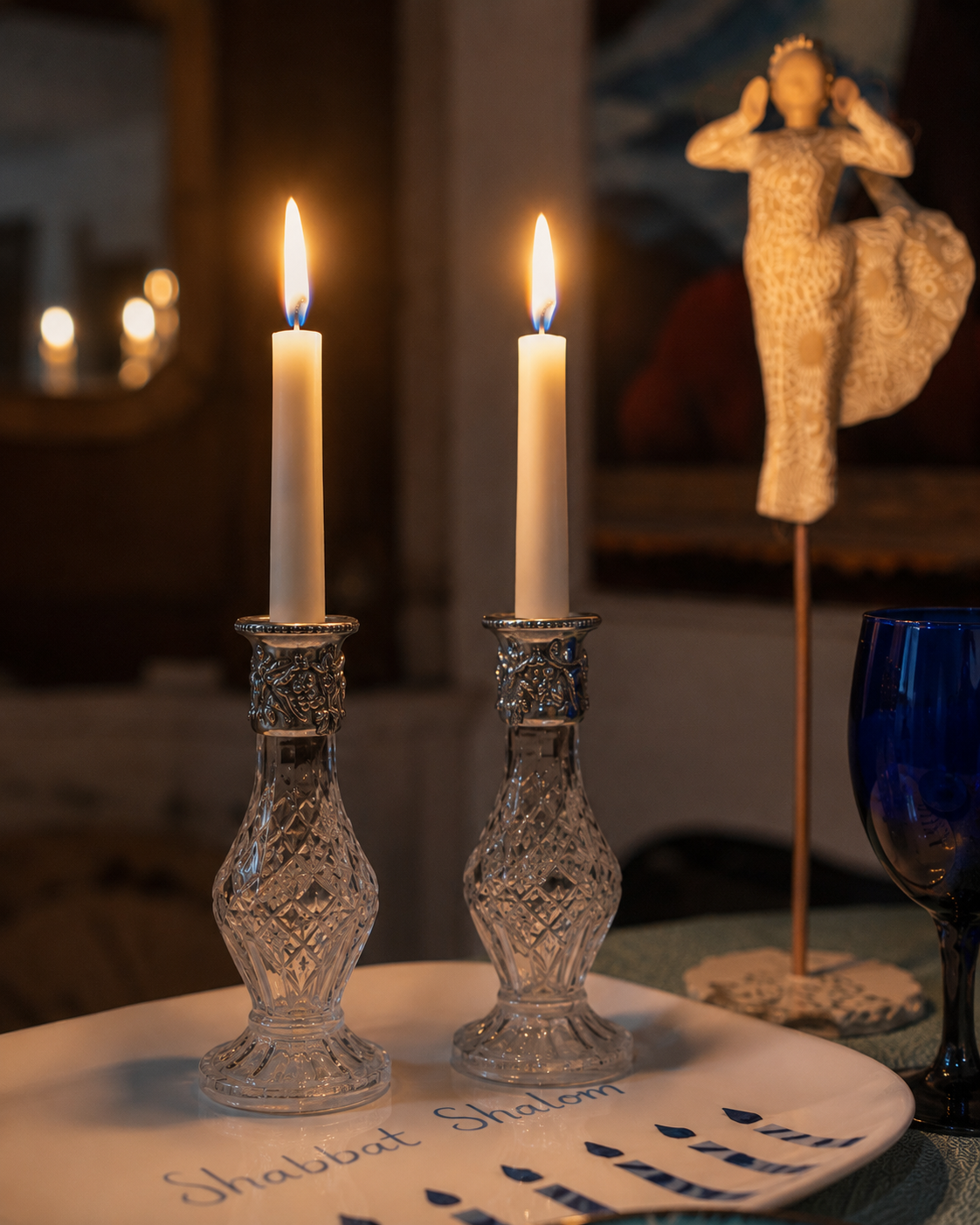
Perhaps that is part of what I love about them. Shabbat has taught me again and again that ordinary things can become holy when they are set apart for God.
The Table Is Really About the People Around It
I enjoy making a table beautiful. I like little details that say, I prepared for this. This meal matters.
But I have also learned that the centerpiece isn't the point.
A beautifully arranged table where everyone is tense and hurried doesn't feel much like Shabbat to me.
What matters is that we have stopped.
I don't want to hurry through the meal because I need to get back to work. I don't want to eat while mentally sorting through everything I still need to accomplish. For one evening, those things can wait.
We can sit longer.
We can talk. We can sing. We can discuss Scripture. We can laugh about something that happened during the week. We can enjoy the food instead of treating dinner as another task to complete.
And sometimes we can make room for someone else at the table.
Hospitality feels especially at home on Shabbat. The day reminds me that my time, my food, and my home are gifts. Inviting someone else to share them is one way I can acknowledge the Giver.
Our Sabbath Table Became Ours
One of the things I love about keeping Shabbat year after year is the way traditions grow almost unnoticed.
A family can begin with very little.
Then a particular pair of candlesticks becomes familiar. A favorite dish finds its way onto the menu again and again. A song becomes part of Friday evening. Words that once felt unfamiliar become so deeply woven into the rhythm of the week that their absence would be noticeable.
That's how traditions become family traditions.
Some of what we do connects us with Jewish families who have welcomed Shabbat for generations. Other things belong particularly to our own household. Still others are simply things we enjoy.
I think it is important to know the difference.
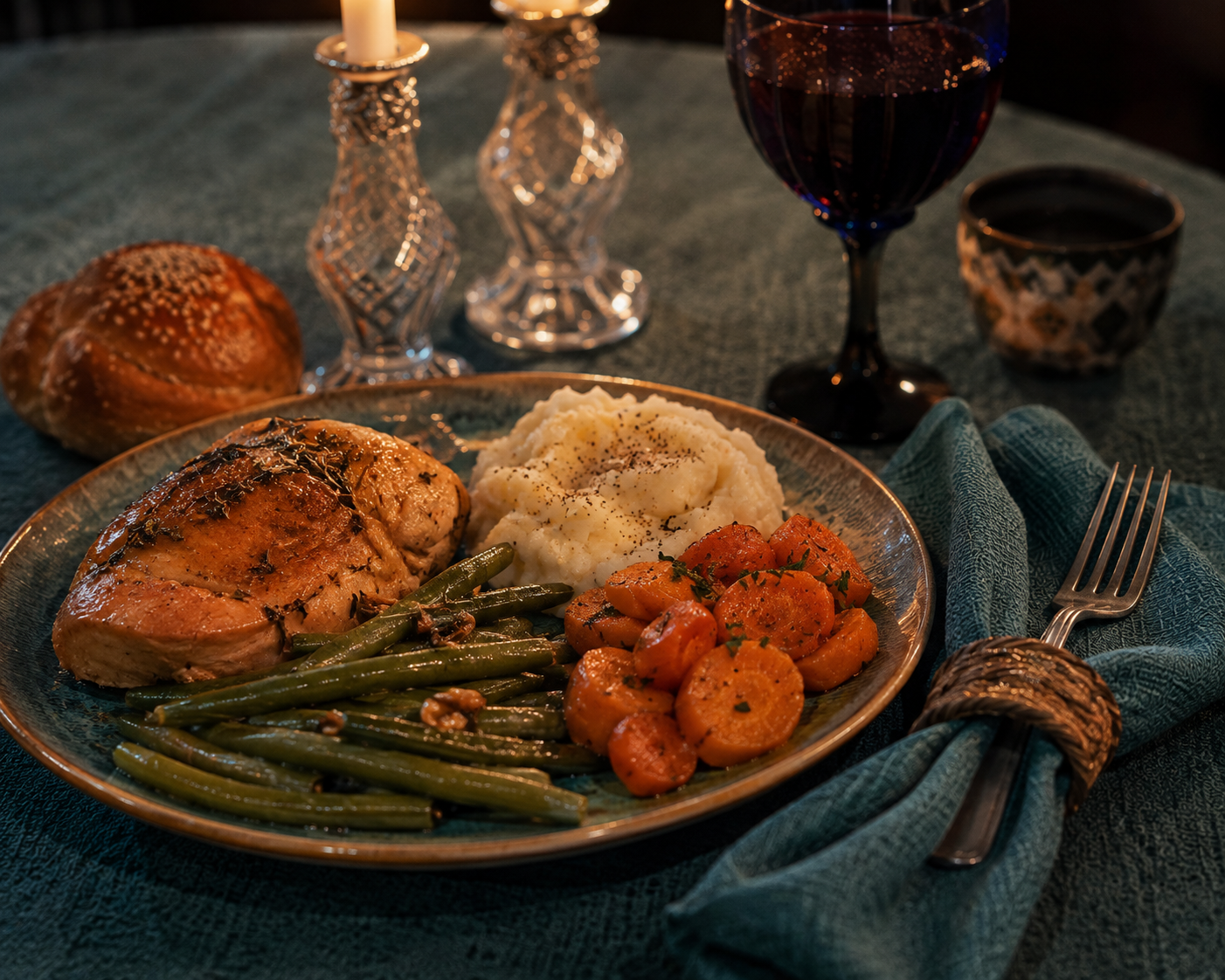
Not everything I do at the Sabbath table is commanded in Scripture. Some things are Jewish tradition. Some are family tradition. Some are simply beautiful or meaningful to me.
I don't have to blur those distinctions in order to value them.
Tradition can be beautiful without pretending it is commandment.
These are ancient Jewish traditions, connecting our little table with countless other Jewish and Messianic Jewish Sabbath tables across generations.
Preparing the Table Prepares Me
Over the years, I've realized that setting the Sabbath table isn't only about preparing a place to eat.
It prepares me.
There is usually a point on Friday when my body is still moving toward Shabbat but my mind is firmly planted in the workweek. I'm thinking about what isn't finished, what still needs to be put away, what I meant to accomplish and didn't.
Then I begin preparing the table.
I clear it.
I bring out the things we use on Friday evening.
I prepare the meal.
I set out the candles.
And little by little, the house begins telling me what my mind hasn't quite caught up with yet:
You are almost done.
I need that reminder.
The workweek can expand indefinitely if I let it. There is always one more email, one more project, one more load of laundry, one more thing that seems important enough to take another twenty minutes.
Shabbat gives the workweek an edge.
Setting the table helps me see that edge approaching.
Soon the candles will be lit. Whatever I didn't finish will still be there when Shabbat is over.
I can stop.
I Don't Have to Earn the Beautiful Version
I have seen photographs of exquisite Sabbath tables—the glowing candles, beautiful linens, polished silver, perfect challah, flowers arranged just so.
I enjoy those images. Beauty has a place at my Sabbath table, too.
But I don't want to confuse beauty with readiness.
I don't have to achieve some ideal version of Shabbat before I am allowed to enjoy the real one.
If the bread isn't perfect, we can bless it.
If the meal is simple, we can enjoy it.
If the house isn't completely clean, I can stop cleaning anyway.
If the table isn't worthy of a photograph, it can still be worthy of Shabbat.
That may be one of the lessons I have needed most.
The beautiful version isn't something I have to earn before I can begin.
I set the table I have.
I light the candles.
I welcome Shabbat.

And over the years, that ordinary table has become something more than a place where we eat dinner on Friday night. It is where the week changes. It is where work gives way to rest, hurry gives way to lingering, and ordinary time gives way to time that has been set apart.
Creating a Sabbath table, for me, has never really been about decorating a surface.
It is about making a place for gratitude, fellowship, worship, delight, and rest.
The table simply gives us somewhere to gather for it.
A Shabbat Table Blessings Printable
When I first began keeping Shabbat, having the blessings together in one place made Friday evening much easier. I've created this printable collection of the blessings and prayers we use around a Messianic Shabbat table, including Hebrew, transliteration, and English, so you don't have to go searching for them when the candles are ready to be lit and dinner is waiting.
