
Growing Apples in Small Spaces
Apples feel like orchard trees. Wide, rooted, permanent. That image is so strong that most people assume apples are out of reach unless they have land to match.
That assumption is wrong.
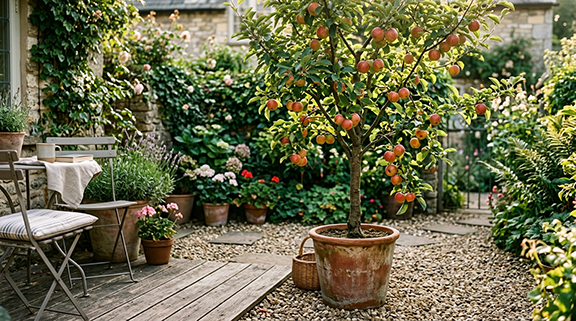
You can grow apples in containers, and not just decorative trees. With the right setup, you can grow real apples—full-sized fruit—from a tree that fits on a patio, in a gravel yard, or in a small homestead space.
“Apples are one of the most adaptable fruit trees you can grow, even in small spaces.”
If your growing space is limited, apples are not off the table. They simply need to be approached differently.
Can You Really Grow Apples in Containers? (Simple Answer)
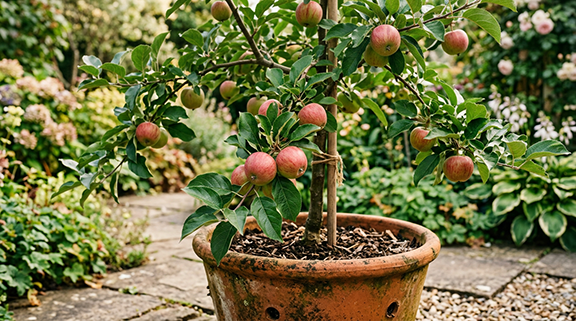
Yes, you can grow apples in containers, but success depends on choosing the right rootstock, not just the variety. Dwarf and semi-dwarf apple trees are specifically designed to stay small while still producing full-sized fruit, making them ideal for container growing.
What Makes Container Apple Trees Work
Most apple trees are grafted, which means they are made of two parts. The top of the tree determines the fruit, and the rootstock determines how large the tree grows and how it behaves. This distinction is what makes container growing possible.
Standard apple trees will quickly outgrow a container and struggle. Dwarf rootstocks, on the other hand, are naturally limited in size and adapt well to controlled environments. That single choice determines whether your tree thrives or fails.
“Dwarf refers to the size of the tree, not the size of the fruit.”
How to Grow Apples in Containers Successfully
A container-grown apple tree behaves more like a managed crop than a wild tree. It requires intention and consistency, but the process is straightforward once you understand the basics.
A successful setup includes a container that holds at least fifteen to twenty gallons of soil, with more space being better over time. The soil must drain well, because heavy garden soil will suffocate the roots. Watering needs to be consistent, since containers dry out faster than the ground. Feeding is necessary because the tree cannot draw nutrients from surrounding soil. In colder climates, some winter protection may be needed to prevent root damage.
This is not difficult, but it does require attention. The tree depends on you more than an in-ground tree would.
Best Dwarf Apple Trees for Small Spaces
Choosing the right rootstock is the most important decision you will make. It determines size, productivity, and how well the tree adapts to container life.
M27 is an extremely dwarf rootstock that grows to about five or six feet tall. It is ideal for very small spaces and patios, but it requires staking for life and produces smaller yields.
M9 is a classic dwarf rootstock that grows between six and ten feet tall. It is highly productive for its size and is commonly used in commercial orchards. This is the best balance between manageable size and meaningful harvest.
M26 is a semi-dwarf rootstock that grows larger, between eight and twelve feet. It can work in very large containers and tends to be more vigorous and forgiving, but it requires more space.
“The rootstock determines the size of the tree. The variety determines the fruit.”
Choosing Apple Varieties for Cooking and Storage
Once the rootstock is chosen, the variety determines how you will use the apples. Climate matters, especially in places with cold winters, so choosing cold-hardy varieties is important. If you want a longer harvest, selecting apples that ripen at different times can extend your season.
For kitchen use, structure matters more than sweetness. Apples that hold their shape during cooking are far more useful than those that collapse.
Good choices include Honeycrisp for fresh eating and versatility, Fuji for sweetness and structure, Granny Smith for baking, and Jonathan or Jonagold for strong flavor in pies.
Do You Need Two Apple Trees? (Pollination Explained)
Most apple trees are not self-fertile, which means they require another apple tree nearby for pollination. This can come from your own second tree or even a neighbor’s tree within range.
If space is limited, there are two solutions. You can choose a self-fertile variety, or you can select a multi-grafted tree that produces multiple varieties on a single trunk.
Understanding this step prevents one of the most common disappointments in small-space fruit growing.
When to Plant Apples in Containers
Timing matters more than most people expect. The best time to plant an apple tree is early spring, just before it breaks dormancy. This allows the roots to establish before the stress of summer heat.
Early fall is a strong second option, giving the tree time to settle in while top growth slows. In colder climates, containers may need protection once temperatures drop.
Planting later in spring or early summer is possible with nursery trees, but it requires more attention to watering and heat management. In that case, you are managing stress instead of preventing it.
“A well-timed planting sets the rhythm for everything that follows.”
What to Expect from a Container Apple Tree
It is important to set realistic expectations. A container-grown apple tree will not produce the volume of a full orchard tree. What it will produce is enough to matter.
You can expect fresh apples for eating, small batches for baking, and the ability to turn your harvest into something meaningful in your kitchen.
“A small harvest is still enough to connect your garden to your table.”
That connection matters more than quantity.
From Tree to Table
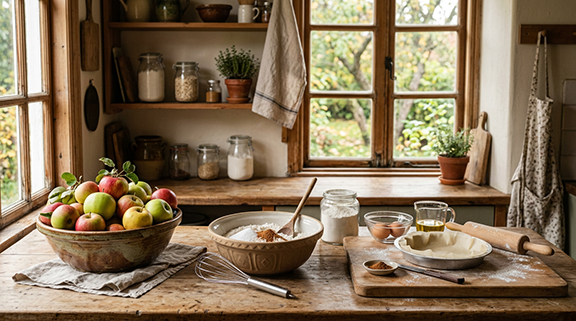
There is a particular kind of satisfaction that comes from cooking apples you grew yourself, even if they came from a single tree in a container. They are not just ingredients. They are part of a cycle that you participated in from the beginning.
That is why preserving them makes sense. Even a small harvest can become jars on a shelf, ready for baking, sharing, or a simple skillet of warm apples in the colder months.
If you are ready to use what you grow, the next step is simple.
