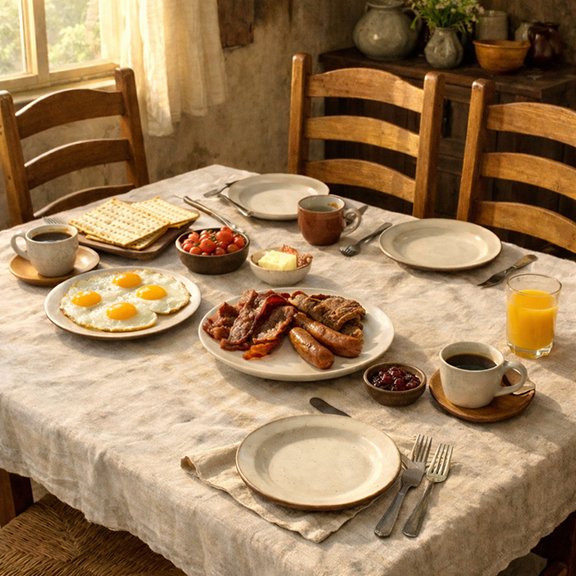
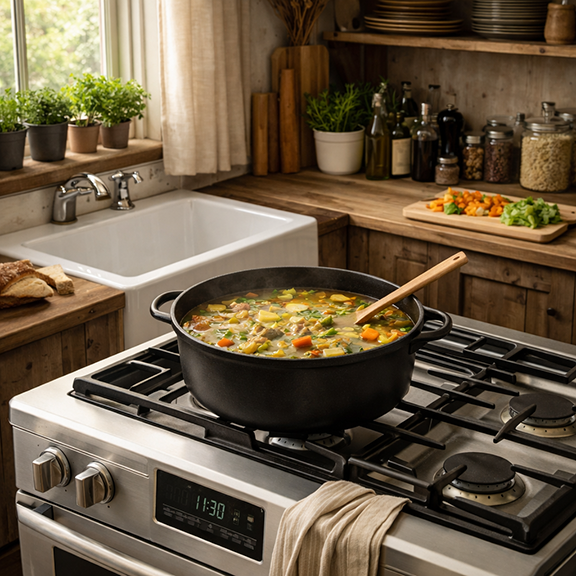
Here are two simple ways to use what is already in your kitchen.
Simple Matzah Breakfast Bake (Sweet or Savory)
This is one of the easiest ways to use leftover matzah without it feeling like you are still eating Passover food.
Ingredients:
4–5 sheets matzah, broken into pieces
4 eggs
1 cup milk
Pinch of salt
For sweet version:
1–2 tbsp honey or maple syrup
½ tsp cinnamon
Optional: chopped apples or raisins
For savory version:
½ cup cooked vegetables (onions, peppers, spinach)
½ cup shredded cheese
Optional: leftover chicken
Instructions:
Preheat oven to 350°F. Lightly grease a small baking dish.
Soak the matzah pieces briefly in water, then drain.
In a bowl, whisk eggs, milk, and salt. Add sweet or savory ingredients.
Fold in the softened matzah and pour into the dish.
Bake 25–30 minutes, until set and lightly golden.
This works because it transforms matzah into something entirely different—soft, cohesive, and flexible. It becomes a base, not the focus.
Simple Chicken and Vegetable Skillet with Bread
This is a transition meal—moving back to normal ingredients while still using what you already have.
Ingredients:
2 cups cooked chicken (or any leftover meat)
2 cups mixed vegetables (fresh or leftover roasted)
2 tbsp olive oil or butter
1 clove garlic, minced
Salt and pepper
Optional: fresh herbs
Serve with fresh bread, rice, or flatbread.
Instructions:
Heat oil in a skillet over medium heat. Add garlic and cook briefly.
Add vegetables and cook until warmed through.
Add chicken and stir until heated. Season with salt, pepper, and herbs.
Serve immediately with bread or grains.
This meal is intentionally simple. It uses what is already prepared, adds one or two fresh elements, and brings your kitchen back into its normal rhythm without extra work.