Tiny Homestead Habits
Small Acts of Stewardship That Shape a Life
Every once in a while, I come across an idea that makes me smile because it finally gives a name to something I've been doing for years.
Recently, it was a Japanese word: Kaizen.
It means continuous improvement—the idea that lasting change rarely comes through dramatic overhauls. Instead, it grows from small, thoughtful improvements made consistently over time.
Most people associate Kaizen with factories or businesses. At first glance, it doesn't seem to have much in common with homesteading.
But the more I thought about it, the more familiar it felt.
Long before I knew there was a Japanese word for it, I had already been practicing it.
I suspect many homesteaders have.
This season of life has only reinforced that lesson. I've recovered from surgery, but I still do much of life from a wheelchair because of an unrelated neurological condition. Our little blue condo isn't the homestead we hope to have someday, but it's the home God has entrusted to us today.
Stewardship doesn't wait for perfect circumstances. It begins exactly where we are.
And stewardship doesn't wait for perfect circumstances.
It begins exactly where we are.
These days I often find myself asking a simple question:
"What's one small thing I can do today that will make tomorrow a little better?"
It's amazing how often the answer is enough.
Over the years I've learned that thriving homesteads aren't built by extraordinary days.
They're built by ordinary ones.
Not through occasional heroic efforts, but through hundreds of small choices repeated faithfully over months, years, and decades.
The longer I homestead, the less interested I become in shortcuts. I'm much more interested in wisdom.
Thriving homesteads aren't built by extraordinary days. They're built by ordinary ones.
Finish One Cycle Before Beginning the Next
Good stewardship often means finishing well before beginning again.
One of the smallest habits in my kitchen has saved countless headaches.
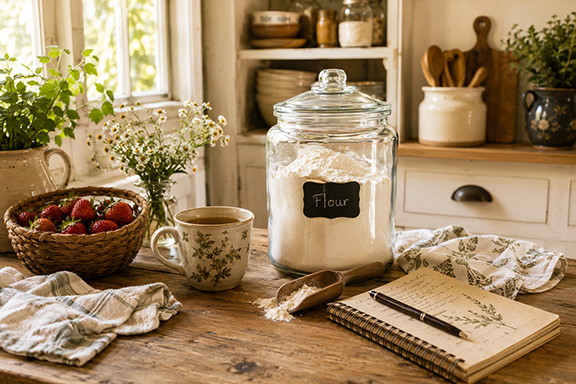
I never top off the flour jar.
Instead, I use what's there, wash the jar, let it dry completely, and only then refill it with fresh flour.
Otherwise, the oldest flour remains buried at the bottom, forgotten until it's far past its best.
The same principle served us well years ago when we raised livestock. Feed bins weren't topped off, either. They were emptied, cleaned, dried, and then refilled. It prevented stale feed, moisture, mold, insects, and all the problems that come from rushing a simple job.
Good stewardship often means finishing well before beginning again.
The longer I homestead, the less interested I become in shortcuts. I'm much more interested in wisdom.
Observe Before You Act
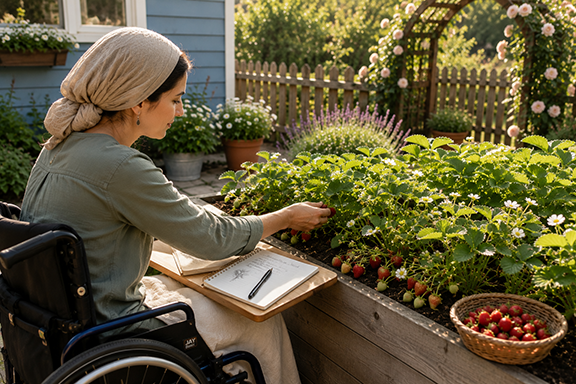
One of the most valuable habits I've developed is simply taking time to observe before I begin working.
These days that often means looking carefully over my strawberry patch.
Which berries are ready today?
Which blossoms promise fruit next week?
Are the leaves healthy?
Has something changed since yesterday?
When I lived on a larger homestead, the questions were different, but the principle was exactly the same.
Careful observation usually accomplishes more than hurried action.
Sometimes the wisest thing we can do is simply pay attention.
Sometimes the wisest thing we can do is simply pay attention.
Care for the Tools That Care for You
Fresh bread dough washes easily.
Garden tools clean up quickly before the soil dries.
A pair of pruning shears wiped clean after use will serve faithfully for years.
Taking care of the tools we've been given is one of the quietest forms of stewardship I know.
Write It Down While You Remember
Homesteaders have always kept notebooks.
The first ripe strawberries.
The tomato variety that outperformed the rest.
The recipe that everyone requested twice.
The lesson learned the hard way.
Memory is a wonderful gift.
It's also wonderfully imperfect.
A notebook turns today's observations into tomorrow's wisdom.
Leave Tomorrow a Gift
Before ending the day, I like to ask one simple question.
"What can I do right now that will make tomorrow just a little easier?"
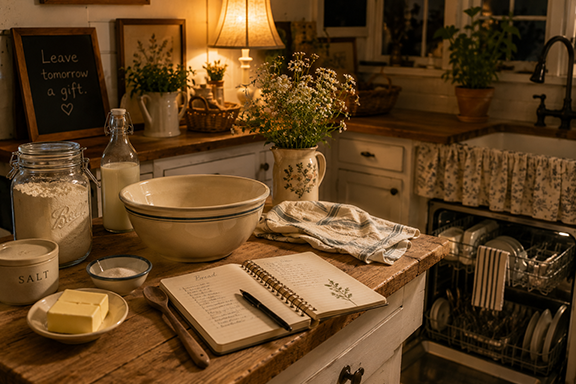
Sometimes it's setting out the ingredients for bread.
Sometimes it's emptying the dishwasher.
Sometimes it's gathering the basket I'll need in the morning.
Sometimes it's simply putting everything back where it belongs.
None of those jobs feels especially important.
Together, they create a home that feels peaceful instead of overwhelming.
Faithfulness Grows Slowly
The more I read Scripture, the more I notice that God often works through things the world overlooks.
A seed.
A little leaven.
Daily bread.
A widow's offering.
The Kingdom itself is described as something that grows quietly, almost unnoticed.
Perhaps that's why Kaizen resonated with me so deeply.
Not because I'm trying to turn my home into a business.
But because it reminded me that lasting change usually begins with one small act of faithfulness.
One clean jar.
One notebook entry.
One careful observation.
One act of gratitude.
Tomorrow those things won't seem quite so small.