
Tiny Homestead Habits: Stewardship Begins with Gratitude
Homesteading has a funny way of keeping your attention fixed on what comes next.
There’s always another project. Another tool that would make the work easier. Another garden bed we could build, another fruit tree we could plant, another skill we could learn. Even when the homestead is still mostly a dream, it’s easy to spend more time thinking about what we don’t have than noticing what has already been placed in our hands.
So here’s a tiny homestead habit that costs nothing and takes almost no time:
Before you think about what you need, give thanks for what you have.
Not vaguely. Name it.
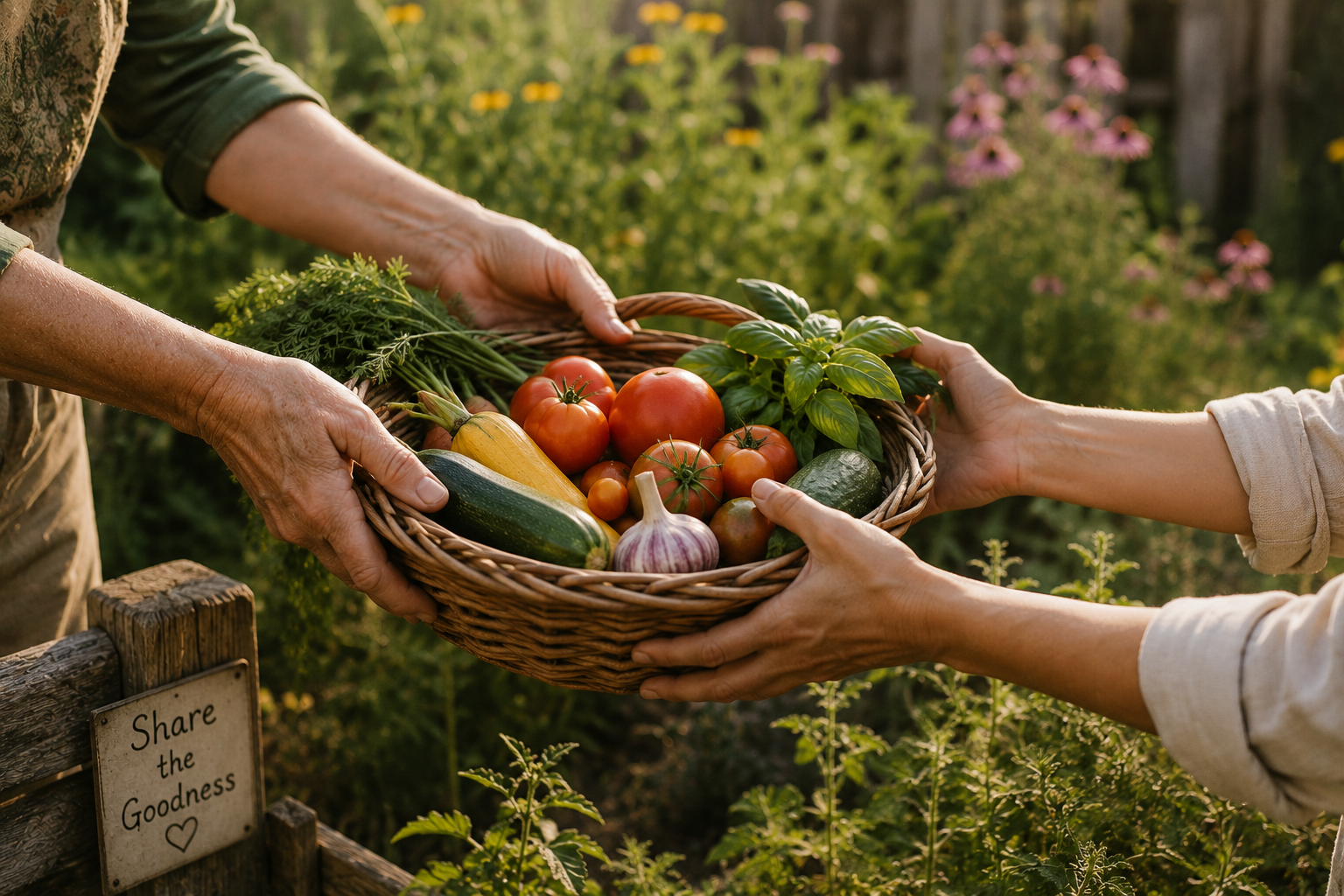
That last jar of tomatoes on the pantry shelf. The basil that has grown far beyond what you could possibly use. A good shovel that has lasted for years. Flour in the jar. Clean water from the tap. A sunny windowsill. A freezer with food in it. Someone willing to help with the work.
Gratitude changes the way we see ordinary things.
A basket of zucchini stops being more zucchini and becomes abundance. Scraps headed for the compost aren't merely waste; they're tomorrow's soil. The worn garden gloves by the door become evidence that we had work worth doing and hands available to do it.
And once we see what we have as a gift, taking care of it begins to feel different.
Gratitude Comes Before Stewardship
We often talk about stewardship as responsibility: don't waste food, maintain your tools, care for the soil, use your resources wisely.
All of that matters.
But stewardship that begins only with responsibility can start to feel like a very long list of chores.
Biblical stewardship begins somewhere deeper.
“The earth is Adonai’s and all that fills it.”
—Psalm 24:1
If everything ultimately belongs to God, then the things in our care aren't possessions in quite the way we tend to think of them. They're things entrusted to us for a time.
That includes the obvious things—the house, land, money, food, animals, and belongings—but it also includes time, strength, knowledge, relationships, and opportunities.
Gratitude reminds us whose they are.
Instead of looking at what we have and thinking, This is mine, we begin to think, Thank You for letting me care for this.
That is a very different way to live.
What Gratitude Changes
I've noticed that when I'm genuinely grateful for something, I naturally want to take better care of it.
If I'm thankful for the food in my kitchen, I'm more likely to notice what needs to be used before it spoils.
If I'm thankful for a tool, putting it back where it belongs doesn't seem quite so much like an annoying final step.
If I'm grateful for what the garden produces, even an imperfect harvest feels worth preserving.
And if I'm grateful for the little patch of earth under my care, tending the soil becomes more than a means of getting tomatoes out of it.
Gratitude slows down the constant reaching for more.
That doesn't mean we never buy anything, improve anything, expand anything, or dream about what comes next. Sometimes good stewardship means buying the better tool. Sometimes it means building another bed or replacing something that has worn out.
But gratitude helps us tell the difference between I need this and I want this because I've stopped noticing what I already have.
That's a useful distinction on a homestead—and everywhere else.
The Habit Is Simply to Notice
This doesn't need a gratitude journal, a complicated routine, or another item on the morning checklist.
Just notice.
When you open the pantry, pause for a moment before deciding what needs restocking.
When you walk into the garden, look at what is growing before noticing what isn't.
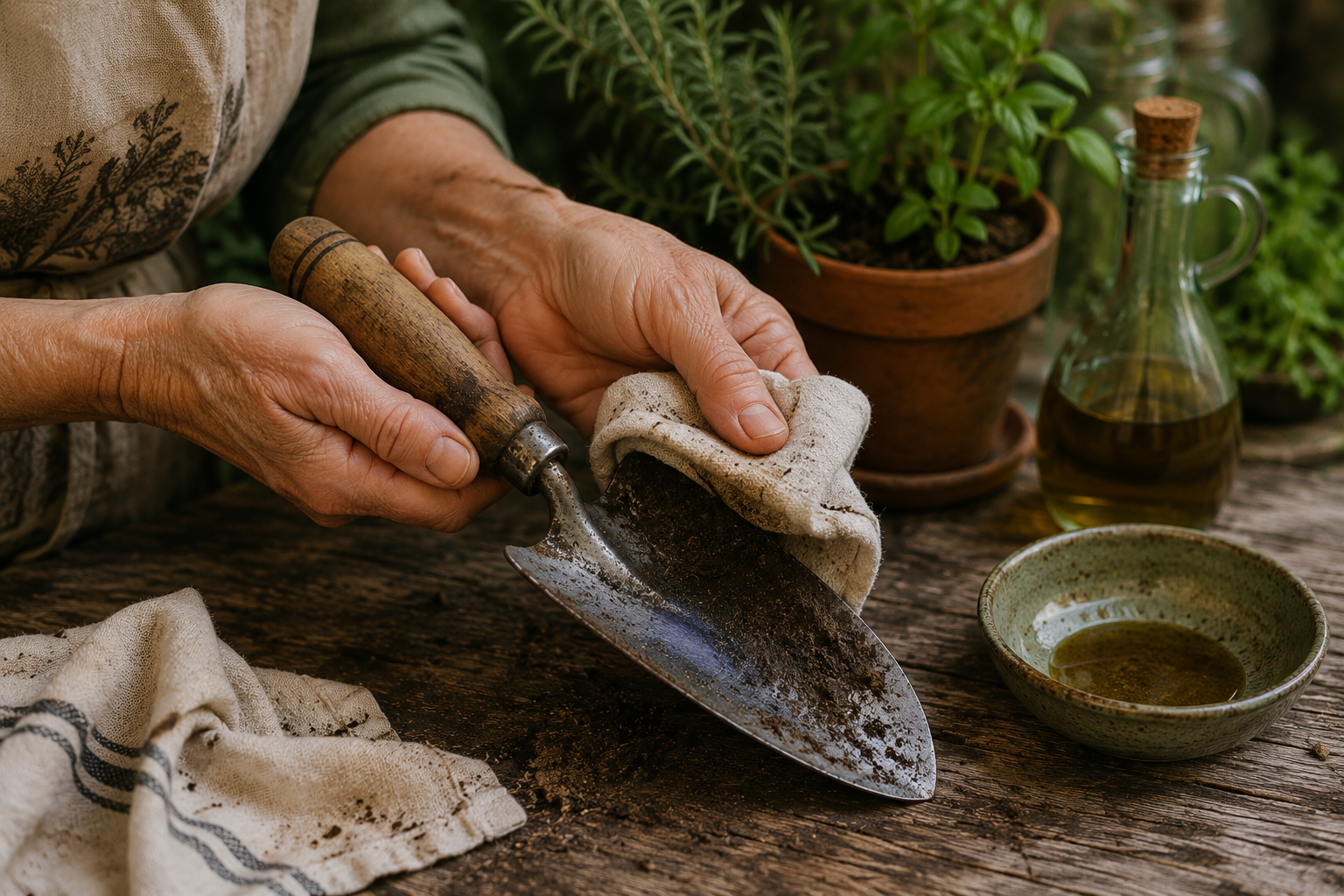
When you pick up a familiar tool, remember how many jobs it has already helped you accomplish.
When you sit down to eat something you grew, baked, preserved, or prepared, recognize the remarkable chain of provision that brought that food to your table.
And when something is small, imperfect, secondhand, patched, repaired, or not quite what you eventually hope to have, give thanks for what it allows you to do today.
A homestead doesn't have to be finished before it can be enough.
Begin With Thank You
Before making the shopping list, say thank you.
Before planning the next improvement, say thank you.
Before wishing the garden were bigger, the pantry fuller, the kitchen prettier, or the work easier, look at what is already here.
Then take care of it.
Use it wisely. Repair it when you can. Share the abundance. Avoid wasting it. Put it away when you're finished. Enjoy it while it is yours to enjoy.
Those are acts of stewardship.
But perhaps the smallest habit comes first.
Notice the gift. Thank the Giver. Then care well for what He has placed in your hands.
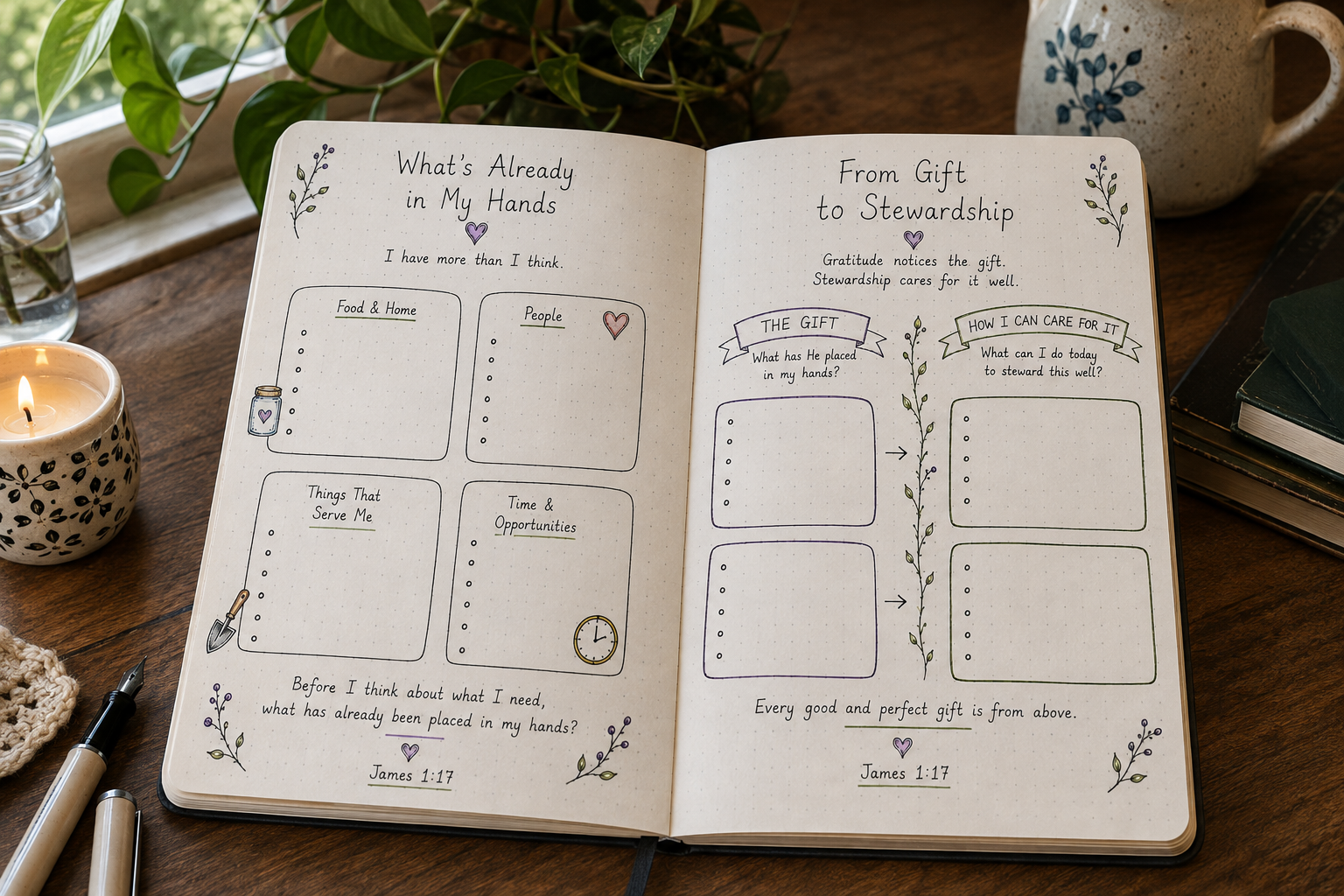
A Little Gratitude for Your Journal
Sometimes gratitude becomes easier when we give ourselves a place to notice it. I created these Homestead Gratitude Bullet Journal Pages as a starting point—not as pages you have to use in any particular way. You can download and use them as inspiration, or pull out your own dotted journal and copy the layouts by hand. They’re intentionally simple and a little imperfect, because your journal doesn’t need to be a work of art to be meaningful. Use the prompts to notice what is already in your hands, think about how you can care for it well, and turn gratitude into everyday stewardship.

