
Mung Sprouts or Microgreens? What Actually Supports Your Immune System
Winter has been relentless this year.
After getting sick more times than I care to admit, I started asking a simple question:
What can I grow, right here in my kitchen, that genuinely supports my immune system?
No acreage. No greenhouse. Just a windowsill.
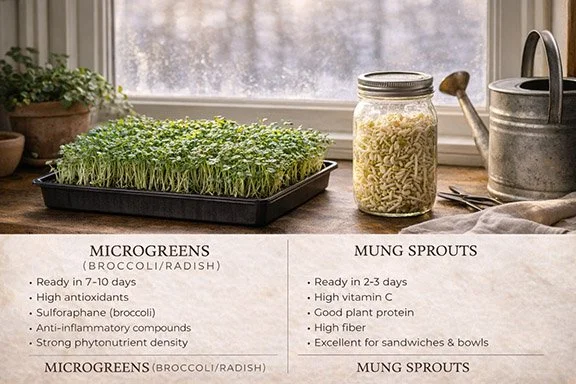
COMPARISON
The two obvious candidates?
Mung bean sprouts and microgreens.
So which one is better?
The honest answer is: they do different jobs.
Mung Sprouts: Gentle, Steady Nourishment
Mung beans sprout quickly—usually in 2–3 days. You rinse them twice a day, and before long you have crisp, living food ready for sandwiches, salads, or a quick stir-fry.
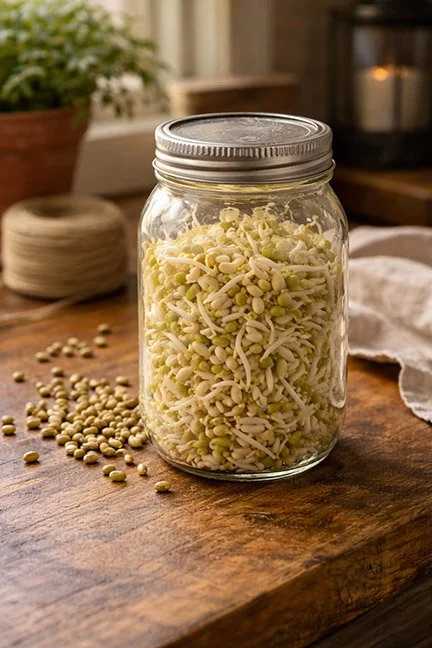
When mung beans sprout, several things happen:
Vitamin C increases dramatically.
Enzyme activity rises.
The beans become easier to digest.
Nutrients become more bioavailable.
They are hydrating, fiber-rich, and contain plant protein. That matters. Your immune system is built from protein. Antibodies are protein. Immune signaling molecules are protein.
Mung sprouts won’t “boost” your immune system in a flashy way. They nourish it steadily. Think foundational support.
Microgreens: Concentrated Plant Compounds
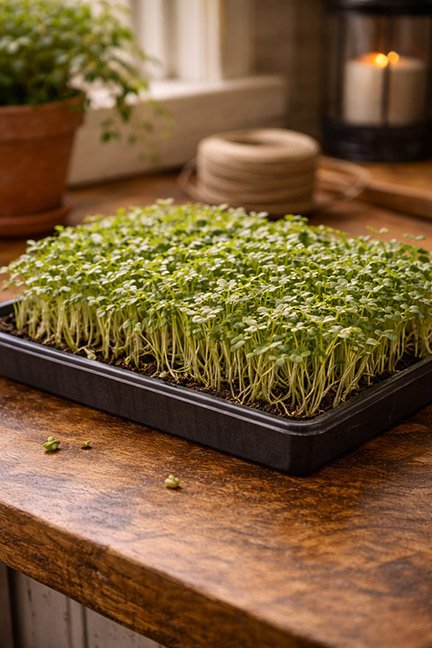
Microgreens are harvested just after the first true leaves form, usually 7–14 days after planting. At this stage, the plant is in rapid growth mode, and many nutrients are highly concentrated.
Certain microgreens stand out for immune support:
Broccoli microgreens are rich in sulforaphane precursors, compounds studied for their antioxidant and anti-inflammatory effects.
Radish microgreens contain strong phytochemicals that support detox pathways and respiratory health.
Pea shoots provide vitamins and a mild sweetness that makes them easy to add to almost anything.
Microgreens are less about bulk and more about density. A small handful carries a surprising nutritional load.
So Which One Is Healthier?
If you want volume, fiber, protein, and vitamin C quickly: mung sprouts.
If you want concentrated antioxidants and plant defense compounds: microgreens.
If you want the strongest overall immune support in a small space?
Both.
Sprout mung beans for sandwiches and bowls.
Grow broccoli or radish microgreens for topping eggs, soups, and sourdough toast.
Layer nourishment instead of choosing sides.
Why This Matters in Winter
When illness keeps circulating, the goal is not “boosting” the immune system into overdrive. The goal is balance.
Your immune system needs:
Micronutrients
Antioxidants
Protein
Reduced inflammation
Steady nourishment
Living greens grown in your kitchen provide all of those without requiring a garden plot.
And there’s something else.
In winter, when the world feels dormant, tending something green—even a jar of sprouts on the counter—quietly shifts the atmosphere of a home.
Light. Growth. Movement.
Sometimes immune support begins with what you grow.
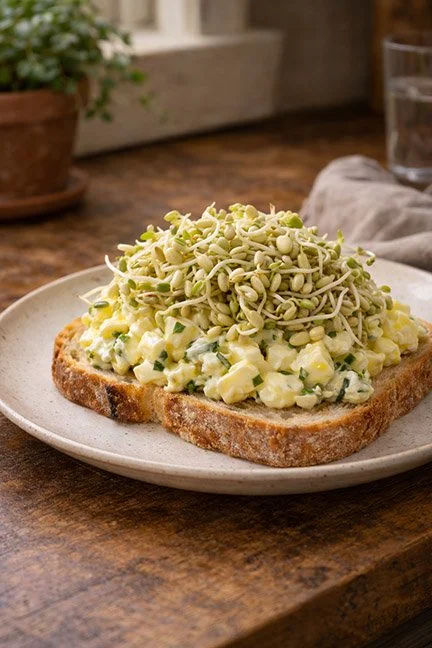
A nigh-protein sandwich that supports your immune system
