
Tiny Homestead Habits: The Morning Reset
My morning reset actually begins the night before.
I hate waking up to a disorderly kitchen. If yesterday’s dishes and clutter are still sitting there when I come into the kitchen in the morning, it feels as though I’m starting the day already behind. So we don’t do that. Before we go to bed, the kitchen is put in order. The dishes are dealt with, the counters are cleared, and things are put away.
That means I don’t wake up facing yesterday’s work. I can start with today.
And that, really, is what my morning reset is about.
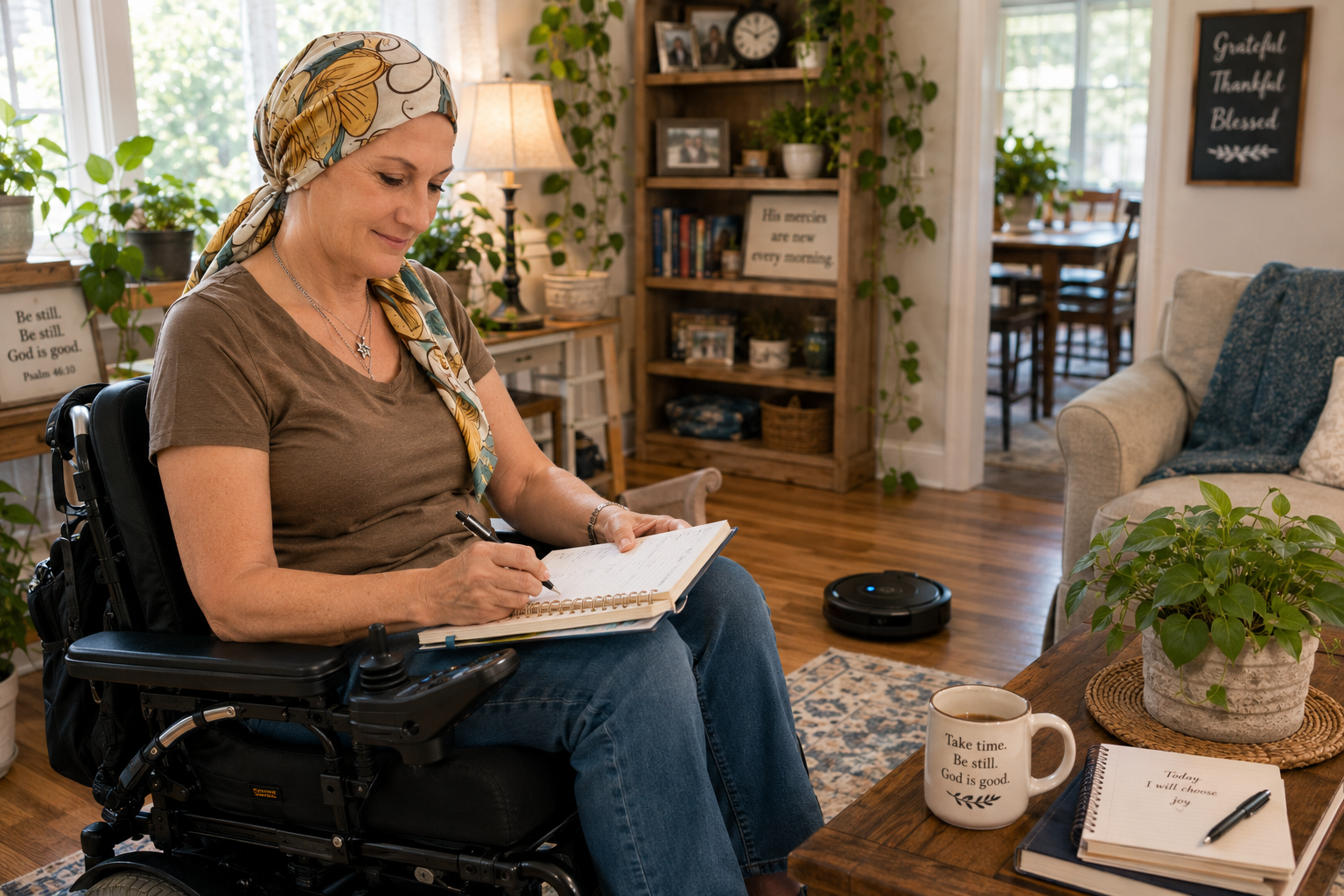
Get the House Ready for the Day
First, the dog needs to be taken care of. Anyone who lives with a dog knows that your carefully considered morning priorities are of absolutely no interest to the dog.
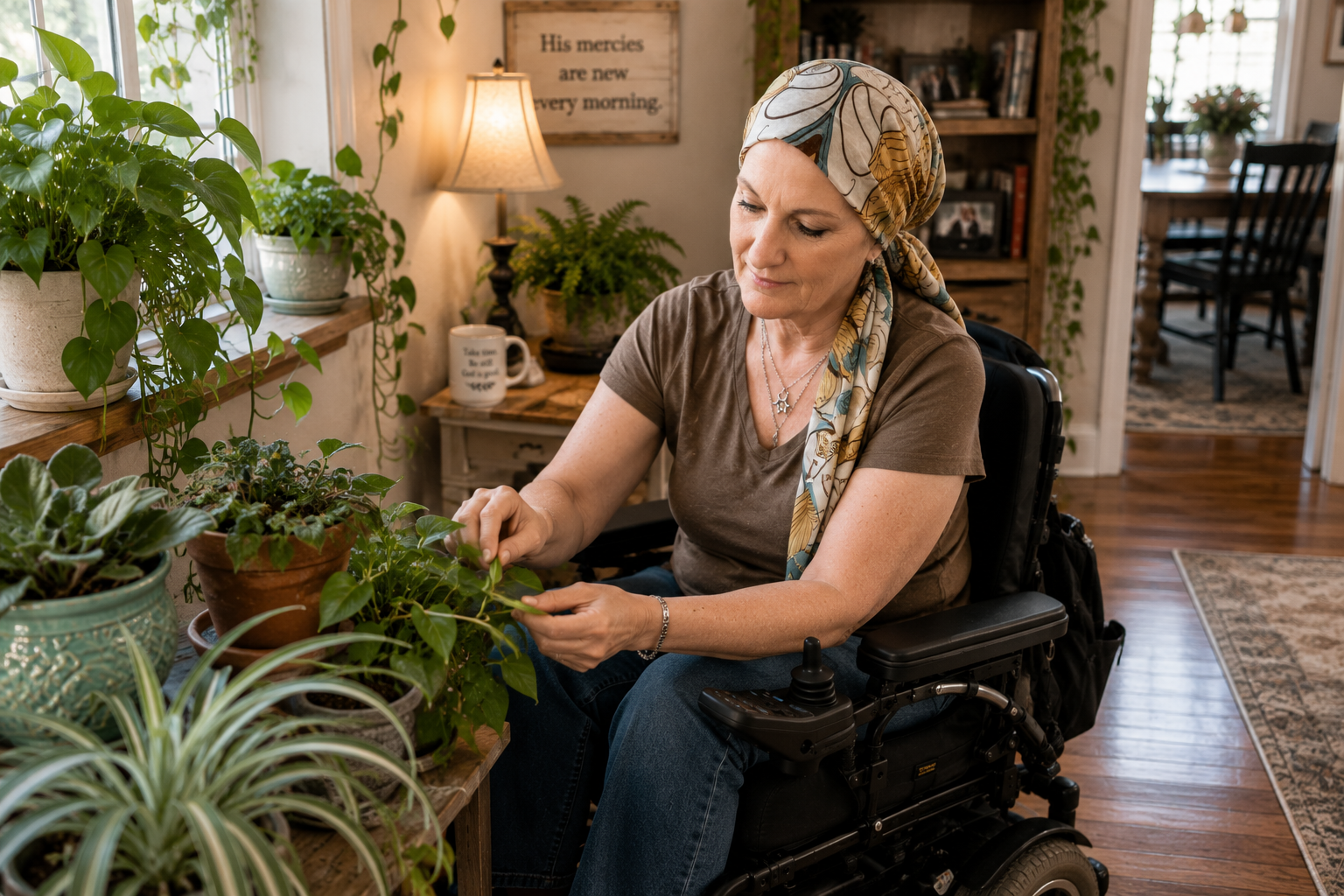
Then I check the plants.
Plants are remarkably good at telling you what’s going on if you make a habit of looking at them.
This is one of those tiny habits that prevents bigger problems. I don't necessarily do anything to every plant every morning. I just look. Does anything need water? Is something drooping that wasn't drooping yesterday? Is there a new leaf, a pest, a blossom, or something that needs attention?
Plants are remarkably good at telling you what's going on if you make a habit of looking at them.
And checking every morning means I'm much more likely to notice a problem while it's still small. A thirsty plant gets watered before it wilts badly. A struggling plant gets my attention before I've walked—or rolled—past it for three days without really seeing it.
A good routine should help me through the day, not use me up before I’ve really started it.
Only after the living things have been checked do I turn to the little household things.
I tidy the bathroom, wipe out the sink, and polish the mirror. Jeff makes the bed. The living room gets straightened up. If laundry needs to be done, I start a load.
None of this is a major cleaning session. I'm not scrubbing floors or tackling projects. I'm simply taking care of the handful of things that keep yesterday from spilling over into today.
For me, that distinction matters.
I do these things from a wheelchair, and that changes how I work. A routine that depends on dashing from one end of the house to the other isn't going to work for me. Extra trips matter. Reaching matters. Carrying things matters. I've learned to think ahead, combine tasks when I can, and pay attention to how much energy I'm spending on something.
A good routine should help me through the day, not use me up before I've really started it.
Let the Machines Do Their Share
If there is laundry to do, I like to get it going early. I also start the robot vacuum when the floors need it.
Then I leave them to it.
The washing machine can wash clothes and the robot vacuum can make its rounds while I'm doing something that actually requires me. By the time I've finished Bible study, exercises, or language study, work has been getting done around the house without my having to do it myself.
For me, that's more than a clever way to multitask.
Start what can run without you, and then use your own time and energy for the things that can’t.
Working from a wheelchair has made me very conscious of where I spend my energy. If a machine can do a job, I don't earn extra points for doing it the hard way. The vacuum doesn't need me pushing it from room to room, and the washing machine certainly doesn't need me watching it go around.
So I put them to work.
I've come to appreciate this kind of quiet household efficiency. Start what can run without you, and then use your own time and energy for the things that can't.
On a homestead—whether it's twelve acres or a little blue condo—there will always be more things that could be done than one person can reasonably do.
I'm quite happy to let the robots help.
Find Out What Kind of Day It Is
Before I get too far into the morning, I look at what's on the agenda.
I don't schedule every minute of my day, and I wouldn't want to. But I do want to know what's coming.
Do I have an appointment? Is there something I need to write? Do we have errands? Is there a household job that really needs attention today? Is there something that needs to be prepared now so I'm not scrambling for it later?
Taking a few minutes to look ahead helps me decide what actually matters.
Some things need to be done today.
Some things would be nice to get done.
And some things can wait.
Knowing the difference can change the whole day.
The House Isn't the Only Thing That Needs Preparing
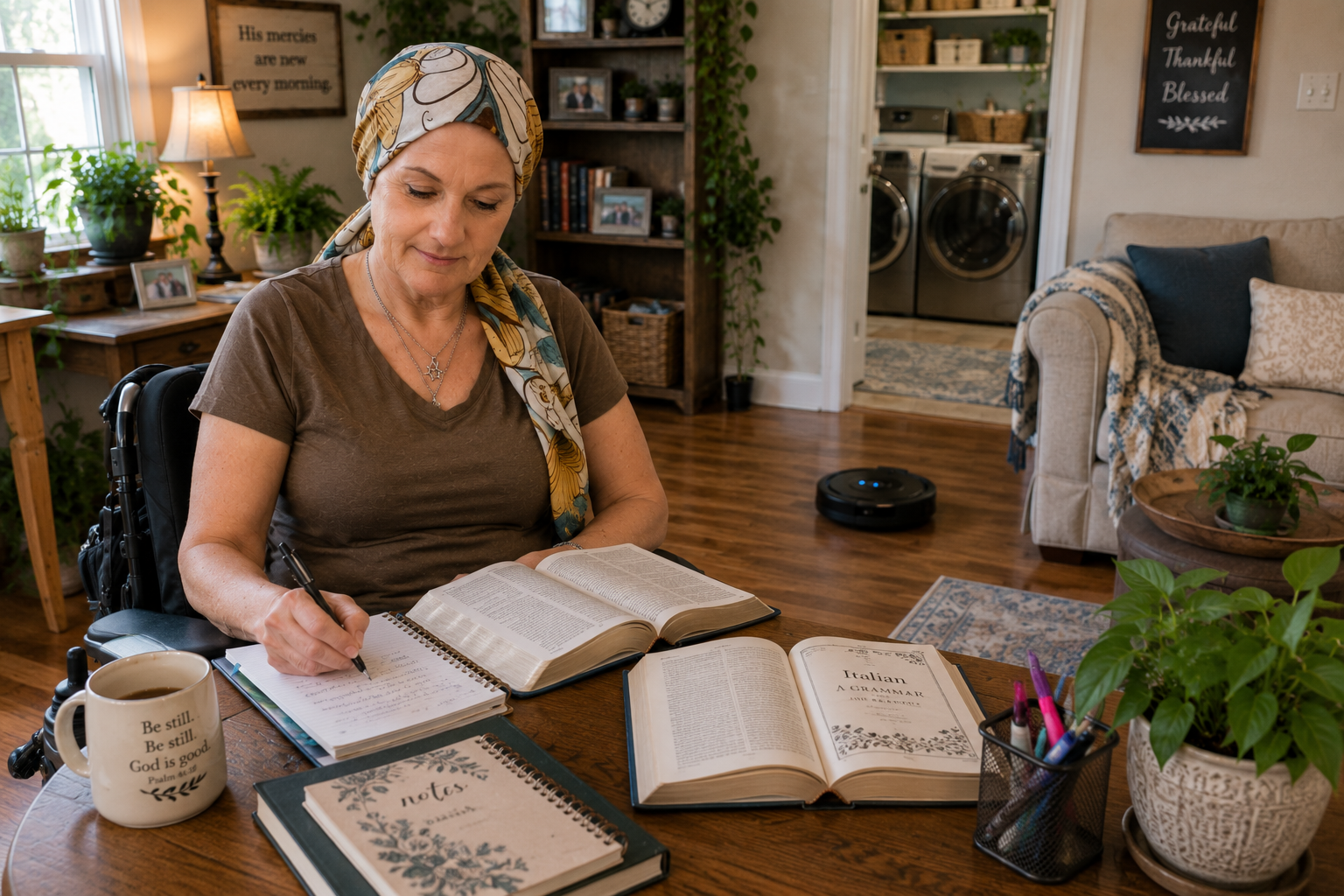
Once those little household things are taken care of, I turn to Bible study, exercises, and language study.
I consider those part of my morning reset, too.
Bible study comes before I get caught up in everything else I could be doing. My exercises are part of taking care of the body I've been given. And language study keeps me learning, which is something I never intend to stop doing.
These aren't chores I have to get out of the way before the “real” day begins.
They are part of the real day.
I think that's easy to forget when we talk about morning routines. We tend to measure them by how much we accomplish: make the bed, empty the dishwasher, start the laundry, answer the email, check another box.
But a morning shouldn't only prepare our surroundings for the work ahead.
It should prepare us.
Then I Begin
Once I've done those things, I move into whatever is on the agenda for that particular day.
No elaborate morning routine. No attempt to clean the entire house before breakfast. No long checklist that leaves me exhausted before I get to the things I actually need to do.
The dog is cared for. The bathroom is tidy. The bed is made. The living room is in order. If laundry needs doing, it's underway. I know what's ahead of me. I've spent time in Scripture, done my exercises, and studied.
Now I can get on with the day.
I've discovered that the best routines remove little bits of friction. They take care of the things that would otherwise keep interrupting you, nagging at you, or requiring attention at inconvenient times.
That's especially valuable when your energy and mobility aren't unlimited. I don't want to spend either one carelessly.
Make Your Reset Fit Your Life
Your morning reset probably won't look exactly like mine. It shouldn't.
A family with young children will have a different morning. Someone with livestock will have chores that can't wait. A homeschooling family may need to clear the kitchen table and gather books. Someone who leaves for work at seven in the morning may have only ten minutes to put the house in order before heading out the door.
A morning reset isn’t supposed to finish the day’s work. It’s supposed to help you begin it.
The point isn't to copy someone else's routine.
Look around your own home and ask:
What can I do now that will make the rest of the day easier?
Start there.
Maybe it's one load of laundry. Maybe it's feeding the animals and filling water bowls. Maybe it's making the bed, clearing the table, or looking at the calendar before everyone starts asking where they're supposed to be.
Do the few things that help your household move into the day without unnecessary friction.
Then stop.
A morning reset isn't supposed to finish the day's work.
It's supposed to help you begin it.
And, perhaps most importantly, it should leave enough of you for the rest of the day.
Create your own personal morning reset!

