
Tiny Homestead Habits: Five-Minute Garden Walks
The tiny habit that helps you notice what your garden needs before it starts shouting.
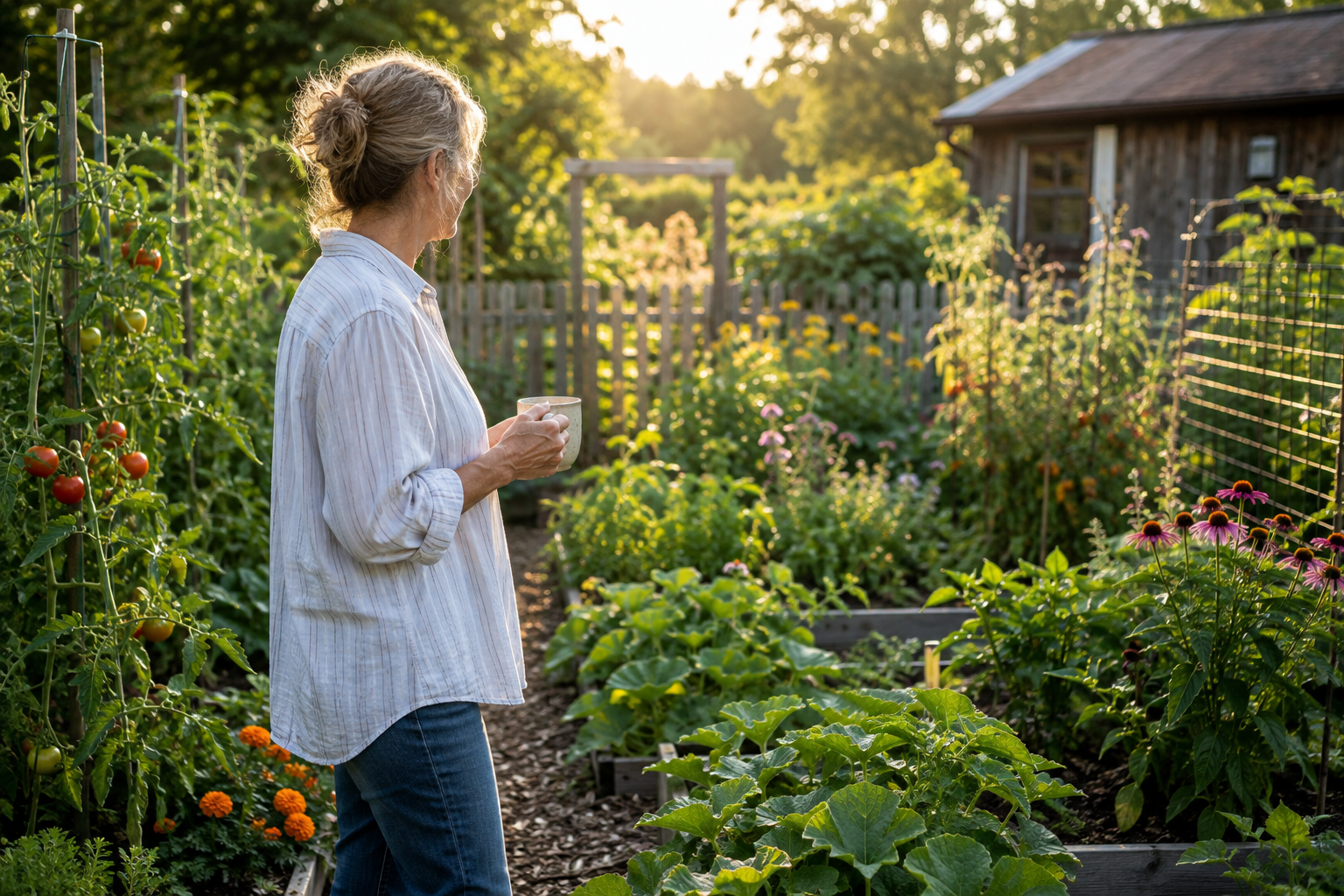
A garden has a way of changing when you aren't looking.
One day the cucumber leaves are green and sprawling. The next, one of them has a suspicious white patch. The tomatoes that weren't quite ripe yesterday are suddenly perfect. The lemon balm has burst into flower, the bees have discovered it, and somewhere beneath a squash leaf there is almost certainly a zucchini plotting to become the size of a baseball bat.
You can miss a lot in a garden in just a few days.
That's why one of the simplest homestead habits I know is also one of the most useful:
Take five minutes and walk through the garden every day.
Not to work.
Just to look.
Five Minutes Is Enough
I think sometimes we avoid going out to the garden because we know what will happen.
We'll see weeds.
We'll notice something needs pruning.
We'll remember that the beans should have been picked yesterday.
Suddenly what was supposed to be a pleasant walk outside has turned into another item on an already-full list.
So this habit has a rule:
You don't have to fix anything.
You are allowed to simply notice.
Five minutes is enough to walk slowly through a small garden, look beneath a few leaves, check the soil, see what's flowering, and notice what has changed since yesterday.
If something needs attention, you can come back to it later.
Look High, Look Low
Gardens are remarkably good at hiding things.
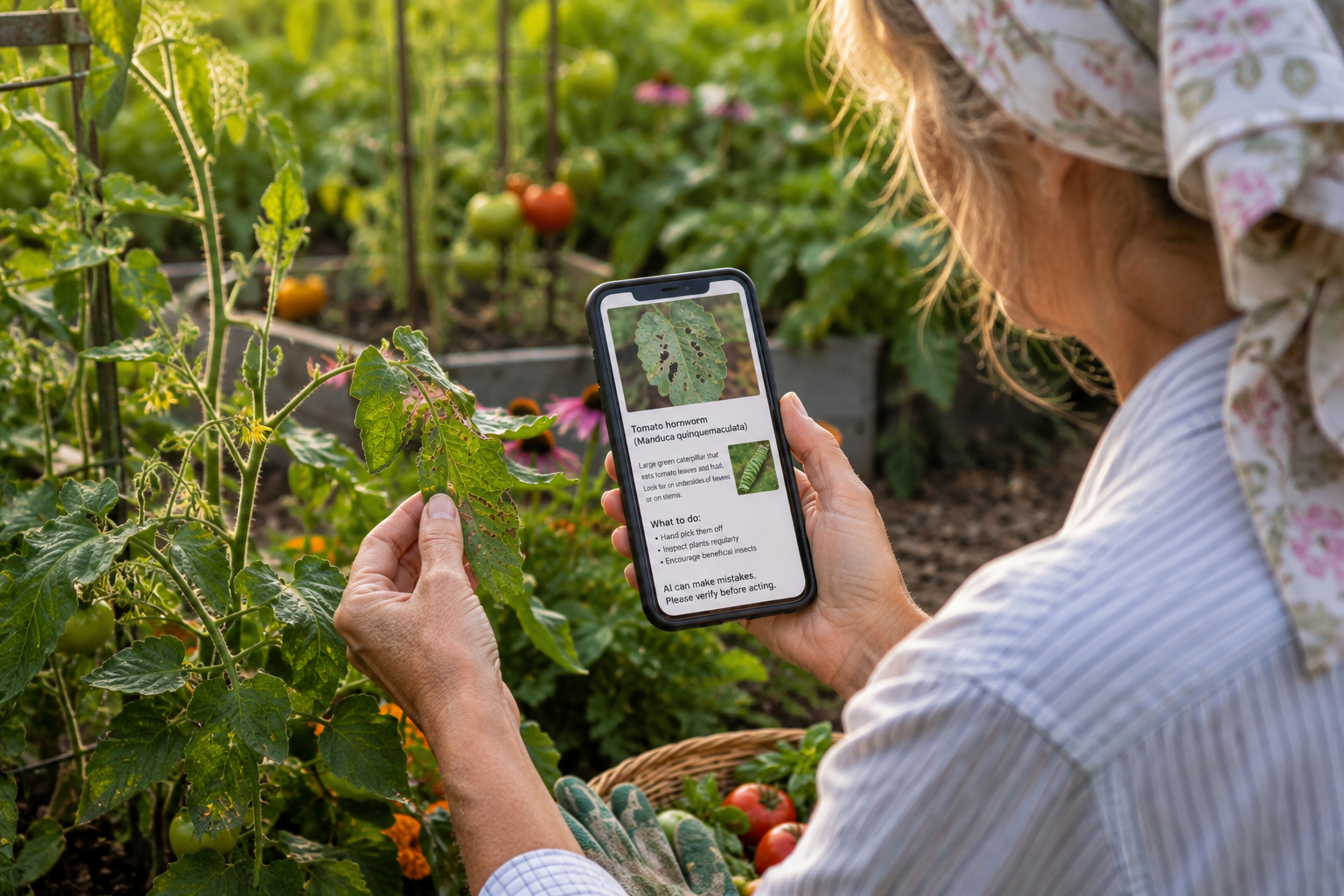
A tomato hornworm can be happily eating its way through a plant while remaining nearly invisible. Cucumbers tuck themselves behind leaves. Squash bugs hide underneath them. A plant that looks perfectly healthy from above may tell an entirely different story when you turn over one leaf.
So I wander.
I look at the tops of plants and underneath their leaves. I notice whether anything is drooping. I look for blossoms and developing fruit. I check whether the soil looks dry.
And I watch for life.
Bees working among the flowers. Birds visiting the garden. A hummingbird stopping at something I intentionally allowed to bloom for him. Ladybugs doing work I didn't have to do myself.
Those aren't distractions from gardening.
They're part of the garden.
Homestead Tip: Take Your Phone
Slip your phone into your pocket before you head out.
If you spot an insect you've never seen before, a strange patch on a leaf, an unfamiliar weed, or anything else you can't identify, take a photo. AI tools can often help you identify what you're looking at, explain whether it's something to be concerned about, and suggest what to do next.
It can be surprisingly useful to have a garden helper right there in your pocket.
But remember: AI can make mistakes. Treat its answer as a good place to begin your research, not the final word. Before spraying, treating, pulling, pruning, or otherwise acting on its advice, verify the identification and make sure the recommended solution is appropriate for your garden.
Sometimes that mysterious bug is a pest.
And sometimes it's the beneficial insect that was about to eat the pest.
You Begin to Learn Its Rhythm
When you see your garden every day, you begin to recognize what is normal.
You know how the squash leaves look in the heat of the afternoon and whether they'll perk up again when the sun moves.
You notice which corner dries out first.
You learn that one tomato plant ripens faster than another.
You begin recognizing the first signs of trouble—not because you've memorized a gardening book, but because yesterday that leaf didn't look like that.
That kind of knowledge can't really be rushed.
It grows through attention.
Five minutes today.
Five minutes tomorrow.
Five minutes the day after that.
Eventually you aren't simply growing plants. You're learning your garden.
Sometimes the Garden Doesn't Need You
This may be my favorite thing a garden teaches.
Not everything needs my intervention.
Sometimes a plant is doing exactly what plants do. Sometimes an insect nibbling a leaf is simply an insect nibbling a leaf. Sometimes flowers that I could cut back are feeding bees and hummingbirds instead.
The five-minute walk gives me time to see that before I charge in with the clippers.
Homesteading can easily become a long succession of things that need doing. Feed this. Water that. Clean this. Mend that. Preserve what's ripe before it spoils.
But stewardship isn't only work.
It is also paying attention.
The Habit
Once a day, step outside.
You don't need your garden gloves. You don't need a basket. You don't even need a plan.
Give yourself five minutes.
Walk slowly.
Look underneath a leaf.
Touch the soil.
Notice what's blooming.
See what's ripe.
Watch who's visiting.
And before you go back inside, ask one simple question:
What changed since yesterday?
You may discover something that needs your attention.
Or you may discover that everything is growing perfectly well without you for the moment.
Either way, you'll know.
And tomorrow, you'll walk through again.
Five minutes at a time, you aren't only tending a garden.
You're becoming someone who notices.

